
Exercise, sleep are key to keeping employees from bringing home work frustrations
February 7, 2017
Science Daily/University of Central Florida
A brisk walk or a long swim may be the key to preventing a bad day at the office from spilling over into the home. A study tracked participants' sleep patterns and daytime physical movements found employees who recorded more than 10,900 steps each day were less likely to perpetuate abuse at home.
A study published this month in the Journal of Applied Psychology tracked participants' sleep patterns and daytime physical movements found employees who recorded an average of more than 10,900 steps each day were less likely to perpetuate abuse at home than those recording fewer than 7,000.
"Research shows employees who are mistreated at work are likely to engage in similar behaviors at home," said University of Central Florida's College of Business management professor Shannon Taylor, who teamed up with researchers from Illinois and Wisconsin for the study. "If they've been belittled or insulted by a supervisor, they tend to vent their frustration on members of their household. Our study shows that happens because they're too tired to regulate their behavior."
The study concludes sleep and exercise are intervention points that can be leveraged to prevent the spread of harmful behavior. Study participants included 118 MBA students with full-time jobs who took a survey and then wore activity monitors for a week. A follow-up survey was then sent to the participants' cohabitants.
Taylor said the study found that burning an additional 587 calories can reduce the harmful effects of mistreatment and help prevent it from carrying into the home. For the average American man, these gains can be achieved with an hour of swimming or a brisk 90-minute walk.
"The findings are particularly compelling given recommendations from the Centers for Disease Control and the American Heart Association to walk between 8,000 and 10,000 steps per day," Taylor said. "I also think the study gives us a new perspective on the importance of getting an adequate amount of sleep and exercise. It's not just good for you, it's good for your spouse, too."
Taylor is an associate professor and Ph.D. program coordinator in the management department at the University of Central Florida in Orlando. His research examines rude, abusive, and unethical behaviors of employees and leaders. His work has appeared in journals in business and applied psychology and has been featured by The New York Times, Wall Street Journal, Fox News and NPR. He also serves as research director at Knowtro Inc.
Science Daily/SOURCE :https://www.sciencedaily.com/releases/2017/02/170207191902.htm
Does stress lead to lengthier periods of sick leave?
May 30, 2017
Science Daily/Deutsches Aerzteblatt International
The duration of a person’s unfitness for work is determined by more than his/her primary diagnosis. Patients often report psychological problems and a feeling of being burnt out. Researchers analyzed whether an association exists between such psychological symptoms and the length of sick leave, even if patients received their sick note because of purely physical symptoms, such as back pain.
The researchers studied the data of 225 patients, from 14 general practices, who had been issued with a sickness certificate. The diagnoses that prompted the sick leave varied. Respiratory disorders and disorders of the musculoskeletal system were the most common diagnoses. The longest mean periods of sick leave were documented for patients with diagnoses of skin diseases and mental disorders. All study participants completed a questionnaire that included the Maslach Burnout Inventory, General Survey, and Patient Health Questionnaire, with the scales depression, somatization, and anxiety. Patients' characteristics such as sex, age, relationship status, and educational attainment were also captured.
For the total study population, doctors' sick notes were associated with longer periods of sick leave in patients with a lower level of educational attainment (less than 10 years of schooling), independently of the primary diagnosis. An association existed between the length of the sick leave period and emotional exhaustion, depersonalization, depression, anxiety, and somatization. When study participants were excluded whose unfitness for work was primarily due to psychological and psychiatric diagnoses, the sick leave period correlated with emotional exhaustion, somatization, and -- almost statistically significantly -- with depression. Sex and relationship status were not relevant.
In a secondary analysis, age and formal education were associated with the duration of sick leave. Each year of increase in age led to an increase in the length of the sick leave period by 1.7%. In persons with higher levels of education, the length of sick leave was reduced by 40%. In terms of the psychological burden, an association of anxiety symptoms with the duration of unfitness to work was primarily noted.
The authors conclude that a holistic approach in patient-centered communication, such as is applied in case of depression and anxiety, may be helpful in psychological or physical symptoms of unknown origin during the consultation with the primary care physician.
Science Daily/SOURCE :https://www.sciencedaily.com/releases/2017/05/170530095835.htm

Mindfulness and the Importance of Developing Compassion in your Career
November 22, 2016
By Anne Foy, Guest Contributor
Mindfulness has become something of a buzzword amongst professionals hoping to de-stress, enhance their wellbeing, and take control of their lives. And yet many people aren’t really clear about what mindfulness actually is. Put simply, mindfulness is the practice of paying close attention to the world around you and the way it impacts on your wellbeing: thinking about the clean fresh air as you take several deep breaths, enjoying the sensation of warm water on your skin as you wash your hands.
Effectively, mindfulness involves focusing on the present moment and processing on the thoughts and feelings that moment creates, and is now regarded as a very effective therapeutic tool. Mindfulness helps people to feel calmer, more connected with the world around them, and more aware of their role within it. As a result, one of the ‘side effects’ of practicing mindfulness is that mindful people are more compassionate: and this is becoming increasingly important within the modern working environment, and is something that many professionals are now striving to achieve, separately to a state of mindfulness.
The Professional Benefits of Compassion
There are many professional benefits of demonstrating compassion in the workplace. Creating a culture of compassion within a workplace has been shown to bring out the best in employees within a wide range of different industries, and increases both morale, productivity, and both of these things will ultimately impact the financial bottom line of the company.
Bringing people together in a supportive environment can also lead to career progression Acknowledging the strength and attributes of others doesn’t negate your own achievements: in fact, if anything, showing this kind of support and compassion will only increase your own standing within your company and bring the right attention to you at the same time.
Most important though is the impact it has on individual employee wellbeing: it is important that compassion is not viewed as a self-serving act and simply as a tool to assist career progression. Rather, you should consider the ways that learning to demonstrate true compassion can enhance every aspect of your life and enrich your journey through the world, as well as through your career.
Learning to Show Self-Compassion
As well as showing compassion to others, is it important that we learn to show self-compassion. According to researcher Kristen Neff, self-compassion is composed of three parts: “self-kindness, common humanity, and mindfulness.” We often find it easier to forgive others, to show them this common humanity, whilst not forgiving ourselves for the mistakes that we make in life.
Many people choose to consider self-compassion to be something of a self-indulgence, but in reality showing compassion to yourself when you fail, make a mistake, or fall short of expectations (both your own and others) will make you a happier and healthier individual. Showing self-compassion when you fail can also help to get rid of the fear of failure so common in many young professionals.
When you are no longer afraid to fail, you are free to take risks, to make leaps of faith, and to ultimately be brave enough to further your career more than you ever felt possible. Everyone fails: everyone suffers hardships, whether they be personal or professional. Forgiving yourself for those mistakes, showing self-compassion, and accepting that you are infallible, just like everyone else, is an important step in your personal development.
Self-compassion may sound like just another buzz word (it has even been called ‘the new mindfulness’) but in reality it is an important life skill to develop if you want to be happy and successful, both in your life and in your career.
Compassion and Mindfulness are a much more important part of career development than you might thing; getting your mind in a happy and healthy space is an important aspect of developing your career and becoming the person you want to be.
Citations
“Why Self-Compassion is the new Mindfulness”, Mindful.org, http://www.mindful.org/self-compassion-new-mindfulness/
“The importance of Mindfulness and compassion at work: LinkedIn Speaker Series with Matthieu Ricard”, LinkedIn, https://blog.linkedin.com/2015/06/25/the-importance-of-mindfulness-and-compassion-at-work-linkedin-speaker-series-with-matthieu-ricard
“Compassion: An essential ingredient of recovery”, Recovery.org, http://www.recovery.org/compassion-an-essential-ingredient-of-recovery/
"What is compassion and how can we cultivate it", The Oxford Mindfulness Centre, http://www.oxfordmindfulness.org/cultivating-compassion/
“Does Mindfulness Make you More Compassionate?”, Berkeley University, http://greatergood.berkeley.edu/article/item/does_mindfulness_make_you_compassionate
“10 ways to bring more compassion to the workplace”, The Chopra Center, http://www.chopra.com/articles/10-ways-to-bring-more-compassion-to-the-workplace

Patients with insomnia have altered activity in specific brain regions
Science Daily/University of Pittsburgh Medical Center (UPMC)
Specific brain regions, including those involved in awareness of self and tendency to ruminate, show altered activity in patients with insomnia when compared to good sleepers, according to a new study.
In what is the largest study of its kind on insomnia, a research group led by Daniel Buysse M.D., professor of psychiatry and clinical and translational science, and the UPMC Professor of Sleep Medicine, University of Pittsburgh School of Medicine, identified ...
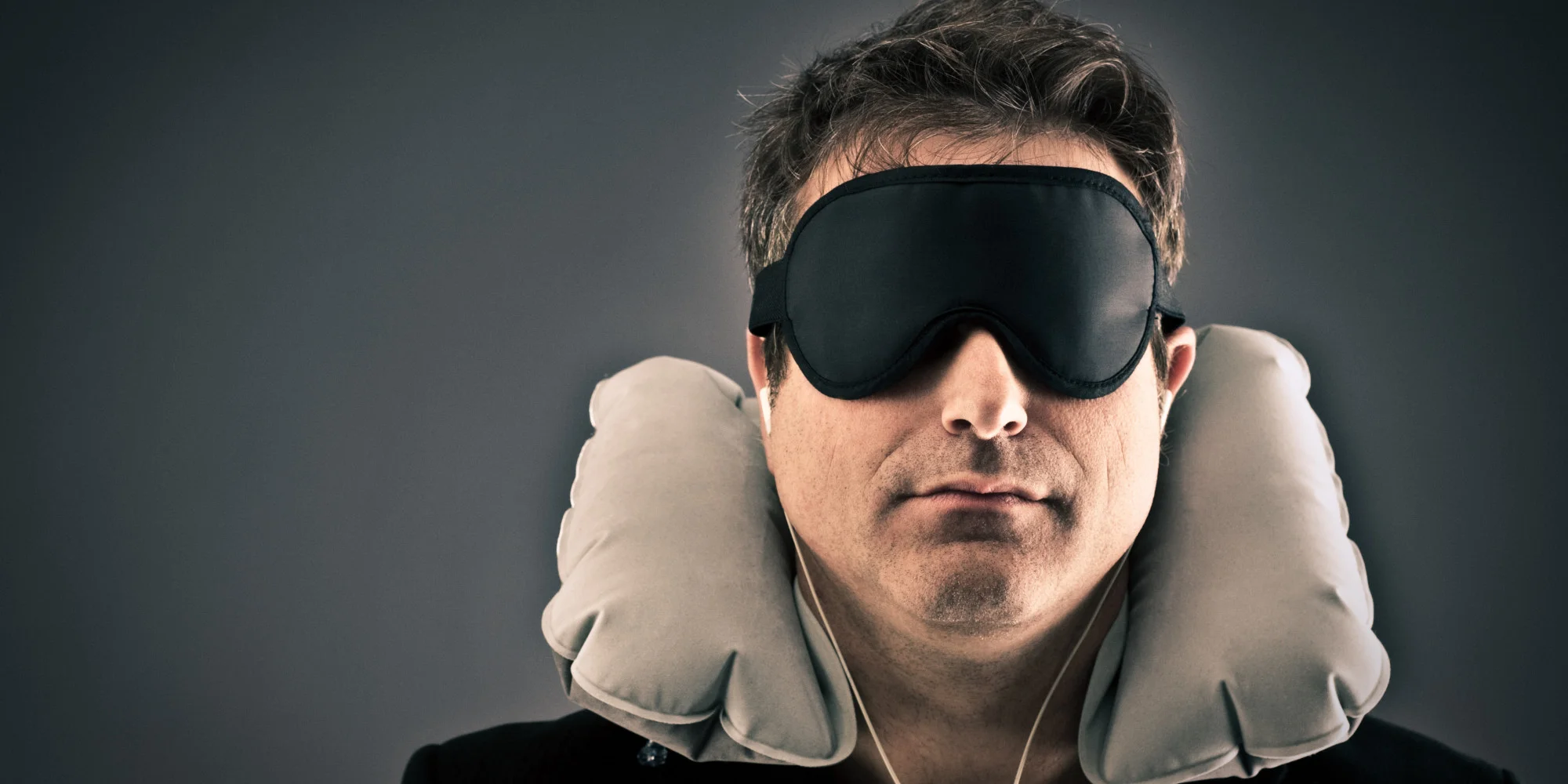
Jet lag treatment? Blast of thin air can reset circadian clocks
October 20, 2016
Science Daily/Cell Press
We might not think of our circadian clock until we are jetlagged, but scientists continue to puzzle over what drives our biological timepiece. Now, a study has found that variations in surrounding oxygen levels can reset circadian clocks of mice. If confirmed in humans, the research could help inform how airlines moderate cabin air pressure.
Presently, light, food, and temperature are the best known cues that can influence circadian rhythms. But lead author Gad Asher, a senior scientist at the Weizmann Institute of Science in Rehovot, Israel, and his colleagues, including postdoctoral fellows Yaarit Adamovich and Benjamin Ladeuix, wondered if oxygen might also cue circadian rhythms since oxygen absorption in animals varies alongside meals and changing temperatures.
In the paper, the researchers show that changing the concentration of oxygen in cells by just 3%, twice a day, will synchronize mouse cells to a circadian rhythm. They suspected HIF1α was the link between oxygen and the circadian clock because HIF1α plays both a role in oxygen homeostasis in cells. They found that cells with low HIF1α levels won't synchronize in response to oxygen variations.
"It was extremely exciting to see that even small changes in oxygen levels were sufficient to efficiently reset the circadian clock," says Asher. "The study actually raises a lot of important questions; although we show that clock reset by oxygen is dependent on HIF1α, we did not yet fully identify how HIF1α integrates within the core clock circuitry."
The researchers further explored oxygen's effect on circadian rhythms with jetlag experiments. Just like humans, mice are prone to jetlag after a sudden shift in daylight hours. Mice were first left to eat, sleep and run on their wheels in air-controlled environments. Altering oxygen levels alone did not change their circadian rhythms but once mice experienced a 6-hour jump ahead in daylight hours, varying oxygen levels could help them adapt their eating, sleeping and running habits to the new time faster. They also saw that a small drop in oxygen levels 12 hours before the 6-hour daylight shift, or 2 hours afterwards, put the mice back on their circadian schedules faster and this too was dependent on HIF1α levels.
Presently, commercial airliners pressurize cabins to the same air density of a city 6,000-8,000 feet above sea level. This low-pressure saves wear and tear on the airplane, but enough passengers suffer from airsickness in response to this drop in oxygen levels that some airlines are considering ways to increase the pressure on flights. In fact, Boeing designed its new 787 Dreamliner so that it can be pressurized to the equivalent of lower altitudes for this reason. But in light of these findings, the researchers noted passengers may feel better with higher pressurized cabins during flights, but may also lose a potential advantage of recovering from jetlag. And in light of the effects of lower oxygen levels, the researchers now want to see what higher oxygen levels may do to the circadian clock.
"We are very looking forward to seeing the outcome of these experiments -- it will be interesting both from basic science and also from a practical standpoint," said Asher. "I believe passengers might be more enthusiastic to inhale oxygen-enriched air to alleviate jetlag in contrast to low oxygen."
Understanding how oxygen influences the circadian clock goes beyond jetlag. Cardiovascular disease, COPD, shift work sleep disorder, and other common health problems can result in tissues with low oxygen levels. "We show that oxygen works in mammals, specifically rodents, but it will be interesting to test whether oxygen can reset the clock of bacteria, plants, flies and additional organisms," says Asher.
https://www.sciencedaily.com/releases/2016/10/161020142746.htm