
Cannabis use in teens linked to risk of depression in young adults
Cannabis use among adolescents is found to be associated with increased risk of depression and anxiety in adulthood
February 13, 2019
Science Daily/University of Oxford
Cannabis is the most commonly used recreational drug by teenagers worldwide. In Canada, among youth aged 15 to 19 years, the rate of past-year cannabis use is 20.6 percent, while in England, 4 percent of adolescents aged 11 to 15 years used cannabis in the last month.
While there has been a lot of focus on the role of cannabis use in psychosis, there has been less attention on whether cannabis use is associated with an increased risk of common mental health disorders, such as depression and anxiety.
Researchers from McGill University and the University of Oxford carried out a systematic review and meta-analysis of the best existing evidence and analysed 23,317 individuals (from 11 international studies) to see whether use of cannabis in young people is associated with depression, anxiety and suicidality in early adulthood.
They found that cannabis use among adolescents is associated with a significant increased risk of depression and suicidality in adulthood (not anxiety). While the individual-level risk was found to be modest, the widespread use of the drug by young people makes the scale of the risk much more serious.
The population attributable risk was found to be around 7%, which translates to more than 400,000 adolescent cases of depression potentially attributable to cannabis exposure in the US, 25,000 in Canada and about 60,000 in the UK.
Dr. Gabriella Gobbi, Professor, Department of Psychiatry, McGill University and a scientist at the Research Institute of the McGill University Health Centre, states: "While the link between cannabis and mood regulation has been largely studied in preclinical studies, there was still a gap in clinical studies regarding the systematic evaluation of the link between adolescent cannabis consumption and the risk of depression and suicidal behaviour in young adulthood. This study aimed to fill this gap, helping mental health professionals and parents to better address this problem."
Professor Andrea Cipriani, NIHR Research Professor of Psychiatry at the University of Oxford, said: 'We looked at the effects of cannabis because its use among young people is so common, but the long-term effects are still poorly understood. We carefully selected the best studies carried out since 1993 and included only the methodologically sound ones to rule out important confounding factors, such us premorbid depression.'
'Our findings about depression and suicidality are very relevant for clinical practice and public health. Although the size of the negative effects of cannabis can vary between individual adolescents and it is not possible to predict the exact risk for each teenager, the widespread use of cannabis among the young generations makes it an important public health issue.
'Regular use during adolescence is associated with lower achievement at school, addiction, psychosis and neuropsychological decline, increased risk of motor vehicle crashes, as well as the respiratory problems that are associated with smoking.'
The active ingredient in cannabis,THC, mediates most of psychoactive and mood-related effects of cannabis and also has addictive properties. Preclinical studies in laboratory animals reported an association between pubertal exposure to cannabinoids and adult-onset depressive symptoms. It is thought that cannabis may alter the physiological neurodevelopment (frontal cortex and limbic system) of adolescent brains.
While the review of observational studies was the first to look at the effects of cannabis use in adolescents only, it was not possible to predict the risk at the individual level, nor was it possible to discern information about the dose-dependent risk of cannabis use.
https://www.sciencedaily.com/releases/2019/02/190213172307.htm
Potent marijuana edibles can pose a major unrecognized risk to patients with cardiovascular disease
February 11, 2019
Science Daily/Elsevier
With widespread legalization and increasing use, more care, education a research needed about how each marijuana formulation may affect and sometimes compromise the cardiovascular system of our aging population, according to a new article and editorial.
As marijuana legalization sweeps North America, use of the substance has been on the rise, and the public's attitude is shifting. An increasing number of people believe that "weed" is the safest recreational drug, one that carries health benefits that outweigh its risks. Those assumptions are challenged in an article and editorial published in the Canadian Journal of Cardiology that examine the story of a patient who developed crushing chest pain and myocardial ischemia after consuming most of a marijuana lollipop.
"Marijuana can be a useful tool for many patients, especially for pain and nausea relief. At the same time, like all other medications, it does carry risk and side effects. In a recent case, inappropriate dosing and oral consumption of marijuana by an older patient with stable cardiovascular disease resulted in distress that caused a cardiac event and subsequent reduced cardiac function," said Alexandra Saunders, MD, Dalhousie University, Internal Medicine Program and Horizon Health Network's Department of Cardiology, Saint John, NB, Canada.
The case report describes a 70-year-old man with stable coronary artery disease, taking the appropriate cardiac medications, who ate most of a lollipop that was infused with 90 mg of THC (delta-9-tetrahydrocannabinol) to relieve pain and aid sleep, which caused him to have a potentially-serious heart attack. He consumed a much larger dose than the 7 mg that is typically ingested by smoking a single joint or taking the 2.5 mg starting dose of dronabinol (Marinol), a synthetic THC marketed for nausea and appetite stimulation in AIDS and cancer patients. While the patient had smoked marijuana in his youth, he had not done so since the THC content of the substance had increased significantly from three percent to 12 percent. He was also not familiar with the time-delayed and extended effect of oral THC dosing.
The patient's cardiac event was likely triggered by unexpected strain on his body from anxiety and fearful hallucinations caused by the unusually large amount of THC he ingested. His sympathetic nervous system was stimulated, causing increased cardiac output with tachycardia, hypertension, and catecholamine (stress hormone) release. After the psychotropic effects of the drug wore off, and his hallucinations ended, his chest pain stopped.
A number of prior case reports, as well as epidemiological studies, have described the association between cannabis use and acute cardiovascular (CV) adverse events, including myocardial infarction, stroke, arrhythmias, and sudden death.
"Most previous research on marijuana-induced myocardial ischemia focused mostly on younger patients and did not focus on its different formulations and potencies. As a result of widespread marijuana legalization, healthcare providers need to understand and manage cannabis use and its complications in older patients, particularly in those with cardiovascular disease," said Robert S. Stevenson, MD, Horizon Health Network, Department of Cardiology, Saint John, NB, Canada.
CV toxicity of marijuana is described in an accompanying editorial. It can be viewed as a consequence of one or more the following: 1) inhalation of combustion products of marijuana; 2) direct CV effects of THC; and 3) indirect effects of THC related to acute anxiety, hallucination, and/or psychosis. Individuals who are THC-naïve and are not used to taking mind-altering drugs can become highly distressed by impaired cognition and feelings of loss of control produced by THC. Extreme emotional responses in the context of THC psychiatric toxicity are associated with surges of catecholamines, which can have adverse acute CV effects. Important considerations with respect to cannabis toxicity are the pattern of use, dose, route of administration, and degree of tolerance.
"The legalization of cannabis has considerable public support but also raises public health concerns," commented the editorial's author, Neal L. Benowitz, MD, Chief, Division of Clinical Pharmacology and Experimental Therapeutics, Medical Service, Departments of Medicine, and Biopharmaceutical Sciences; Center for Tobacco Control Research and Education, University of California, San Francisco, CA, USA. "Some users may benefit from the social and medical effects, but others will be at risk for adverse health outcomes. Little information has been disseminated to patients or healthcare providers about cannabis use in older patients, and in particular those with cardiovascular disease. For better or worse, providing advice and care to such patients who are using cannabis is now necessary for the provision of optimal medical care to these patients."
https://www.sciencedaily.com/releases/2019/02/190211083204.htm
MDMA users more empathetic than other drug users
February 8, 2019
Science Daily/University of Exeter
Long-term MDMA users have higher levels of empathy than cannabis and other drugs users, new research suggests.
University of Exeter scientists compared the empathy levels of 25 people who used multiple drugs including MDMA, 19 people who used multiple drugs not including MDMA and 23 people who used alcohol only.
Users of MDMA reported feeling much more empathy -- and were better at identifying the emotions of others on a computer task -- than people who took multiple drugs not including MDMA.The other drugs were cannabis, cocaine and ketamine.
MDMA (3,4-Methylenedioxymethamphetamine, also known as ecstasy) is known to increase empathy for a short period, and these findings about longer-term effects could have implications for possible medical uses.
MDMA is a Class A banned drug in the UK and is not currently licensed for any medical use.
Lead author Molly Carlyle, of the University of Exeter, said: "We recruited long-term but mild users (a minimum of ten times), in order to reflect doses that may be used for medical purposes,
"It has been suggested that MDMA, combined with therapy, might be an effective treatment for psychological trauma and alcoholism, but it has previously been suggested that MDMA may cause heightened social distress. Our findings indicate that isn't the casein our study, MDMA users were better able to understand the emotions of others and had better emotional empathy than people using other drugs, and on a similar level to those who only drink alcohol."
The study's 67 participants completed a questionnaire about their own empathy, and took computerised tasks in which they had to identify emotions on the faces of others. They also reported how strongly they felt emotions based on seeing others in emotional states.
The researchers wanted to measure both cognitive empathy (the ability to understand the emotions of others) and emotional empathy (experiencing emotions due to the emotions of others).
The study says:
· MDMA users reported feeling significantly greater emotional empathy, and computer tasks revealed greater cognitive empathy, compared to people who used multiple drugs not including MDMA (there was little difference between the MDMA group and the alcohol-only group)
· All participants showed declines in mood and self-esteem in response to social exclusion, but there were no differences between the three groups.
· The levels of empathy and social pain in MDMA users were consistent with "normal psychosocial functioning."
The findings contradict previous suggestions that long-term MDMA use may cause heightened social distress.
Professor Celia Morgan, senior author of the research, said: "Our study suggests that mild MDMA use is not associated with any problems in how we function socially. Instead, it seems to make people better at empathy when compared to drug users who don't use MDMA, with a suggestion of better empathy compared to alcohol users.
"We cant say whether differences in empathy are due to taking MDMA, or whether there were already differences in the people who use MDMA and those who don't before they started taking the drug. But importantly this study suggests that MDMA may be used safely as a treatment without side effects on these crucial social processes."
The study, published in the Journal of Psychopharmacology, is entitled: "Greater empathy in MDMA users."
https://www.sciencedaily.com/releases/2019/02/190208115247.htm
Parenting in the age of legal pot: Household rules, conversations help guide teen use
February 7, 2019
Science Daily/University of Washington
The legalization of marijuana in Washington state in 2012 gave parents the opportunity for a new teachable moment. Many say that as society has become more permissive, they want information and advic
When Washington voters legalized marijuana in 2012, many parents found themselves with a new teachable moment.
Though illegal for anyone under 21, the drug presented a dilemma similar to alcohol: Retailers sold it, people openly consumed it -- sometimes to excess -- and parents themselves struggled with how to talk to their kids about their own use, past or present.
Unlike with alcohol, research on the health and developmental effects of marijuana is still emerging. And the law's complexity, along with the accessibility of marijuana products and stores, has left parents thinking more deliberately about how and why to set some ground rules.
Most parents agree that marijuana should be off-limits to children and teenagers, but they want information and advice from trustworthy sources, said Nicole Eisenberg, a research scientist with the University of Washington's Social Development Research Group. Those findings come from a study published online Jan. 16 in the Journal of Child and Family Studies, by Eisenberg and a team of researchers.
"What I heard a lot of parents saying is, essentially, 'I can tell my kids not to use it, but I just don't know how to enforce and reinforce that message,'" Eisenberg said. "Parents are having a hard time reconciling societal norms with personal norms. Society has become more permissive, but at home, most parents don't want their children to use marijuana. It's a challenge that leaves them feeling like they don't know what to do."
To that end, parents said they want guidance, she added.
"Parents are eager to learn, and open to materials and programs that can help them. They're open to factual, unbiased, scientific information, and they want to know how to talk to their kids," Eisenberg said.
Based on focus group interviews with 54 adults, the study examined parents' attitudes and challenges around marijuana use. Researchers grouped parents according to the ages of their children and by their own usage of marijuana during the past year (as measured by a prior confidential survey); those who had used during the past year, to any degree, were in one group, and those who had not were in another. That separation was designed to better identify differences in how these groups parent; participants were not told anything about other group members' marijuana use.
Yet, in both groups, there were common themes that emerged which can be useful in delivering educational and prevention-oriented messages, Eisenberg said.
For parents, talking to kids about marijuana can mean many things: explaining its risks and effects, deciding on rules and consequences, and choosing whether to share their own history. Researchers didn't offer answers -- that wasn't their role, or the purpose of the study -- but parents appeared to appreciate hearing from each other, Eisenberg said.
Among the challenges parents discussed were adequate and appropriate consequences for breaking house rules, while a few parents of older kids, especially in the user-groups, described a harm-reduction approach, such as discussing with their teens how to use marijuana safely. Parents who chose this strategy said that while they didn't want their children to use marijuana, they figured that if the children were going to try it anyway, they might as well educate them.
What makes the issue so thorny is the relatively rapid legal and cultural change around marijuana, said Rick Kosterman, a co-author of the study from the Social Development Research Group. While marijuana has become even more available since these interviews were conducted in 2014, parents' questions are unlikely to have changed.
"In many ways, parenting around marijuana use is similar to that of alcohol use, since they're both legal for adults," Kosterman said. "A key difference is where I think parents and society in general have accepted that some people can become dependent on alcohol and it can ruin people's lives if used in excess. Parents and kids aren't so clear about risks of marijuana use -- like the potential for misuse or effects on adolescent brains.
"We are still learning about the risks of teen marijuana use, as well as potential medical uses."
The study's conclusion points to how parents might seek answers, whether through community-oriented drug prevention programs or through information from health care providers, public health agencies or school programs.
"The fact that parents in this study openly asked for guidance highlights an opportunity for the prevention science community to work with medical professionals, schools and policymakers to fulfill this vital need at a critical time of policy transition in the United States," the authors wrote.
Alongside this study of parenting practices is a companion study by the same research team, forthcoming in the Journal of the Society for Social Work and Research, about parent perceptions of teens' exposure to marijuana use following legalization in Washington state.
The parents who agreed to participate in both studies came from a longitudinal study the research group launched in the 1980s called the Seattle Social Development Project. The focus group sample was 39 percent white, 37 percent African American, 17 percent Asian American and 7 percent Native American. Of these groups, approximately 5 percent were Latino.
The study on parenting practices was funded by the National Institute on Drug Abuse. Additional authors were Tiffany Jones, a postdoctoral researcher at the UW School of Social Work and an affiliate at Colorado State University; Jennifer Bailey and Kevin Haggerty, of the Social Development Research Group; and Jungeun Olivia Lee of USC.
https://www.sciencedaily.com/releases/2019/02/190207123242.htm
Traffic fatalities on a high after cannabis legalization
February 5, 2019
Science Daily/Monash University
Legalizing the sale of cannabis for recreational use can lead to a short-term increase in traffic fatalities in legalizing states and their neighboring jurisdictions, new research suggests.
The researchers looked at the number of additional deaths each month after legalisation, and found there was on average one additional traffic fatality per million residents, in comparison to states that had not changed cannabis laws. The increase was temporary, seeming to last for about a year following legalisation. The combined population of affected areas is 27 million people, suggesting an additional 170 deaths in the first six months after legalisation.
But the study reported the spill over effects to be slightly larger in neighbouring states and provinces, particularly those with population centres closest to the border of a legalising state -- possibly because cannabis users were driving interstate to make purchases, before returning under the influence.
It's called 'cannabis tourism', and Monash University's Dr Tyler Lane says there are important implications for both legalising states and their neighbours as prohibitions against cannabis use are lifted globally.
"The effect of cannabis legalisation on traffic fatalities is a growing public health concern," Dr Lane said.
"The results suggest that legalising the sale of cannabis for recreational use can lead to a temporary increase in traffic fatalities in legalising states. This spills over into neighbouring jurisdictions through cross-border sales, trafficking, or cannabis tourists driving back to their state of residence while impaired.
"Our findings suggest that policymakers should consult with neighbouring jurisdictions when liberalising cannabis policy to mitigate any deleterious effects."
Dr Lane said the findings were in contrast to research on medicinal cannabis suggesting it decreases traffic fatalities.
One reason for the difference may be that medicinal users tend to substitute cannabis for other substances, including alcohol, which has a greater effect on impairment. Recreational users are less likely to substitute and more likely to combine alcohol and cannabis, which has a much bigger effect than either in isolation.
https://www.sciencedaily.com/releases/2019/02/190205090524.htm
Cannabinoid compounds may inhibit growth of colon cancer cells
February 6, 2019
Science Daily/Penn State
Medical marijuana has gained attention in recent years for its potential to relieve pain and short-term anxiety and depression. Now, Penn State College of Medicine researchers say some cannabinoid compounds may actually inhibit the growth of colon cancer cells in the lab.
The researchers tested the effects of synthetic cannabinoid compounds on colon cancer cells in an experiment in test tubes. While the compounds most commonly associated with cannabis -- THC and CBD -- showed little to no effect, 10 other compounds were effective at inhibiting cancer cell growth.
Kent Vrana, chair of the Department of Pharmacology at Penn State College of Medicine, said the study -- recently published in Cannabis and Cannabinoid Research -- helped identify compounds that could be tested further to understand their anti-cancer properties.
"Now that we've identified the compounds that we think have this activity, we can take these compounds and start trying to alter them to make them more potent against cancer cells," Vrana said. "And then eventually, we can explore the potential for using these compounds to develop drugs for treating cancer."
Colorectal cancer is one of the most common cancers diagnosed in the United States, according to the National Cancer Institute, with an estimated 140,250 newly diagnosed cases and 50,630 deaths in 2018. While medical cannabis has largely been used in recent years for palliative care, the researchers said some previous studies suggested that certain cannabinoid compounds may have the potential to inhibit or prevent the growth of tumors.
To explore how effective cannabinoids were at reducing the viability of colon cancer cells specifically, the researchers tested how 370 different synthetic cannabinoid compounds affected seven types of human colon cancer cells.
"There are many different ways cells can become cancerous," Vrana said. "Each of the seven cells we tested had a different cause or mutation that led to the cancer, even though they were all colon cells. We didn't want to test these compounds on just one mutation or pathway to cancer."
The researchers incubated the cancer cells in a lab for eight hours before treating them with the cannabinoid compounds for 48 hours. Any compounds that showed signs of reducing the viability of one kind of cancer cell was then used to treat all seven kinds of cells.
After further screening and analysis, the researchers identified 10 compounds that inhibited the growth of almost all seven types of colon cancer types tested. But while the researchers were able to identify these compounds, Vrana said they are still unsure about how exactly the compounds worked to reduce the viability of the cancer cells.
"The 10 compounds we found to be effective fall into three classes, so they're similar to each other but with small changes," Vrana said. "We know how one of them works, which is by inhibiting the division of cells in general. We also found that the most potent and effective compounds don't seem to work through traditional marijuana receptors, although we're not sure of the exact mechanism yet."
Vrana said certain types of cells, like skin and colon cells, are more susceptible to cancers because they divide very frequently: "Every time a cell divides, there's the chance that it will mutate and keep dividing when it shouldn't, which is how cancers can start. So if we block that signal that's telling cancer cells to continue to divide, that could be a way to stop that cancer."
Vrana said that because the other compounds did not seem to be working through traditional cannabinoid signaling pathways, future research will focus on better understanding how the compounds interact with cancer cells and whether researchers can make the compounds more potent and effective.
https://www.sciencedaily.com/releases/2019/02/190206091420.htm
Marijuana smoking linked with higher sperm concentrations
February 5, 2019
Science Daily/Harvard T.H. Chan School of Public Health
Men who have smoked marijuana at some point in their life had significantly higher concentrations of sperm when compared with men who have never smoked marijuana, according to new research led by Harvard T.H. Chan School of Public Health. The study, conducted in the Fertility Clinic at Massachusetts General Hospital, also found that there was no significant difference in sperm concentrations between current and former marijuana smokers.
"These unexpected findings highlight how little we know about the reproductive health effects of marijuana, and in fact of the health effects of marijuana in general," said Jorge Chavarro, associate professor of nutrition and epidemiology at Harvard Chan School. "Our results need to be interpreted with caution and they highlight the need to further study the health effects of marijuana use."
The study will be published on February 5, 2019 in Human Reproduction.
It is estimated that 16.5% of adults in the U.S. use marijuana, and support for legal recreational use of marijuana has increased dramatically in recent years. Understanding the health effects associated with marijuana use is important given the growing perception that it poses few health hazards.
The researchers hypothesized that marijuana smoking would be associated with worse semen quality. Previous studies on marijuana have suggested that it is associated with negative effects on male reproductive health, but most of those studies had focused on animal models or on men with histories of drug abuse.
For this study, researchers collected 1,143 semen samples from 662 men between 2000 and 2017. On average, the men were 36 years old, and most were white and college educated. Additionally, 317 of the participants provided blood samples that were analyzed for reproductive hormones. To gather information on marijuana use among study participants, researchers used a self-reported questionnaire that asked the men a number of questions about their usage, including if they had ever smoked more than two joints or the equivalent amount of marijuana in their life and if they were current marijuana smokers.
Among the participants, 365, or 55%, reported having smoked marijuana at some point. Of those, 44% said they were past marijuana smokers and 11% classified themselves as current smokers.
Analysis of the semen samples showed that men who had smoked marijuana had average sperm concentrations of 62.7 million sperm per milliliter of ejaculate while men who had never smoked marijuana had average concentrations of 45.4 million sperm per milliliter of ejaculate. Only 5% of marijuana smokers had sperm concentrations below 15 million/mL (the World Health Organization's threshold for "normal" levels) compared with 12% of men who had never smoked marijuana.
The study also found that among marijuana smokers, greater use was associated with higher serum testosterone levels.
The researchers cautioned that there are several potential limitations to the findings, including that participants may have underreported marijuana use given its status as an illegal drug for most of the study period. The researchers emphasized that they do not know to what extent these findings may apply to men in the general population as the study population consisted of subfertile men in couples seeking treatment at a fertility center. Additionally, they noted that there are few similar studies to compare their results against.
"Our findings were contrary to what we initially hypothesized. However, they are consistent with two different interpretations, the first being that low levels of marijuana use could benefit sperm production because of its effect on the endocannabinoid system, which is known to play a role in fertility, but those benefits are lost with higher levels of marijuana consumption," said Feiby Nassan, lead author of the study and a postdoctoral research fellow at Harvard Chan School. "An equally plausible interpretation is that our findings could reflect the fact that men with higher testosterone levels are more likely to engage in risk-seeking behaviors, including smoking marijuana."
Other Harvard Chan School study authors included Mariel Arvizu, Lidia Mínguez-Alarcón, Paige Williams, and Russ Hauser.
https://www.sciencedaily.com/releases/2019/02/190205204100.htm
What drives patients to use medical marijuana: Mostly chronic pain
New study seeks to understand whether people are using cannabis for evidence-based reasons
February 4, 2019
Science Daily/Michigan Medicine - University of Michigan
A new study seeks to understand whether people are using medical cannabis for evidence-based reasons.
Slowly but surely, the stigma surrounding marijuana use is losing its grip in the U.S. Since the 1990s, advocates have pushed for a re-evaluation of cannabis (the plant species name often used interchangeably with marijuana) as a viable treatment for a host of ailments. As of 2018, 33 states and the District of Columbia have approved the medical use of cannabis, while 10 states have legalized marijuana for recreational use. Despite this fact, at the federal level, marijuana remains a Schedule 1 drug under the Controlled Substances Act, defined as a drug with no currently accepted medical use and a high potential for abuse.
New research from the University of Michigan, published in the February issue of Health Affairs, takes a deeper dive into state medical marijuana registry data to provide more insight into its use.
"We did this study because we wanted to understand the reasons why people are using cannabis medically, and whether those reasons for use are evidence based," says lead author Kevin Boehnke, Ph.D., research investigator in the department of anesthesiology and the Chronic Pain and Fatigue Research Center.
He and his U-M colleagues Daniel J. Clauw, M.D., a professor of anesthesiology, medicine, and psychiatry and Rebecca L. Haffajee, Ph.D., assistant professor of health management and policy, as well as U-M alum Saurav Gangopadhyay, M.P.H., a consultant at Deloitte, sought out data from states with legalized medical use of marijuana.
To examine patterns of use, the researchers grouped patient-reported qualifying conditions (i.e. the illnesses/medical conditions that allowed a patient to obtain a license) into evidence categories pulled from a recent National Academies of Sciences, Engineering and Medicine report on cannabis and cannabinoids. The report, published in 2017, is a comprehensive review of 10,000 scientific abstracts on the health effects of medical and recreational cannabis use. According to the report, there was conclusive or substantial evidence that chronic pain, nausea and vomiting due to chemotherapy, and multiple sclerosis (MS) spasticity symptoms were improved as a result of cannabis treatment.
Evidence-based relief
One major finding of the Health Affairs paper was the variability of available data. Less than half of the states had data on patient-reported qualifying conditions and only 20 reported data on the number of registered patients. The authors also noted that the number of licensed medical users, with 641,176 registered medical cannabis patients in 2016 and 813,917 in 2017, was likely far lower than the actual number of users.
However, with the available data, they found that the number of medical cannabis patients rose dramatically over time and that the vast majority -- 85.5 percent -- of medical cannabis license holders indicated that they were seeking treatment for an evidence-based condition, with chronic pain accounting for 62.2 percent of all patient-reported qualifying conditions.
"This finding is consistent with the prevalence of chronic pain, which affects an estimated 100 million Americans," the authors state.
This research provides support for legitimate evidence-based use of cannabis that is at direct odds with its current drug schedule status, notes Boehnke. This is especially important as more people look for safer pain management alternatives in light of the current opioid epidemic.
Notes Boehnke, "Since the majority of states in the U.S. have legalized medical cannabis, we should consider how best to adequately regulate cannabis and safely incorporate cannabis into medical practice."
https://www.sciencedaily.com/releases/2019/02/190204172220.htm
Cannabis use disorder: The policy climate matters
January 23, 2019
Science Daily/Columbia University's Mailman School of Public Health
Adolescents and young adults living in states with more liberal policies reported higher average rates of past-year cannabis use than those in states with more conservative policies. However, the rates of cannabis use disorder -- abuse or dependence on the drug -- were significantly lower in states with more liberal policies compared to states with more conservative policies. The study is one of the first to assess the relationship between policy liberalism and health outcomes, and specifically cannabis use-related outcomes.
Adolescents and young adults living in states with more liberal policies reported higher average rates of past-year cannabis use than those in states with more conservative policies, according to a new study conducted at Columbia University Mailman School of Public Health. However, the rates of cannabis use disorder -- abuse or dependence on the drug -- were significantly lower in states with more liberal policies compared to states with more conservative policies, for ages 12 to 17, and marginally lower for ages 26 and older. These results remained significant even when controlling for the presence of medical cannabis laws. This study is one of the first to assess the relationship between policy liberalism and health outcomes, and specifically cannabis use-related outcomes. The findings are published in the International Journal of Drug Policy.
"The majority of existing work has explored the relationship between medical cannabis laws and cannabis outcomes, whereas our results identified important relationships between the state-level policy context as a whole, and cannabis use outcomes," said Morgan Philbin, PhD, assistant professor of Sociomedical Sciences, and first author. "While this research does not suggest that being in a liberal state causes people to use cannabis, or have lower rates of cannabis use disorder, it does highlight how states may differ beyond substance use policies, and how these differences also merit attention."
Using nationally-representative state-level data, the researchers examined the associations between policy liberalism and cannabis use and cannabis use disorder among past year users. Data were obtained for ages 12-17, 18-25, and 26 and older from the 2004-2006 and 2010-2012 National Survey on Drug Use and Health.
Past year cannabis use was consistently higher in liberal compared to conservative states, and remained significantly higher for ages 12-17 and 18-25 after adjusting for medical cannabis law status. As of December 2018, a total of 33 states had approved medical cannabis laws and eight states plus Washington, D.C. had legalized cannabis use.
Prevalence of cannabis use has increased overall since 2007 which has raised concerns about potential negative consequences associated with problematic use, specifically cannabis use disorder. "These latest findings could directly inform policymakers and public health practitioners about the degree to which other broader contextual factors also influence cannabis use patterns in the U.S.," noted Philbin.
States were categorized as liberal, moderate, or conservative based on the 2005 and 2011 State Rank on Policy Liberalism Index, which is based on policy indicators for which liberals and conservatives commonly differ. The Index ranked each state from 1 (most liberal) to 50 (most conservative) based on its policies regulating gun control, abortion access, Temporary Assistance to Needy families, collective bargaining, and tax structure.
Average state-level prevalence of past-year cannabis use by age was lowest for ages 26 and older and highest for ages 18 to 25 throughout the study period. Average prevalence increased for ages 18-25 in liberal states, from 33 percent to 37 percent, and rose marginally in conservative states, from 25 percent to 26 percent. The same pattern of use was observed for ages 26 and over in liberal (8 percent to 10 percent) and conservative (6 percent to 7 percent) states. For ages 12-17, however, past year use did not significantly change from 2004-2006 to 2010-2012 in liberal or conservative states.
In contrast, cannabis use disorder among past-year cannabis users decreased from 2004-2006 to 2010-2012 among those aged 18-25 in conservative states (22 percent to 18 percent) and liberal states (20 percent to 17 percent). Among individuals ages 26 and over, cannabis use disorder among past-year users decreased in liberal states (11 percent to 8 percent). For 12-17 year olds, cannabis use disorder decreased in conservative states (28 percent to 25 percent), though still remained marginally higher than in liberal states (24 percent).
"Our study highlights the need for researchers and public health professionals to distinguish between cannabis use and cannabis use disorder when interacting with patients at the individual level and when developing primary prevention strategies and interventions at the population level," said Silvia Martins, MD, PhD, associate professor of Epidemiology and senior author. "This line of research not only helps identify how state-level policies as a whole impact cannabis use outcomes, but ultimately supports the development of more health-promoting policies."
The work was funded by the National Institutes of Health/National Institute on Drug Abuse (DA037866, DA039804A, DA031099).
Co-authors are Pia Mauro, Julian Santaella-Tenorio, Christine Mauro, and Elizabeth Kinnard, Columbia Mailman School; and Magdalena Cerdá, New York University.
https://www.sciencedaily.com/releases/2019/01/190123091158.htm
Some pregnant women don't believe cannabis is harmful to their fetus
January 21, 2019
Science Daily/University of British Columbia
Up to one-third of pregnant women do not believe cannabis is harmful to their fetus, according to a new review by UBC researchers.
In some cases, women perceived a lack of communication from their health care providers about the risks of cannabis as an indication that the drug is safe to use during pregnancy.
The findings are outlined in a new review, published in the journal Preventive Medicine, in which UBC researchers sought to identify the latest evidence on women's perspectives on the health aspects of cannabis use during pregnancy and post-partum and whether their perceptions influence decision-making about using the drug.
"Our research suggests that, over the past decade, more women seem to be using cannabis during pregnancy than ever before, even though evidence of its safety is limited and conflicting," said lead author Hamideh Bayrampour, assistant professor in the UBC department of family practice and affiliate investigator at BC Children's Hospital Research Institute. "As many jurisdictions around the world, including Canada, legalize cannabis, it's becoming increasingly important for public health officials to understand perceptions of cannabis use and to increase awareness of the health concerns around its use, especially for pregnant women."
For the review, researchers identified six studies, all conducted in the United States, which looked at women's perceptions about cannabis use during pregnancy.
Across the studies, the rate of cannabis use among pregnant women varied considerably. In a large U.S. population-based study, nearly four per cent of women self-reported using cannabis within the past month, while seven per cent self-reported using cannabis within the past year. However, in another study that saw researchers also test hair and urine samples, the rate of cannabis use increased to 28 per cent.
Pregnant cannabis users were more likely to be under the age of 25, unemployed, single or uninsured, African American, and to have low income and education, or use other substances such as tobacco and alcohol. A diagnosis of anxiety or depression was also associated with cannabis use during pregnancy.
As for patterns of use, the researchers found that cannabis use rates were highest during the first trimester (7.4 per cent) and lowest during the third trimester (1.8 per cent). Most pregnant users reported using cannabis to treat nausea early in their pregnancy.
In one study involving 306 pregnant women, 35 per cent reported being cannabis users when they realized they were pregnant. Two-thirds of those women quit after finding out they were pregnant, but among those who continued to use cannabis, half reported using almost daily or twice a week.
When women were asked about their perception of general harm associated with cannabis use, 70 per cent of both pregnant and non-pregnant cannabis users responded that they perceived slight or no risk of harm. In another study, when asked if they believed cannabis is harmful to a baby during pregnancy, 30 per cent of pregnant women responded "no." When women were asked to identify substances most likely to harm the baby during pregnancy, 70 per cent chose alcohol and 16 per cent chose tobacco, while only two per cent chose cannabis.
While research on the health effects of cannabis is limited, some studies have shown an increased risk of problems for pregnant women, including anemia, low birth weight, stillbirth and newborn admission to the neonatal intensive care unit. Due to the risk of potential problems, many professional organizations, including the Society of Obstetricians and Gynaecologists of Canada, recommend women not use cannabis when trying to conceive, during pregnancy and while breastfeeding.
Still, some women reported that not having specific counselling provided about the risks of cannabis use suggest that the drug is safe.
"One of our review findings revealed that some people don't consider cannabis to be a drug," said Bayrampour. "With this in mind, it's especially important for health care providers to ask specific questions about cannabis use during pregnancy and breastfeeding to help spark a productive conversation about the potential health impacts and to help support women in their decision to reduce use and quit."
https://www.sciencedaily.com/releases/2019/01/190121103421.htm
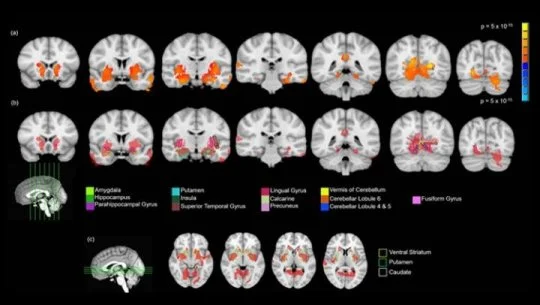
Teen brain volume changes with small amount of cannabis use
Those regions showing significantly greater GMV in 14 year olds reporting one or two instances of cannabis use than in matched controls. Credit: Orr et al., JNeurosci (2019)
January 14, 2019
Science Daily/Larner College of Medicine at the University of Vermont
At a time when several states are moving to legalize recreational use of marijuana, new research shows that concerns about the drug's impact on teens may be warranted. The study, published in The Journal of Neuroscience, shows that even a small amount of cannabis use by teenagers is linked to differences in their brains.
Senior author and University of Vermont (UVM) Professor of Psychiatry Hugh Garavan, Ph.D., and first author and former UVM postdoctoral fellow Catherine Orr, Ph.D., say this research is the first to find evidence that an increase in gray matter volume in certain parts of the adolescent brain is a likely consequence of low-level marijuana use.
Few studies have looked at the effects of the first few uses of a drug, says Garavan. Most researchers focus on heavy marijuana users later in life and compare them against non-users. These new findings identify an important new area of focus.
"Consuming just one or two joints seems to change gray matter volumes in these young adolescents," Garavan says.
The new study, part of a long-term European project known as IMAGEN, included 46 kids who reported having used cannabis once or twice by age 14. Their brains showed more gray matter volume in areas where cannabis binds, known as cannabinoid receptors, compared to the kids who didn't use the drug. The biggest differences in gray matter were in the amygdala, which is involved in fear and other emotion-related processes, and in the hippocampus, involved in memory development and spatial abilities.
Exploiting the advantages of the study's longitudinal data, the researchers ruled out the likelihood that the cannabis-using kids had pre-existing differences in gray matter thickness or that they had specific personality traits that might correlate with the difference in brain makeup.
"The implication is that this is potentially a consequence of cannabis use," Garavan says. "You're changing your brain with just one or two joints. Most people would likely assume that one or two joints would have no impact on the brain."
What the increased brain matter volume means is unclear.
Typically at that age, Garavan says, the adolescent brain undergoes a "pruning" process, where it gets thinner, rather than thicker as it refines its synaptic connections.
"One possibility is they've actually disrupted that pruning process," Garavan says of the marijuana-using kids.
https://www.sciencedaily.com/releases/2019/01/190114130855.htm
Worrisome statistics around medical cannabis users operating vehicles
More public education and guidelines are needed to increase marijuana users' understanding of cannabis-related driving impairment
January 9, 2019
Science Daily/Michigan Medicine - University of Michigan
More than half of people who take medical cannabis for chronic pain say they've driven under the influence of cannabis within two hours of using it, at least once in the last six months, according to a new survey. One in five of them said they'd driven while 'very high' in the past six months.
One in five of them said they'd driven while 'very high' in the past six months, researchers from the University of Michigan Addiction Center report in the journal Drug & Alcohol Dependence .
Lead author Erin E. Bonar, Ph.D., assistant professor of psychiatry and a practicing clinical psychologist at the U-M Addiction Treatment Services finds the results of a survey of 790 Michigan medical cannabis users troubling.
Hundreds of thousands of Americans have state approval to use medical marijuana, including nearly 270,000 in the state of Michigan, according to Statista, as of May 2018. Michigan is second only to California for the highest number of medical marijuana patients in a state.
Risky driving
Bonar says that when people drive under the influence of marijuana their reaction time and coordination may be slowed down and they could have a harder time reacting to the unexpected. If they are in a risky situation, they could be more likely to be involved in motor vehicle crash, because they would not be able to respond as quickly.
For the study, the team surveyed adults in Michigan who were seeking medical cannabis recertification or a new certification for chronic pain in 2014 and 2015. The researchers asked about respondents' driving habits for the past six months.
Fifty-six percent of participants reported driving within two hours of using cannabis, 51 percent reported they drove while a "little high," and 21 percent reported driving while "very high."
"There is a low perceived risk about driving after using marijuana, but we want people to know that they should ideally wait several hours to operate a vehicle after using cannabis, regardless of whether it is for medical use or not," Bonar said. "The safest strategy is to not drive at all on the day you used marijuana."
There is uncertainty about how marijuana could affect driving for chronic daily users, who might have even longer-lasting effects that linger in their system, Bonar added.
Uncharted territory
To add complexity to the issue, in November Michigan voters approved the use of recreational marijuana in the state. In early December, it became legal under state law for any Michigan resident over the age of 21 to use marijuana inside a private residence, and to grow up to 12 plants for personal use. Retail sales are only allowed for those with medical marijuana cards issued by the state. Marijuana use and possession remains illegal under federal law.
In light of this policy change, Bonar says, all cannabis users need a clear understanding of the side effects of this drug.
"When it comes to driving, we haven't yet figured out the best way to know how impaired marijuana users are at any given time," she says. "With alcohol, you can do some quick math based on the amount you drank, and take an educated guess at your blood alcohol level. For marijuana, an estimate like this would be complicated. It's hard to quantify because there is a lot of variation in marijuana dosing, THC potency, and route of administration. We also don't have specific guidelines yet about when exactly it would be safe to operate a vehicle."
Bonar says the goal of her team's study -- conducted before the passage of the ballot question that resulted in the change in state law -- is to help medical marijuana users to be safer on the roads.
"We believe more research is needed to inform a larger public education effort that will help individuals understand the risks for themselves, and others, of driving while under the influence of cannabis," she says. "It is especially needed during this time of rapid policy change as many states are determining how to manage marijuana legalization. We also need clearer guidelines about marijuana dosing and side effects with an understanding of how individual differences in things like sex and body weight interact as well."
This study was funded by the National Institute on Drug Abuse. The lead project investigator was Mark Ilgen, Ph.D., director of UMATS. Additional study authors include James Cranford, Ph.D., Brooke Arterberry, Ph.D., Maureen Walton, M.P.H., Ph.D., and Kipling M. Bohnert, Ph.D.
https://www.sciencedaily.com/releases/2019/01/190109170635.htm

Exposure to cannabis and stress in adolescence can lead to anxiety disorders in adulthood
Dendritic spines of a rodent exposed to THC and stress. Credit: UPF
January 8, 2019
Science Daily/Universitat Pompeu Fabra - Barcelona
A new study conducted on laboratory animals shows that exposure to cannabis and stress during adolescence may lead to long-term anxiety disorders characterized by the presence of pathological fear. The work carried out by the Neuropharmacology Laboratory-NeuroPhar at Pompeu Fabra University, was led by the researchers Fernando Berrendero, now at Francisco de Vitoria University, and Rafael Maldonado, and has been published in the journal Neuropharmacology.
Cannabis remains the most commonly consumed illegal drug worldwide. Its regular use often begins during adolescence, which is especially troubling because this period is crucial for the brain to mature properly through the reorganization of the neuronal synapses.
Numerous preclinical and epidemiological data suggest that exposure to cannabinoids in adolescents may increase the risk of the onset of psychiatric illnesses in adulthood. The results of the National Drugs Plan show an increase in the consumption of cannabis and a recent review highlights that in recent years the perception of the risk of its consumption has diminished among the young population, from 12 to 17 years of age, the age group discussed in this article.
"In this study we have investigated the effects of simultaneous exposure to Δ9-tetrahydrocannabinol (THC), which is primarily responsible for the psychoactive properties of cannabis, and to stress during adolescence," explain Rocio Saravia and Marc Ten-Blanco, first authors of the article. Specifically, they have studied how this exposure during adolescence affects the extinction of the memory of fear in adult mice.
Occasionally, a stimulus that should be neutral, as could be, for example, seeing the dentist in a white coat, is associated with a threatening one, which would be the pain we have felt upon previous visits to the dentist, and causes a fear response. Normally, fear reactions diminish over time as the conditioned stimulus ceases to be associated with the negative experience. This is known as fear extinction. But when fear extinction does not occur properly, anxiety disorders such as post-traumatic stress syndrome, phobias or panic attacks occur.
"We have observed that adolescent mice treated with THC and exposed to stress display impaired fear extinction in adulthood. However, this effect was not observed in animals exposed to these same two factors separately," Fernando Berrendero explains. In addition, the resistance to fear extinction was associated with a decrease in neuronal activity in the basolateral amygdala and the infralimbic prefrontal cortex, suggesting a deregulation in the long term of the circuit that regulates fear.
"Our findings highlight the influence of environmental factors such as stress on the harmful effects of the exposure to cannabis during early ages and suggest that the consequences of early cannabis use greatly depend on the environment of its use," explains Rafael Maldonado, full professor of Pharmacology at UPF. "The presence of stress situations, common among consumers of the substance, may worsen the harmful effects of cannabis," he concludes.
Their study has also involved the researchers Humberto Gagliano, Antonio Armario and Raül Andero, of the Autonomous University of Barcelona. The article is part of a project funded by the Spanish National Drugs Plan.
https://www.sciencedaily.com/releases/2019/01/190108125419.htm
Increased risk of harm from cannabis across Europe
December 31, 2018
Science Daily/University of Bath
A significant new study shows that cannabis potency has doubled across Europe in the past 11 years.
Cannabis resin and herbal cannabis have significantly increased in potency and in price, according to the first study to investigate changes in cannabis across Europe.
The study, published today (Sunday 30 December) in the journal Addiction by researchers from the University of Bath and King's College London, draws on data collected from across 28 EU Member states, as well as Norway and Turkey by the European Monitoring Centre for Drugs and Drug Addiction.
The findings show that for herbal cannabis, concentrations of delta-9-tetrahydrocannabinol ('THC' -- the main psychoactive constituent of cannabis) increased by a similar amount each year, from 5% in 2006 to 10% in 2016.
For cannabis resin (or hash), THC concentrations were relatively stable from 2006 to 2011 (from 8% to 10%) but then increased rapidly from 2011 to 2016 (from 10% to 17%). The price of cannabis resin also increased, but to a lesser extent than for herbal cannabis.
Lead author Dr Tom Freeman from the Addiction and Mental Health Group within the Department of Psychology at the University of Bath, said: "These findings show that cannabis resin has changed rapidly across Europe, resulting in a more potent and better value product."
Unlike herbal cannabis, cannabis resin typically contains cannabidiol (CBD) in addition to THC. CBD has recently attracted considerable interest due to its potential to treat several medical conditions including childhood epilepsy syndromes, psychosis and anxiety. When present in cannabis, CBD may offset some of the harmful effects of THC such as paranoia and memory impairment.
Cannabis containing higher levels of THC and / or lower levels of CBD has been linked to greater long-term harms such as the development of cannabis dependence, and an increased risk of psychotic illness. New resin production techniques in Morocco and Europe have increased levels of THC, but not CBD.
Dr Freeman added: "CBD has the potential to make cannabis safer, without limiting the positive effects users seek. What we are seeing in Europe is an increase in THC and either stable or decreasing levels of CBD, potentially making cannabis more harmful. These changes in the illicit market are largely hidden from scientific investigation and are difficult to target by policy-makers. An alternative option could be to attempt to control THC and CBD content through regulation."
It is estimated that 24 million people (or 7.2%) of European adults used cannabis in the last year. Across the globe 192 million people use the drug in a variety of markets, ranging from heavily sanctioned prohibition to commercialised legal sale. Cannabis policies are rapidly changing across the globe.
Recreational use is now legalised in Canada and several US states, and medical use is permitted in many more countries, including very recently in the UK.
https://www.sciencedaily.com/releases/2018/12/181231103957.htm

Exposure to cannabis alters the genetic profile of sperm
Marijuana growing. THC appeared to impact hundreds of different genes in rats and humans, but many of the genes did have something in common -- they were associated with two of the same major cellular pathways. Credit: © watman / Fotolia
Whether genetic changes can be reversed or are passed on to children is still unknown
December 19, 2018
Science Daily/Duke University Medical Center
New research suggests men in their child-bearing years should consider how THC could impact their sperm and possibly the children they conceive during periods when they've been using the drug. Much like previous research that has shown tobacco smoke, pesticides, flame retardants and even obesity can alter sperm, the new research shows THC also affects epigenetics, triggering structural and regulatory changes in the DNA of users' sperm.
As legal access to marijuana continues expanding across the U.S., more scientists are studying the effects of its active ingredient, tetrahydrocannabinol (THC), in teens, adults and pregnant women.
New research from Duke Health suggests men in their child-bearing years should also consider how THC could impact their sperm and possibly the children they conceive during periods when they've been using the drug.
Much like previous research that has shown tobacco smoke, pesticides, flame retardants and even obesity can alter sperm, the Duke research shows THC also affects epigenetics, triggering structural and regulatory changes in the DNA of users' sperm.
Experiments in rats and a study with 24 men found that THC appears to target genes in two major cellular pathways and alters DNA methylation, a process essential to normal development.
The researchers do not yet know whether DNA changes triggered by THC are passed to users' children and what effects that could have. Their findings will be published online Dec. 19 in the journal Epigenetics.
"What we have found is that the effects of cannabis use on males and their reproductive health are not completely null, in that there's something about cannabis use that affects the genetic profile in sperm," said Scott Kollins, Ph.D., professor in psychiatry and behavioral sciences at Duke and senior author of the study.
"We don't yet know what that means, but the fact that more and more young males of child-bearing age have legal access to cannabis is something we should be thinking about," Kollins said.
National research has shown a steady decline in the perceived risk of regular marijuana use. This, combined with the demand and wide availability of marijuana bred specifically to yield higher THC content, make this research especially timely, Kollins said.
The study defined regular users as those who smoked marijuana at least weekly for the previous six months. Their sperm were compared to those who had not used marijuana in the past six months and not more than 10 times in their lifetimes.
The higher the concentration of THC in the men's urine, the more pronounced the genetic changes to their sperm were, the authors found.
THC appeared to impact hundreds of different genes in rats and humans, but many of the genes did have something in common -- they were associated with two of the same major cellular pathways, said lead author Susan K. Murphy, Ph.D., associate professor and chief of the Division of Reproductive Sciences in obstetrics and gynecology at Duke.
One of the pathways is involved in helping bodily organs reach their full size; the other involves a large number of genes that regulate growth during development. Both pathways can become dysregulated in some cancers.
"In terms of what it means for the developing child, we just don't know," Murphy said. It's unknown whether sperm affected by THC could be healthy enough to even fertilize an egg and continue its development into an embryo, she said.
The study was a starting point on the epigenetic effects of THC on sperm and is limited by the relatively small number of men involved in the trial, Murphy said. The findings in men also could be confounded by other factors affecting their health, such as their nutrition, sleep, alcohol use and other lifestyle habits.
The Duke team plans to continue its research with larger groups. They intend to study whether changes in sperm are reversed when men stop using marijuana. They also hope to test the umbilical cord blood of babies born to fathers with THC-altered sperm to determine what, if any epigenetic changes, are carried forward to the child.
"We know that there are effects of cannabis use on the regulatory mechanisms in sperm DNA, but we don't know whether they can be transmitted to the next generation," Murphy said.
"In the absence of a larger, definitive study, the best advice would be to assume these changes are going to be there," Murphy said. "We don't know whether they are going to be permanent. I would say, as a precaution, stop using cannabis for at least six months before trying to conceive."
In addition to Kollins and Murphy, study authors include Nilda Itchon-Ramos, Zachary Visco, Zhiqing Huang, Carole Grenier, Rose Schrott, Kelly Acharya, Marie-Helene Boudreau, Thomas M. Price, Douglas J. Raburn, David L. Corcoran, Joseph E. Lucas, John T. Mitchell, F. Joseph McClernon, Marty Cauley, Brandon J. Hall, and Edward D. Levin.
The research was supported by a grant from the John Templeton Foundation.
https://www.sciencedaily.com/releases/2018/12/181219075846.htm
CBD in marijuana may worsen glaucoma, raise eye pressure
Research in mice suggests over-the-counter substance could possess unknown side effects
December 17, 2018
Science Daily/Indiana University
A study has found that CBD -- a major chemical component in marijuana -- appears to increase pressure inside the eye of mice, suggesting the use of the substance in the treatment of glaucoma may actually worsen the condition.
One of the most commonly proposed uses of medical marijuana is to treat glaucoma.
But a study from researchers at Indiana University has found that a major chemical component in the substance appears to worsen the primary underpinning of the disease: a rise in pressure inside the eye.
The chemical that causes this rise in pressure is cannabidiol, or CBD, a non-psychoactive ingredient in cannabis that is increasingly marketed to consumers in products such as oil, gummies, creams and health food. It is also approved in many states as a treatment for conditions such as pediatric epilepsy.
The study was reported Dec. 14 in the journal Investigative Ophthalmology & Visual Science.
"This study raises important questions about the relationship between the primary ingredients in cannabis and their effect on the eye," said Alex Straiker, an associate scientist in the IU Bloomington College of Arts and Sciences' Department of Psychological and Brain Sciences, who led the study. "It also suggests the need to understand more about the potential undesirable side effects of CBD, especially due to its use in children."
The study, which was conducted in mice, specifically found that CBD caused an increase in pressure inside the eye of 18 percent for at least four hours after use.
Tetrahydrocannabinol, or THC, the primary psychoactive ingredient of marijuana, was found to effectively lower pressure in the eye, as has been previously reported. But the study found that the use of CBD in combination with THC blocked this effect.
Specifically, the study found that male mice experienced a drop in eye pressure of nearly 30 percent eight hours after exposure to THC alone. A lower pressure drop of 22 percent was also observed after four hours in male mice.
The effect was weaker in female mice. This group experienced a pressure drop of only 17 percent after four hours. No difference in eye pressure was measured after eight hours.
The results suggest that females may be less affected by THC, though it isn't clear whether this extends to the substance's psychoactive effects.
"This difference between males and females -- and the fact that CBD seems to worsen eye pressure, the primary risk factor for glaucoma -- are both important aspects of this study," Straiker said. "It's also notable that CBD appears to actively oppose the beneficial effects of THC."
By comparing the effect of these substances on mice without specific neuroreceptors affected by THC and CBD, the IU researchers were also able to identify the two specific neuroreceptors -- named CB1 and GPR18 -- by which the first substance lowered pressure inside the eye.
"There were studies over 45 years ago that found evidence that THC lowers pressure inside the eye, but no one's ever identified the specific neuroreceptors involved in the process until this study," Straiker said. "These results could have important implications for future research on the use of cannabis as a therapy for intraocular pressure."
https://www.sciencedaily.com/releases/2018/12/181217151537.htm
Cannabis-based drug in combination with other anti-spasticity
Drugs may help to relieve symptoms of motor neuron disease
December 13, 2018
Science Daily/The Lancet
Oral spray containing two compounds derived from the cannabis plant reduced spasticity compared with placebo in patients already taking anti-spasticity drugs.
Chemical compounds derived from the cannabis sativa plant given as an add-on treatment may help ease symptoms of spasticity (tight or stiff muscles), a major cause of disability and reduced quality of life in people with motor neuron disease, according to a phase 2 trial of 60 adults published in The Lancet Neurology journal.
The findings show for the first time that adults with motor neuron disease taking first-line anti-spasticity drugs who were then treated with an oral spray (nabiximols) containing equal parts delta-9 tetrahydrocannabinol THC and cannabidiol (THC-CBD) experienced less spasticity and pain at 6-week follow-up compared with those given placebo.
While there are several drugs to relieve spasticity, evidence for their effectiveness is scant and they do not sufficiently improve symptoms in all patients. Moreover, they can have undesirable side effects, such as increasing muscle weakness and fatigue. In the study, participants continued taking other medications throughout the trial.
"There is no cure for motor neuron disease, so improved symptom control and quality of life are important for patients," says Dr Nilo Riva from the San Raffaele Scientific Institute in Milan, Italy, who led the research. "Our proof-of-concept trial showed a beneficial effect of THC-CBD spray in people on treatment-resistant spasticity and pain. Despite these encouraging findings, we must first confirm that THC-CBD spray is effective and safe in larger, longer term phase 3 trials."
Spasticity is a common symptom in motor neuron disease, a rapidly progressive, fatal neurodegenerative disorder affecting the nerve cells that control muscle movement (motor neurons). It occurs to a variable degree in people with amyotrophic lateral sclerosis (ALS), the most common and severe form of motor neuron disease, and is a defining characteristic of primary lateral sclerosis (PLS), that is rarer and progresses more slowly.
Previous research has found possible therapeutic benefits of cannabinoids (components of the cannabis plant) to include muscle relaxation, appetite stimulation, and pain-relieving, anticonvulsant, and anti-inflammatory effects in patients with other neurological conditions. Cannabinoids have been licensed in several countries for symptomatic treatment of spasticity in multiple sclerosis, and are increasingly recognised as a valuable option for the management of pain.
To investigate whether cannabinoids might also reduce spasticity in motor neuron disease, Italian researchers recruited 60 adults (aged 18-80 years) with ALS or PLS from four tertiary motor neuron disease centres in Italy. To participate in the study, patients had to have experienced spasticity symptoms for at least 3 months and be taking a stable dose of any anti-spasticity medication for 30 days before enrolment and throughout the study.
Participants were randomised to receive THC-CBD mouth spray (29 participants) or placebo (30) for 6 weeks. The number of sprays was gradually increased for the first 2 weeks of treatment until the optimum dose was reached, and then that dose was maintained for 4 weeks.
Change in spasticity was assessed by a physician who rated the spasticity of each participant's joints on the Modified Ashworth Scale (MAS) -- an objective tool to evaluate intensity of muscle tone. Participants were also asked to keep a daily symptom diary on spasticity levels, pain, spasm frequency, and sleep disruption.
At the end of treatment (6 weeks), spasticity was significantly improved in the THC-CBD spray group compared with the placebo group (mean MAS-scores improved by an average 0.11 vs deteriorated by an average 0.16). Additionally, the number of participants treated with THC-CBD spray reporting an improvement was significantly higher compared with participants receiving placebo (55%; 16/29 participants vs 13%; 4/30). Finally, pain scores were significantly improved in the THC-CBD spray group compared with placebo on a 0-10 scale (-0.97 vs -0.06).
Overall, THC-CBD spray was well tolerated and adverse events were mild to moderate and typical of cannabinoids -- asthenia (loss of energy and fatigue), somnolence (sleepiness), vertigo, and nausea. Twenty-one (72%) participants in the THC-CBD spray group and four (13%) in the placebo group reported at least one potentially treatment-related adverse event. There were no serious adverse events and no participants permanently discontinued treatment. However, three patients temporarily discontinued treatment in the THC-CBD spray group, two because of adverse events (one had nausea and anxiety and the other influenza), and one because of disease progression.
The authors note that an important limitation of the study was that the Modified Ashworth Scale has lacked sensitivity in studies assessing cannabinoids efficacy in multiple-sclerosis-related spasticity.
Writing in a linked Comment, Dr Marinne de Visser from Amsterdam University Medical Centre, University of Amsterdam, the Netherlands, says: "Before asking for approval of cannabinoids for symptomatic treatment of spasticity in patients with amyotrophic lateral sclerosis, further studies are needed to establish the frequency of spasticity in the various presentations of motor neuron disease, and also whether reductions in spasticity improve quality of life. Natural history studies including all subtypes of motor neuron disease and better outcome measures aimed at assessment of spasticity are required. Riva and colleagues' data are encouraging, and larger multicentre randomised controlled trials should be done to identify which subgroups of patients derive clinically significant benefits from nabiximols."
https://www.sciencedaily.com/releases/2018/12/181213190606.htm

How catnip makes the chemical that causes cats to go crazy
Catnip has a well known effect on, its intoxicating highs are caused by nepetalactone, a type of chemical called a terpene. Credit: John Innes Centre
December 11, 2018
Science Daily/John Innes Centre
Researchers at John Innes Centre have shed light on how catnip -- also known as catmint -- produces the chemical that sends cats into a state of wanton abandon.
The remarkable effect catnip has on cats is well known thanks to the scores on online videos showing pets enjoying its intoxicating highs.
The substance that triggers this state of feline ecstasy is called nepetalactone, a type of chemical called a terpene. This simple, small molecule is part of an unusual chain of events, not previously seen by chemists.
The researchers believe that understanding the production of these nepetalactones could help them recreate the way that plants synthesise other chemicals like vinblastine, which is used for chemotherapy. This could lead to the ability to create these useful medicines more efficiently and quickly than we are currently able to harvest them from nature.
Usually in plants, for example peppermint, terpenes are formed by a single enzyme. In their paper published online this week in Nature Chemical Biology, the researchers report that in catnip terpenes are formed in a two-step process; an enzyme activates a precursor compound which is then grabbed by a second enzyme to produce the substance of interest.
This two-step process has previously never been observed, and the researchers also expect something similar is occurring in the synthesis of anti-cancer drugs vincristine and vinblastine from Madagascan periwinkle, Catharanthus roseus, and elsewhere in olive and snapdragon.
In the publication, the team describe the process by which catmint produces nepetalactone in microscopic glands on the underside of its leaves. The study also identifies three new enzymes with unusual activity.
Dr Benjamin Lichman, who conducted the work while a post-doc at John Innes Centre and who is now a lecturer at the University of York, says: "We have made significant progress in understanding how catnip makes nepetalactones, the chemicals that sends cats crazy. Catnip is performing unusual and unique chemical processes, and we plan to use these to help us create useful compounds that can be used in treatment of diseases such as cancer. We are also working to understand the evolution of catnip to understand how it came to produce the cat-active chemicals."
Professor Sarah O'Connor, project leader at the John Innes Centre, says: "Nepetalactones have potential use in agriculture as they participate in certain plant-insect interactions. In future work we will explore the roles that these compounds have in plants."
https://www.sciencedaily.com/releases/2018/12/181211103125.htm
Cannabis-based compound may reduce seizures in children with epilepsy
December 5, 2018
Science Daily/Wiley
A recent analysis of published studies indicates that the use of cannabinoids for the treatment of epilepsy in children looks promising.
Interest has been growing in the use of cannabinoids -- the active chemicals in cannabis or marijuana -- for the treatment of epilepsy in children. A recent Epilepsia analysis of relevant published studies indicates that this strategy looks promising.
The analysis included four randomized controlled trials and 19 non-randomized studies, primarily involving cannabidiol, a particular type of cannabinoid that does not have psychoactive effects.
Among randomized controlled trials involving children with severe forms of epilepsy, there was no statistically significant difference between cannabidiol and placebo in terms of freedom from seizures, sleep disruption, or vomiting. There was a statistically significant reduction in the median frequency of monthly seizures with cannabidiol compared with placebo and an increase in number of participants with at least a 50 percent reduction in seizures.
"Although we saw no significant difference in the number of children who became completely seizure free, we that found a significant number of these children achieved a 50 percent or more reduction in seizures. Any reduction in seizures has a striking impact on the lives of these children and their families," said lead author Jesse Elliott, of the University of Ottawa, in Canada. "Research in this area is active, and we expect a dramatic increase in the number of studies over the next few years."
https://www.sciencedaily.com/releases/2018/12/181205093644.htm
Vaping cannabis produces stronger effects than smoking cannabis for infrequent users
December 4, 2018
Science Daily/Johns Hopkins Medicine
In a small study of infrequent cannabis users, Johns Hopkins Medicine researchers have shown that, compared with smoking cannabis, vaping it increased the rate of short-term anxiety, paranoia, memory loss and distraction when doses were the same.
The findings of the new study, described in the Nov. 30 edition of JAMA Network Open, highlight the importance of dose considerations with the perception that vaping is a safer alternative to smoking cannabis, the researchers say. And they ask regulators of medical and recreational cannabis dispensaries to take note.
Vaping devices heat cannabis to a temperature in which the mind-altering compounds in the plant are released as a vapor that is inhaled. Vaping is thought to be safer for cannabis and tobacco use because it doesn't produce many of the harmful components of burning material such as tar and other cancer-causing agents.
But, the researchers say, their study suggests that at least for first-timers or others who don't use cannabis regularly, vaping delivers greater amounts of THC, the primary intoxicant in cannabis, which increases the likelihood of adverse reactions.
"In light of increased legalization of cannabis, we designed our study to be more representative of the general population's exposure to cannabis, namely someone who has never smoked it and wants to try it for medical or recreational purposes, or someone who does not use it regularly enough to understand or predict its effects," says Ryan Vandrey, Ph.D., associate professor of psychiatry and behavioral sciences at the Johns Hopkins University School of Medicine. "What our study suggests is that some people who use cannabis infrequently need to be careful about how much cannabis they use with a vaporizer, and they should not drive, even within several hours after use. It could be dangerous for themselves and others, and on top of that, they may experience negative effects such as anxiety, nausea, vomiting and even hallucinations," he adds.
For their study, the researchers chose 17 volunteer participants (nine men and eight women, average age 27 years), who hadn't used cannabis in the past 30 days, which was verified by a drug screen, and together on average hadn't used in over a year.
In a controlled setting at Johns Hopkins Bayview Medical Center's behavioral pharmacology research unit, each participant either smoked or vaped cannabis containing 0, 10 or 25 milligrams of ?9-tetrahydrocannabinol (THC), the active component in cannabis that gives people the high, in single visits once a week over six weeks. The researchers say that 25 milligrams of THC is a relatively low dose, and much less than is typically found in pre-rolled cannabis "joints" sold in dispensaries where cannabis is legal. The participants either smoked preloaded pipes or inhaled vapor from a vaporizer. Neither the participants nor the researchers knew the doses of THC that were delivered in a given experimental test session.
During each of the six sessions, the research team observed and assessed drug effects in the test subjects, including for adverse reactions. They also measured vital signs such as heart rate and blood pressure and collected blood samples just after smoking, every 30 minutes for two hours and then every hour for eight hours.
Each participant also completed the Drug Effect Questionnaire -- rating self-reported drug effects out of a score of 100 -- shortly after smoking and each hour for up to eight hours later. The survey assessed overall drug effect; feeling sick, anxious, hungry, sleepy and restless; and experiencing heart racing, dry mouth, dry eyes, memory impairment and coughing.
Results showed that a few minutes after smoking, those who vaped the 25-milligram THC dosage reported an average of 77.5 on the overall strength of the drug's effect, meaning how high they felt compared with the average score of 66.4 reported by those who smoked the same dose. Participants who vaped 25 milligrams of THC reported about a 7 percent higher score on average for anxiety and paranoia, compared with people who smoked the same amount of the compound. Those who vaped any dose of THC also reported higher levels of dry mouth and dry eyes than those who smoked it. For example, when vaping 25 milligrams of THC, the participants rated dry mouth at 67.1 on average compared with 42.6 for those smoking it.
Researchers say the participants also completed three computerized tasks designed to measure attention span, memory, physical reaction time and motor movement. One task required the participant to replicate the shape of patterns, another required them to add up strings of single-digit numbers and the third required them to follow a dot across the screen with the cursor while also tracking a dot that pops up in the periphery.
The tests are meant to represent skills needed for proper workplace performance, operating a car or other daily activities. Reaction times on average were slower by more than 120 milliseconds with both active test doses of THC, using either smoking or vaping, when compared with reaction time after smoking or vaping cannabis without any THC.
Next, the researchers compared the effects of vaping compared with smoking on participants taking the computerized Divided Attention Task, which required participants to track a square on the computer screen while also monitoring numbers in each corner of the screen. The amount of time participants accurately tracked the square on the computer in the Divided Attention Task dropped by an average of 170 percent after smoking 25 milligrams of THC compared with the cannabis without THC.
The amount of time they accurately tracked fell an average of 350 percent when vaping 10 milligrams of THC and fell 500 percent when vaping 25 milligrams of THC, compared with those smoking either dose.
"Our participants had substantially higher impairment on the tasks when vaping versus smoking the same dose, which in the real world translates to more functional impairment when driving or performing everyday tasks," says postdoctoral fellow Tory Spindle, Ph.D., a researcher in the behavioral pharmacology research unit at Johns Hopkins Bayview.
Other results showed that blood levels of THC were at their highest immediately after smoking or vaping cannabis. At 10 milligrams of THC, blood levels of THC reached an average of 7.5 nanograms per milliliter in vapers, compared with 3.8 nanograms per milliliter in smokers 10 minutes after they inhaled the drug. At 25 milligrams of THC, blood levels reached an average of 14.4 nanograms per milliliter when vaped compared with 10.2 nanograms per milliliter when smoked.
"There's a definite differences in the amount of drug making it into the blood when using a vaporizer versus smoking the drug, so considerations need to be made when dosing to ensure people are using cannabis safely," says Spindle.
The researchers note that they could only detect THC in the blood samples up to four hours after using, even though the participants reported the drug's effects lasted five or six hours. The researchers say this suggests that blood testing isn't an accurate way to tell if someone is high or perhaps driving under the influence.
Two participants vomited after vaping 25 milligrams of THC, and another experienced hallucinations. One person vomited after smoking 25 milligrams of THC.
Vandrey cautions that the study involved only a small number of younger adults and lasted only six weeks. "We still don't have a full look at the long-term effects of vaping, such as whether there is a risk for chronic bronchitis, and more work needs to be done on that front," he says. It is important to note that these effects were observed in individuals who don't use cannabis very often, and may not extend to people who use cannabis routinely; they may have developed tolerance to these effects and also may be better able to regulate their dose.
In recent years, Canada and several U.S. states including Washington, California, Colorado and Massachusetts have legalized cannabis for recreational use. Thirty-two states have made cannabis available with a doctor's prescription, including Maryland, where the research was performed.
Additional authors include Edward Cone, Nicolas Schlienz and George Bigelow of Johns Hopkins; John Mitchell of RTI International and Ronald Flegel and Eugene Hayes of the Substance Abuse and Mental Health Services Administration (SAMHSA).
This research was funded by SAMHSA.
https://www.sciencedaily.com/releases/2018/12/181204131115.htm