
No relief yet for brutal oral cancer pain, but cannabinoids may offer some hope
May 3, 2014
Science Daily/American Pain Society
Many cancer patients endure severe pain and, by far, one of the most excruciating pain conditions is caused by oral cancer, for which even the strongest available pain medications are largely ineffective. One of the nation's leading oral cancer treating clinicians, speaking at the American Pain Society's annual meeting, said he believes that while prospects for major treatment advances remain bleak, a new cannabinoid-based medication may have some promise for providing meaningful pain relief.
Brian Schmidt, DDS, MD, PhD, professor, New York University College of Dentistry and School of Medicine, delivered the Global Year Against Pain Lecture and reported that today, more than 100 years since President Ulysses S. Grant died from oral cancer, there is only modest improvement in patient survival. Grant is the only American president to die from cancer.
"Oral cancer is one of the most painful and debilitating of all malignancies," said Schmidt, " and opioids, the strongest pain medications we have, are an imperfect solution. They become dramatically less effective as tolerance to these drugs develops."
Now considered to be the fastest increasing cancer in the United States, oral and oropharyngeal malignancies usually begin in the tongue. Human papillomavirus transmitted through oral sex, tobacco use and excessive alcohol consumption are the leading causes of this increase in oropharyngeal cancer. In the United States, some 43,000 new cases of oral cancer are diagnosed every year and the disease is more widespread worldwide with 640,000 new cases a year.
Schmidt said oral cancer patients often undergo multiple surgeries as tumors recur and also are treated with radiation and chemotherapy. The disease is difficult to diagnose at early stages and spreads quickly, leaving patients in gruesome pain and unable to speak or swallow. "Our inability to effectively treat oral cancer stems from lack of knowledge. We know that cancer pain is caused by a unique biological mechanism, but more research is needed to develop medications that are effective in treating oral cancer pain," Schmidt said.
"The only way we can hope to reduce the devastating impact of oral cancer pain is to fund more research to help those who suffer or will suffer from this ruthless disease," Schmidt told the APS audience. He added that half of oral cancer patients do not survive five years after diagnosis.
Schmidt noted that perhaps some good news is on the horizon, as clinical trials proceed for a drug produced directly from a marijuana plants (Sativex). It is administered as an oral spray and shows promise for treating cancer pain. The drug is available in Canada and Europe for treating spasticity from multiple sclerosis and is in Phase 3 clinical trials in the United States for treatment of cancer pain. Schmidt is a clinical investigator for Sativex trials.
"While it's too early to conclude the cannabinoid medication will provide effective cancer pain relief, we do know that humans possess numerous cannabinoid receptors in the brain and body which regulate a significant amount of human physiology. So, there is hope that cannabinoid-based medications can become effective pain relievers for cancer patients."
https://www.sciencedaily.com/releases/2014/05/140503141201.htm
Key protein enhances memory, learning
May 2, 2014
Science Daily/Case Western Reserve University
Case Western Reserve researchers have discovered that a protein previously implicated in disease plays such a positive role in learning and memory that it may someday contribute to cures of cognitive impairments. The findings regarding the potential virtues of fatty acid binding protein 5 (FABP5) -- usually associated with cancer and psoriasis -- appear in the May 2 edition of The Journal of Biological Chemistry.
"Overall, our data show that FABP5 enhances cognitive function and that FABP5 deficiency impairs learning and memory functions in the brain hippocampus region," said senior author Noa Noy, PhD, a professor of pharmacology at the School of Medicine. "We believe if we could find a way to upregulate the expression of FABP5 in the brain, we might have a therapeutic handle on cognitive dysfunction or memory impairment in some human diseases."
FABP5 resides in many tissues and is especially highly expressed in the brain. Noy and her Case Western Reserve School of Medicine and National Institute on Alcohol Abuse and Alcoholism colleagues particularly wanted to understand how this protein functioned in neurons. They performed imaging studies comparing the activation of a key transcription factor in the brain tissue of normal mice and in FABP5-deficient mice. (Transcription factor is a protein the controls the flow of genetic information). The investigations revealed that FABP5 performs two different functions in neurons. First, it facilitates the degradation of endocannabinoids, which are neurological modulators controlling appetite, pain sensation, mood and memory. Second, FABP5 regulates gene expression, a process that essentially gives cells their marching orders on structure, appearance and function.
"FABP5 improves learning and memory both because it delivers endocannabinoids to cellular machinery that breaks them down and because it shuttles compounds to a transcription factor that increases the expression of cognition-associated genes," Noy said.
Even though endocannabinoids affect essential physiological processes from appetite to memory, the "cannabinoid" part of the word signifies that these natural biological compounds act similarly to drugs such as marijuana and hashish. Too much endocannabinoid can lead to impaired learning and memory.
In simple terms, FABP5 transports endocannabinoids for processing. FABP5 functions like a bus and carries the brain's endocannabinoids and their biological products to two stations within the neuron cell. FABP5 captures endocannabinoids entering the neuron and delivers them to an enzyme that degrades them (station 1). Then, that degraded product is picked up by the same protein (FABP5) and shuttled to the cell nucleus -- specifically, to a transcription factor within it (station 2). Binding of the degraded product activates the transcription factor and allows it to induce expression of multiple genes. The genes that are induced in this case tell the cells to take steps that promote learning and memory.
Noy and associates also compared memory and learning in FABP5-deficient mice and in normal ones. In one test, both sets of mice repeatedly swam in mazes that had a platform in one established location where they could climb out of the water. During subsequent swims, the wild-type mice reached the platform quickly because they had learned -- and remembered -- its location. Their FABP5-deficient counterparts took much longer, typically finding the platform's location by chance.
"In addition to regulating cell growth as in skin and in cancer cells, for example, FABP5 also plays a key role in neurons of the brain," Noy said. "FABP5 controls the biological actions of small compounds that affect memory and learning and that activate a transcription factor, which regulates neuronal function."
https://www.sciencedaily.com/releases/2014/05/140502132458.htm
Casual marijuana use linked to brain abnormalities in students: Dramatic effects of small time use; more 'joints' equal more damage
April 15, 2014
Science Daily/Northwestern University
Young adults who used marijuana only recreationally showed significant abnormalities in two key brain regions that are important in emotion and motivation, scientists report. The study was a collaboration between Northwestern Medicine® and Massachusetts General Hospital/Harvard Medical School.
This is the first study to show casual use of marijuana is related to major brain changes. It showed the degree of brain abnormalities in these regions is directly related to the number of joints a person smoked per week. The more joints a person smoked, the more abnormal the shape, volume and density of the brain regions.
"This study raises a strong challenge to the idea that casual marijuana use isn't associated with bad consequences," said corresponding and co-senior study author Hans Breiter, M.D. He is a professor of psychiatry and behavioral sciences at Northwestern University Feinberg School of Medicine and a psychiatrist at Northwestern Memorial Hospital.
"Some of these people only used marijuana to get high once or twice a week," Breiter said. "People think a little recreational use shouldn't cause a problem, if someone is doing OK with work or school. Our data directly says this is not the case."
The study will be published April 16 in the Journal of Neuroscience.
Scientists examined the nucleus accumbens and the amygdala -- key regions for emotion and motivation, and associated with addiction -- in the brains of casual marijuana users and non-users. Researchers analyzed three measures: volume, shape and density of grey matter (i.e., where most cells are located in brain tissue) to obtain a comprehensive view of how each region was affected.
Both these regions in recreational pot users were abnormally altered for at least two of these structural measures. The degree of those alterations was directly related to how much marijuana the subjects used.
Of particular note, the nucleus acccumbens was abnormally large, and its alteration in size, shape and density was directly related to how many joints an individual smoked.
"One unique strength of this study is that we looked at the nucleus accumbens in three different ways to get a detailed and consistent picture of the problem," said lead author Jodi Gilman, a researcher in the Massachusetts General Center for Addiction Medicine and an instructor in psychology at Harvard Medical School. "It allows a more nuanced picture of the results."
Examining the three different measures also was important because no single measure is the gold standard. Some abnormalities may be more detectable using one type of neuroimaging analysis method than another. Breiter said the three measures provide a multidimensional view when integrated together for evaluating the effects of marijuana on the brain.
"These are core, fundamental structures of the brain," said co-senior study author Anne Blood, director of the Mood and Motor Control Laboratory at Massachusetts General and assistant professor of psychiatry at Harvard Medical School. "They form the basis for how you assess positive and negative features about things in the environment and make decisions about them."
Through different methods of neuroimaging, scientists examined the brains of young adults, ages 18 to 25, from Boston-area colleges; 20 who smoked marijuana and 20 who didn't. Each group had nine males and 11 females. The users underwent a psychiatric interview to confirm they were not dependent on marijuana. They did not meet criteria for abuse of any other illegal drugs during their lifetime.
The changes in brain structures indicate the marijuana users' brains are adapting to low-level exposure to marijuana, the scientists said.
The study results fit with animal studies that show when rats are given tetrahydrocannabinol (THC) their brains rewire and form many new connections. THC is the mind-altering ingredient found in marijuana.
"It may be that we're seeing a type of drug learning in the brain," Gilman said. "We think when people are in the process of becoming addicted, their brains form these new connections."
In animals, these new connections indicate the brain is adapting to the unnatural level of reward and stimulation from marijuana. These connections make other natural rewards less satisfying.
"Drugs of abuse can cause more dopamine release than natural rewards like food, sex and social interaction," Gilman said. "In those you also get a burst of dopamine but not as much as in many drugs of abuse. That is why drugs take on so much salience, and everything else loses its importance."
The brain changes suggest that structural changes to the brain are an important early result of casual drug use, Breiter said. "Further work, including longitudinal studies, is needed to determine if these findings can be linked to animal studies showing marijuana can be a gateway drug for stronger substances," he noted.
Because the study was retrospective, researchers did not know the THC content of the marijuana, which can range from 5 to 9 percent or even higher in the currently available drug. The THC content is much higher today than the marijuana during the 1960s and 1970s, which was often about 1 to 3 percent, Gilman said.
Marijuana is the most commonly used illicit drug in the U.S. with an estimated 15.2 million users, the study reports, based on the National Survey on Drug Use and Health in 2008. The drug's use is increasing among adolescents and young adults, partially due to society's changing beliefs about cannabis use and its legal status.
A recent Northwestern study showed chronic use of marijuana was linked to brain abnormalities. "With the findings of these two papers," Breiter said, "I've developed a severe worry about whether we should be allowing anybody under age 30 to use pot unless they have a terminal illness and need it for pain."
https://www.sciencedaily.com/releases/2014/04/140415203807.htm
Medical marijuana may ease some MS; Little evidence for other complementary or alternative therapies
March 24, 2014
Science Daily/American Academy of Neurology (AAN)
A new guideline from the American Academy of Neurology suggests that there is little evidence that most complementary or alternative medicine therapies (CAM) treat the symptoms of multiple sclerosis (MS). However, the guideline states the CAM therapies oral cannabis, or medical marijuana pills, and oral medical marijuana spray may ease patients' reported symptoms of spasticity, pain related to spasticity and frequent urination in multiple sclerosis (MS). The guideline, which is published in the March 25, 2014, print issue of Neurology®, the medical journal of the American Academy of Neurology, states that there is not enough evidence to show whether smoking marijuana is helpful in treating MS symptoms.
The guideline looked at CAM therapies, which are nonconventional therapies used in addition to or instead of doctor-recommended therapies. Examples include oral cannabis, or medical marijuana pills and oral medical marijuana spray, ginkgo biloba, magnetic therapy, bee sting therapy, omega-3 fatty acids and reflexology.
"Using different CAM therapies is common in 33 to 80 percent of people with MS, particularly those who are female, have higher education levels and report poorer health," said guideline lead author Vijayshree Yadav, MD, MCR, with Oregon Health & Science University in Portland and a member of the American Academy of Neurology. "People with MS should let their doctors know what types of these therapies they are taking, or thinking about taking."
For most CAM therapies, safety is unknown. There is not enough information to show if CAM therapies interact with prescription MS drugs. Most CAM therapies are not regulated by the Food and Drug Administration (FDA). Dronabinol and nabilone are synthetic forms of key ingredients in marijuana. The FDA approved both drugs as treatments for nausea and vomiting associated with cancer chemotherapy that do not respond to standard treatments. Dronabinol also is approved for loss of appetite associated with weight loss in patients with AIDS.
The guideline found that certain forms of medical marijuana, in pill or oral spray form only, may help reduce patients' reported spasticity symptoms, pain due to spasticity, and frequent urination but not loss of bladder control. The therapy may not help reduce tremor. Long-term safety of medical marijuana use in pill or oral spray is not known. Most of the studies are short, lasting six to 15 weeks. Medical marijuana in pill or oral spray form may cause side effects, some of which can be serious. Examples are seizures, dizziness, thinking and memory problems as well as psychological problems such as depression. This can be a concern given that some people with MS are at an increased risk for depression or suicide. Both doctors and patients must weigh the possible side effects that medical marijuana in pill or oral spray form can cause.
Among other CAM therapies studied for MS, ginkgo biloba might possibly help reduce tiredness but not thinking and memory problems. Magnetic therapy may also help reduce tiredness but not depression.
Reflexology might possibly help ease symptoms such tingling, numbness and other unusual skin sensations. Bee sting therapy, a low-fat diet with fish oil, and a therapy called the Cari Loder regimen all do not appear to help MS symptoms such as disability, depression and tiredness. Bee stings can cause a life-threatening allergic reaction and dangerous infections.
Moderate evidence shows that omega-3 fatty acids such as fish oil likely do not reduce relapses, disability, tiredness or MRI brain scan lesions, nor do they improve quality of life in people with MS.
https://www.sciencedaily.com/releases/2014/03/140324181258.htm
Marijuana's anxiety relief effects: Receptors found in emotional hub of brain
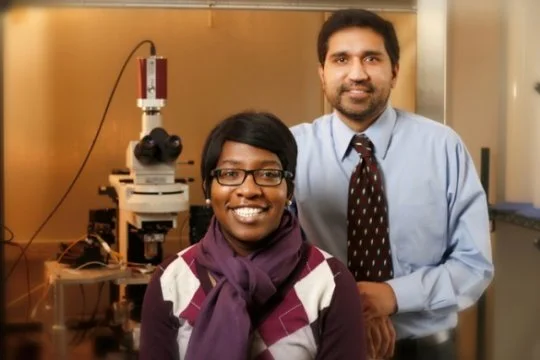
Sachin Patel, M.D., Ph.D., right, Teniel Ramikie, and colleagues found cannabinoid receptors in a part of the brain involved in regulating anxiety. Credit: Joe Howell
March 6, 2014
Science Daily/Vanderbilt University Medical Center
An international group led by Vanderbilt University researchers has found c, through which marijuana exerts its effects, in a key emotional hub in the brain involved in regulating anxiety and the flight-or-fight response.
This is the first time cannabinoid receptors have been identified in the central nucleus of the amygdala in a mouse model, they report in the current issue of the journal Neuron.
The discovery may help explain why marijuana users say they take the drug mainly to reduce anxiety, said Sachin Patel, M.D., Ph.D., the paper's senior author and professor of Psychiatry and of Molecular Physiology and Biophysics.
Led by first author Teniel Ramikie, a graduate student in Patel's lab, the researchers also showed for the first time how nerve cells in this part of the brain make and release their own natural "endocannabinoids."
The study "could be highly important for understanding how cannabis exerts its behavioral effects," Patel said. As the legalization of marijuana spreads across the country, more people -- and especially young people whose brains are still developing -- are being exposed to the drug.
Previous studies at Vanderbilt and elsewhere, Patel said, have suggested the following:
· The natural endocannabinoid system regulates anxiety and the response to stress by dampening excitatory signals that involve the neurotransmitter glutamate.
· Chronic stress or acute, severe emotional trauma can cause a reduction in both the production of endocannabinoids and the responsiveness of the receptors. Without their "buffering" effect, anxiety goes up.
· While marijuana's "exogenous" cannabinoids also can reduce anxiety, chronic use of the drug down-regulates the receptors, paradoxically increasing anxiety. This can trigger "a vicious cycle" of increasing marijuana use that in some cases leads to addiction.
In the current study, the researchers used high-affinity antibodies to "label" the cannabinoid receptors so they could be seen using various microscopy techniques, including electron microscopy, which allowed very detailed visualization at individual synapses, or gaps between nerve cells.
"We know where the receptors are, we know their function, we know how these neurons make their own cannabinoids," Patel said. "Now can we see how that system is affected by … stress and chronic (marijuana) use? It might fundamentally change our understanding of cellular communication in the amygdala."
https://www.sciencedaily.com/releases/2014/03/140306142803.htm
Hempseed oil packed with health-promoting compounds
Oil from non-drug varieties of hempseeds are full of health-promoting compounds. Credit: American Chemical Society
January 29, 2014
Science Daily/American Chemical Society
Long stigmatized because of its "high"-inducing cousins, hemp -- derived from low-hallucinogenic varieties of cannabis -- is making a comeback, not just as a source of fiber for textiles, but also as a crop packed with oils that have potential health benefits. A new study, which appears in ACS' Journal of Agricultural and Food Chemistry, details just how many healthful compounds hempseed oil contains.
Maria Angeles Fernández-Arche and colleagues note that for millennia, people around the world cultivated cannabis for textiles, medicine and food. Hemp has high levels of vitamins A, C and E and beta carotene, and it is rich in protein, carbohydrates, minerals and fiber. In the early 20th century, many countries banned cannabis because some varieties contain large amounts of the high-inducing compound THC. And although Colorado recently legalized recreational marijuana use -- and some states have passed medical marijuana laws -- the drug remains illegal according to U.S. federal law. But the European Union has legalized growing low-THC versions of hemp, and it's making its way back into fabrics and paper. With increasing interest in plant oils as a source of healthful compounds, Fernández-Arche's team wanted to investigate hempseed oil's potential.
They did a detailed analysis of a portion of hempseed oil. They found it has a variety of interesting substances, such as sterols, aliphatic alcohols and linolenic acids, that research suggests promote good health. For example, it contains α-linolenic acid, which is an omega-3 fatty acid that some studies suggest helps prevent coronary heart disease. The findings could have implications in the pharmaceutical, cosmetic, food and non-food industries, they state.
https://www.sciencedaily.com/releases/2014/01/140129115155.htm
Drugs related to cannabis have pain-relieving potential for osteoarthritis
January 7, 2014
Science Daily/University of Nottingham
Chemical compounds synthesized in the laboratory, similar to those found in cannabis, could be developed as potential drugs to reduce the pain of osteoarthritis.
These compounds could also reduce joint inflammation, according to new research carried out at the Arthritis Research UK Pain Centre at The University of Nottingham.
Cannabis contains a number of natural chemicals called cannabinoids and the brain has the ability to respond to such compounds. Cannabis and synthetically manufactured cannabinoid compounds can relieve pain in animal models of arthritis, but their use has been limited because of undesirable psychological side-effects.
Now a team of researchers led by Professor Victoria Chapman at the Arthritis Research UK Pain Centre at The University of Nottingham have shown that selectively targeting one of the molecules involved in the body's natural pain-sensing pathways, called cannabinoid receptor2 (CB2) can also reduce pain in animal models of osteoarthritis. This works in part through the central nervous system (spinal cord and brain). The compound used in this study, called JWH133, is a synthetic cannabinoid molecule manufactured in a laboratory and is not derived from the cannabis plant.
When the research was extended to humans, studies of the human spinal cord tissue showed for the first time the presence of this receptor and, interestingly, that the amount of receptor was related to the severity of the osteoarthritis. This provides evidence from patients that this drug target may have clinical relevance to osteoarthritis pain.
Cannabinoids are known to have anti-inflammatory effects, and the team have demonstrated that JWH133 reduced the levels of inflammation in their studies of osteoarthritis. Thus, cannabinoid CB2 targeted drugs may have a dual beneficial effect for people with osteoarthritis by providing pain relief as well as reducing inflammation in the joint.
Their findings are published online in the journal PLOS One.
Victoria Chapman, Professor of Neuropharmacology, said: "This finding is significant, as spinal and brain pain signalling pathways are known to make a major contribution to pain associated with osteoarthritis. These new data support the further evaluation of the selective cannabinoid-based interventions for the treatment of osteoarthritis pain."
Professor Alan Silman, medical director of Arthritis Research UK, added: "Millions of people are living with the severe, debilitating pain caused by osteoarthritis, and better pain relief is urgently needed. This research does not support the use of recreational cannabis use. What it does suggest is that there is potential to develop a synthetic drug that mimics the behavior of cannabinoid receptors without causing serious side effects."
Osteoarthritis affects eight million people the UK and occurs when the cartilage at the ends of bones wears away, causing joint pain and stiffness, and is a major cause of pain and disability. Current treatment is limited to pain relief, exercise, physiotherapy weight-loss and joint replacement. There are currently no drugs that slow down its progression, and more effective treatment is urgently needed.
https://www.sciencedaily.com/releases/2014/01/140107092825.htm
Molecule discovered that protects brain from cannabis intoxication
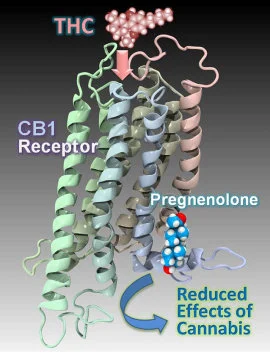
The main active ingredient in cannabis, THC, acts on the brain through CB1 cannabinoid receptors located in the neurons. THC binds to these receptors diverting them from their physiological roles, such as regulating food intake, metabolism, cognitive processes and pleasure. When THC overstimulates CB1 receptors, it triggers a reduction in memory abilities, motivation and gradually leads to dependence. Credit: © Derek Shore, Pier Vincenzo Piazza and Patricia Reggio
January 2, 2014
Science Daily/INSERM (Institut national de la santé et de la recherche médicale)
Two INSERM research teams recently discovered that pregnenolone, a molecule produced by the brain, acts as a natural defense mechanism against the harmful effects of cannabis in animals. Pregnenolone prevents THC, the main active principle in cannabis, from fully activating its brain receptor, the CB1 receptor, that when overstimulated by THC causes the intoxicating effects of cannabis. By identifying this mechanism, the INSERM teams are already developing new approaches for the treatment of cannabis addiction.
These results are to be published in Science on 3 January.
Over 20 million people around the world are addicted to cannabis, including a little more than a half million people in France. In the last few years, cannabis addiction has become one of the main reasons for seeking treatment in addiction clinics. Cannabis consumption is particularly high (30%) in individuals between 16 to 24 years old, a population that is especially susceptible to the harmful effects of the drug.
While cannabis consumers are seeking a state of relaxation, well-being and altered perception, there are many dangers associated to a regular consumption of cannabis. Two major behavioural problems are associated with regular cannabis use in humans: cognitive deficits and a general loss of motivation. Thus, in addition to being extremely dependent on the drug, regular users of cannabis show signs of memory loss and a lack of motivation that make quite hard their social insertion.
The main active ingredient in cannabis, THC, acts on the brain through CB1 cannabinoid receptors located in the neurons. THC binds to these receptors diverting them from their physiological roles, such as regulating food intake, metabolism, cognitive processes and pleasure. When THC overstimulates CB1 receptors, it triggers a reduction in memory abilities, motivation and gradually leads to dependence.
Increase of dopamine release
Developing an efficient treatment for cannabis addiction is becoming a priority of research in the fiend of drug addiction.
In this context, the INSERM teams led by Pier Vincenzo Piazza and Giovanni Marsicano have investigated the potential role of pregnenolone a brain produced steroid hormone. Up to now, pregnenolone was considered the inactive precursor used to synthesize all the other steroid hormones (progesterone, estrogens, testosterone, etc.). The INSERM researchers have now discovered that pregnenolone has quite an important functional role: it provide a natural defence mechanism that can protect the brain from the harmful effects of cannabis.
Essentially, when high doses of THC (well above those inhaled by regular users) activate the CB1 cannabinoid receptor they also trigger the synthesis of pregnenolone. Pregnenole then binds to a specific site on the same CB1 receptors and reducing the effects of THC.
The administration of pregnenolone at doses that increase the brain's level of this hormone even more, antagonize the behavioral effects of cannabis.
At the neurobiological level, pregnenolone greatly reduces the release of dopamine triggered by THC. This is an important effect, since the addictive effects of drugs involve an excessive release of dopamine.
This negative feedback mediated by pregnenolone (THC is what triggers the production of pregnenolone, which then inhibits the effects of THC) reveal a previously unknown endogenous mechanism that protects the brain from an over-activation of CB1 receptor.
A protective mechanism that opens the doors to a new therapeutic approach.
The role of pregnenolone was discovered when, rats were given equivalent doses of cocaine, morphine, nicotine, alcohol and cannabis and the levels of several brain steroids (pregnenolone, testosterone, allopregnenolone, DHEA etc..) were measured. It was then found that only one drug, THC, increased brain steroids and more specifically selectively one steroid, pregnenolone, that went up3000% for a period of two hours.
The effect of administering THC on the pregnenolone synthesis (PREG) and other brain steroids
This increase in pregnenolone is a built-in mechanism that moderates the effects of THC. Thus, the effects of THC increase when pregnenolone synthesis is blocked. Conversely, when pregnenolone is administered to rats or mice at doses (2-6 mg/kg) that induce even greater concentrations of the hormone in the brain, the negative behavioural effects of THC are blocked. For example, the animals that were given pregnenolone recover their normal memory abilities, are less sedated and less incline to self-administer cannabinoids.
Experiments conducted in cell cultures that express the human CB1 receptor confirm that pregnenolone can also counteract the molecular action of THC in humans.
Pier Vincenzo Piazza explains that pregnenolone itself cannot be used as a treatment "Pregnenolone cannot be used as a treatment because it is badly absorbed when administerd orally and once in the blood stream it is rapidly transformed in other steroids."
However, the researcher says that there is strong hope of seeing a new addiction therapy emerge from this discovery. "We have now developed derivatives of pregnenolone that are well absorbed and stable. They then present the characteristics of compounds that can be used as new class of therapeutic drugs. We should be able to begin clinical trials soon and verify whether we have indeed discovered the first pharmacological treatment for cannabis dependence."
https://www.sciencedaily.com/releases/2014/01/140102142012.htm
Scientists discover potential new way to treat anxiety
August 4, 2013
Science Daily/Vanderbilt University Medical Center
Chemically modified inhibitors of the COX-2 enzyme relieve anxiety behaviors in mice by activating natural "endocannabinoids" without gastrointestinal side effects, Vanderbilt University scientists will report next week.
Endocannabinoids are natural signaling molecules that activate cannabinoid receptors in the brain, the same receptors turned on by the active ingredient in marijuana.
These receptors are also found in the gastrointestinal system and elsewhere in the body, and there is evidence that they play a role in wide range of physiological and pathological processes, in addition to modulating stress and anxiety.
If the "substrate-selective" COX-2 inhibitors developed at Vanderbilt also work in humans without side effects, they could represent a new approach to treating mood and anxiety disorders, the researchers conclude in a paper to be posted online Sunday in the journal Nature Neuroscience.
Clinical trials of some of these potential drugs could begin in the next several years, said Lawrence Marnett, Ph.D., director of the Vanderbilt Institute of Chemical Biology and the paper's co-senior author with Sachin Patel, M.D., Ph.D.
The Vanderbilt scientists are pursuing other potential applications of activating endocannabinoids by substrate-selective COX-2 inhibition, including relieving pain, treating movement disorders, and possibly preventing colon cancer.
"The door is really wide open," said Patel, assistant professor of Psychiatry and of Molecular Physiology & Biophysics. "We've just scratched the surface."
Aspirin and other non-steroidal anti-inflammatory drugs (NSAIDs) relieve pain and inflammation by blocking either or both of the cyclooxygenase (COX) enzymes, which produce pro-inflammatory prostaglandins.
It has been known for several years that COX-2 inhibition also activates endocannabinoids.
Because the "substrate selective" inhibitors developed at Vanderbilt increase endocannabinoid levels in the mouse without blocking prostaglandin production, "we think (they) will not have the gastrointestinal and possibly cardiovascular side effects that other NSAIDs do," said Marnett, University Professor and Mary Geddes Stahlman Professor of Cancer Research.
"We thought we knew everything there was to know about (COX-2 inhibitors) until about five years ago when we discovered the substrate selective inhibition," he added. The approach used by the Vanderbilt team "is a really powerful way to help design the next generation of drugs."
https://www.sciencedaily.com/releases/2013/08/130804144523.htm
Cannabis constituent has no effect on multiple sclerosis progression
July 23, 2013
Science Daily/University of Plymouth
The first large non-commercial clinical study to investigate whether the main active constituent of cannabis (tetrahydrocannabinol or THC) is effective in slowing the course of progressive multiple sclerosis (MS), shows that there is no evidence to suggest this; although benefits were noted for those at the lower end of the disability scale.
The study is published in The Lancet Neurology.
The CUPID (Cannabinoid Use in Progressive Inflammatory brain Disease) study was carried out by researchers from Plymouth University Peninsula Schools of Medicine and Dentistry. The study was funded by the Medical Research Council (MRC), the Multiple Sclerosis Society and the Multiple Sclerosis Trust, and managed by the National Institute for Health Research (NIHR) on behalf of the MRC-NIHR partnership.
CUPID enrolled nearly 500 people with MS from 27 centres around the UK, and has taken eight years to complete. People with progressive MS were randomised to receive either THC capsules or identical placebo capsules for three years, and were carefully followed to see how their MS changed over this period. The two main outcomes of the trial were a disability scale administered by neurologists (the Expanded Disability Status Scale), and a patient report scale of the impact of MS on people with the condition (the Multiple Sclerosis Impact Scale 29).
Overall the study found no evidence to support an effect of THC on MS progression in either of the main outcomes. However, there was some evidence to suggest a beneficial effect in participants who were at the lower end of the disability scale at the time of enrolment but, as the benefit was only found in a small group of people rather than the whole population, further studies will be needed to assess the robustness of this finding.
One of the other findings of the trial was that MS in the study population as a whole progressed slowly, more slowly than expected. This makes it more challenging to find a treatment effect when the aim of the treatment is to slow progression.
As well as evaluating the potential neuroprotective effects and safety of THC over the long-term, one of the aims of the CUPID study was to improve the way that clinical trial research is done, by exploring newer methods of measuring MS and using the latest statistical methods to make the most of every piece of information collected. This analysis continued for several months and has provided important information about conducting further large scale clinical trials in MS.
Professor John Zajicek, Professor of Clinical Neuroscience at Plymouth University Peninsula Schools of Medicine and Dentistry, said: "To put this study into context: current treatments for MS are limited, either being targeted at the immune system in the early stages of the disease or aimed at easing specific symptoms such as muscle spasms, fatigue or bladder problems. At present there is no treatment available to slow MS when it becomes progressive. Progression of MS is thought to be due to death of nerve cells, and researchers around the world are desperately searching for treatments that may be 'neuroprotective'. Laboratory experiments have suggested that certain cannabis derivatives may be neuroprotective."
He added: "Overall our research has not supported laboratory based findings and shown that, although there is a suggestion of benefit to those at the lower end of the disability scale when they joined CUPID, there is little evidence to suggest that THC has a long term impact on the slowing of progressive MS."
https://www.sciencedaily.com/releases/2013/07/130723113703.htm
Brain makes its own version of Valium
May 30, 2013
Science Daily/Stanford University Medical Center
Researchers at the Stanford University School of Medicine have found that a naturally occurring protein secreted only in discrete areas of the mammalian brain may act as a Valium-like brake on certain types of epileptic seizures.
The protein is known as diazepam binding inhibitor, or DBI. It calms the rhythms of a key brain circuit and so could prove valuable in developing novel, less side-effect-prone therapies not only for epilepsy but possibly for anxiety and sleep disorders, too. The researchers' discoveries will be published May 30 in Neuron.
"This is one of the most exciting findings we have had in many years," said John Huguenard, PhD, professor of neurology and neurological sciences and the study's senior author. "Our results show for the first time that a nucleus deep in the middle of the brain generates a small protein product, or peptide, that acts just like benzodiazepines." This drug class includes not only the anti-anxiety compound Valium (generic name diazepam), first marketed in 1965, but its predecessor Librium, discovered in 1955, and the more recently developed sleep aid Halcyon.
Valium, which is notoriously addictive, prone to abuse and dangerous at high doses, was an early drug treatment for epilepsy, but it has fallen out of use for this purpose because its efficacy quickly wears off and because newer, better anti-epileptic drugs have come along.
For decades, DBI has also been known to researchers under a different name: ACBP. In fact, it is found in every cell of the body, where it is an intracellular transporter of a metabolite called acyl-CoA. "But in a very specific and very important brain circuit that we've been studying for many years, DBI not only leaves the cells that made it but is -- or undergoes further processing to become -- a natural anti-epileptic compound," Huguenard said. "In this circuit, DBI or one of its peptide fragments acts just like Valium biochemically and produces the same neurological effect."
Other endogenous (internally produced) substances have been shown to cause effects similar to psychoactive drugs. In 1974, endogenous proteins called endorphins, with biochemical activity and painkilling properties similar to that of opiates, were isolated. A more recently identified set of substances, the endocannabinoids, mimic the memory-, appetite- and analgesia-regulating actions of the psychoactive components of cannabis, or marijuana.
DBI binds to receptors that sit on nerve-cell surfaces and are responsive to a tiny but important chemical messenger, or neurotransmitter, called GABA. The roughly one-fifth of all nerve cells in the brain that are inhibitory mainly do their job by secreting GABA, which binds to receptors on nearby nerve cells, rendering those cells temporarily unable to fire any electrical signals of their own.
Benzodiazepine drugs enhance GABA-induced inhibition by binding to a different site on GABA receptors from the one GABA binds to. That changes the receptor's shape, making it hyper-responsive to GABA. These receptors come in many different types and subtypes, not all of which are responsive to benzodiazepines. DBI binds to the same spot to which benzodiazepines bind on benzodiazepine-responsive GABA receptors. But until now, exactly what this means has remained unclear.
Huguenard, along with postdoctoral scholar and lead author Catherine Christian, PhD, and several Stanford colleagues zeroed in on DBI's function in the thalamus, a deep-brain structure that serves as a relay station for sensory information, and which previous studies in the Huguenard lab have implicated on the initiation of seizures. The researchers used single-nerve-cell-recording techniques to show that within a GABA-secreting nerve-cell cluster called the thalamic reticular nucleus, DBI has the same inhibition-boosting effect on benzodiazepine-responsive GABA receptors as do benzodiazepines. Using bioengineered mice in which those receptors' benzodiazepine-binding site was defective, they showed that DBI lost its effect, which Huguenard and Christian suggested makes these mice seizure-prone.
In another seizure-prone mouse strain in which that site is intact but the gene for DBI is missing, the scientists saw diminished inhibitory activity on the part of benzodiazepine-responsive GABA receptors. Re-introducing the DBI gene to the brains of these mice via a sophisticated laboratory technique restored the strength of the GABA-induced inhibition. In normal mice, a compound known to block the benzodiazepine-binding site weakened these same receptors' inhibitory activity in the thalamic reticular nucleus, even in the absence of any administered benzodiazepines. This suggested that some naturally occurring benzodiazepine-like substance was being displaced from the benzodiazepine-binding site by the drug. In DBI-gene-lacking mice, the blocking agent had no effect at all.
Huguenard's team also showed that DBI has the same inhibition-enhancing effect on nerve cells in an adjacent thalamic region -- but also that, importantly, no DBI is naturally generated in or near this region; in the corticothalamic circuit, at least, DBI appears to be released only in the thalamic reticular nucleus. So, the actions of DBI on GABA receptors appear to be tightly controlled to occur only in specific brain areas.
Huguenard doesn't know yet whether it is DBI per se, or one of its peptide fragments (and if so which one), that is exerting the active inhibitory role. But, he said, by finding out exactly which cells are releasing DBI under what biochemical circumstances, it may someday be possible to develop agents that could jump-start and boost its activity in epileptic patients at the very onset of seizures, effectively nipping them in the bud.
https://www.sciencedaily.com/releases/2013/05/130530132429.htm
Youth who have their first drink during puberty have higher levels of later drinking
May 18, 2013
Science Daily/Alcoholism: Clinical & Experimental Research
Research shows that the earlier the age at which youth take their first alcoholic drink, the greater the risk of developing alcohol problems. Thus, age at first drink (AFD) is generally considered a powerful predictor of progression to alcohol-related harm. A new study shows that individuals who have their first drink during puberty subsequently have higher drinking levels than do individuals with a post-pubertal drinking onset.
Results will be published in the October 2013 issue of Alcoholism: Clinical & Experimental Research and are currently available at Early View.
"Most teenagers have their first alcoholic drink during puberty, however, most research on the risks of early-onset alcohol use up to now has not focused on the pubertal stage during which the first alcoholic drink is consumed," said Miriam Schneider, leader of the Research Group Developmental Neuropsychopharmacology at the Central Institute of Mental Health, University of Heidelberg, as well as corresponding author for the study. "Common thinking in alcohol research was that the earlier adolescents begin, the more deleterious become their drinking habits. However, a closer look at the statistics revealed a peak risk of alcohol use disorders for those beginning at 12 to 14 years of age, while even earlier beginners seemed to have a slightly lower risk. Since timing of puberty is not a simple function of chronological age, and also greatly differs between the sexes, the pubertal phase at first drink may therefore represent a stronger and better indicator for subsequent alcohol-related problems than simply the age."
"Usually this type of research has to be done retrospectively, and those studies are not very reliable," added Rainer Spanagel, head of the Institute of Psychopharmacology at the University of Heidelberg. "Prospective longitudinal studies like the one here … are able to provide reliable conclusions on such a clinically and highly relevant research question. Alternatively, animal studies can be very informative -- and which the researchers have also provided."
"Adolescents have their first drink at very different ages," explained Schneider. "It would be unethical to make adolescents have their first drink in the course of a study, so this variable requires a longitudinal epidemiological study or experimental animal research to assess drinking behavior. Also, the determination of the pubertal stage at AFD is not trivial; even our study had to rely on estimations. Third, it takes longitudinal studies to assess drinking data in early adulthood. Fourth, both drinking behavior and pubertal development can be traced back to common factors such as psychosocial adversity. Finally, while puberty and adolescence are overlapping time periods, with puberty being a part of adolescence, the terms cannot be used interchangeably. 'Puberty' refers to the time period during which sexual maturity is achieved. 'Adolescence' refers to the gradual period of behavioral and cognitive transition from childhood to adulthood, where adult behavioral abilities are acquired, and the boundaries of this period are not precisely defined. Girls complete puberty much earlier than boys, indicating a difference in timing of neurodevelopmental processes."
Schneider and her colleagues determined pubertal age at first drink in 283 young adults (152 females, 131 males) that were part of a larger epidemiological study. In addition, the participants' drinking behavior -- number of drinking days, amount of alcohol consumed, and hazardous drinking -- was assessed at ages 19, 22, and 23 years via interviews and questionnaires. Furthermore, a rodent study concurrently examined the effects of mid-puberty or adult alcohol exposure on voluntary alcohol consumption in later life by 20 male Wistar rats.
"Both studies revealed that those individuals that initiated alcohol consumption during puberty tended to drink more and also more frequently than those starting after puberty," said Schneider.
"In other words," said Spanagel, "this study indicates that the period of puberty might serve as a risk window for AFD. Results also show a higher Alcohol Use Disorders Identification Test (AUDIT) score later in life in those individuals who had their AFD in puberty. A higher AUDIT score is indicative of a high likelihood of hazardous or harmful alcohol consumption. This information is of great relevance for intervention programs. Even more interesting, neither pre-pubertal nor post-pubertal periods seem to serve as risk-time windows. Therefore, intervention programs should be directed selectively towards young people in puberty."
Both Schneider and Spanagel noted the influence of a high degree of brain development that occurs during puberty.
"Numerous neurodevelopmental alterations are taking place during puberty, such as maturational processes in cortical and limbic regions, which are characterized by both progressive and regressive changes such as myelination and synaptic pruning," said Schneider. "Typically, an overproduction of axons and synapses can be found during early puberty, followed by rapid pruning during later puberty, indicating that connections and communication between subcortical and cortical regions are in a highly transitional state during this period."
"Puberty is a phase in which the brain reward system undergoes major functional changes," said Spanagel. "For example, the endocannabinoid and dopamine systems are at their peak and these major neurobiological changes are reflected on the behavioral level; reward sensitivity is highest during puberty. Therefore, during puberty the brain is in a highly vulnerable state for any kind of reward, and drug rewards in particular. This high vulnerability might also affect reward seeking, or in this particular case, alcohol seeking and drinking behavior later in life."
"In summary," said Schneider, "puberty is a very critical developmental period due to ongoing neurodevelopmental processes in the brain. It is exactly during puberty that substances like drugs of abuse -- alcohol, cannabis, etc. -- may induce the most destructive and also persistent effects on the still developing brain, which may in some cases even result in neuropsychiatric disorders, such as schizophrenia or addictive disorders. Prevention work therefore needs to increase awareness of specific risks and vulnerability related to puberty."
https://www.sciencedaily.com/releases/2013/05/130518153740.htm
Marijuana users have better blood sugar control
May 15, 2013
Science Daily/Elsevier
Regular marijuana use is associated with favorable indices related to diabetic control, say investigators. They found that current marijuana users had significantly lower fasting insulin and were less likely to be insulin resistant, even after excluding patients with a diagnosis of diabetes mellitus. Their findings are reported in the current issue of The American Journal of Medicine.
Marijuana (Cannabis sativa) has been used for centuries to relieve pain, improve mood, and increase appetite. Outlawed in the United States in 1937, its social use continues to increase and public opinion is swinging in favor of the medicinal use of marijuana. There are an estimated 17.4 million current users of marijuana in the United States. Approximately 4.6 million of these users smoke marijuana daily or almost daily. A synthetic form of its active ingredient, tetrahydrocannabinol, commonly known as THC, has already been approved to treat side-effects of chemotherapy, AIDS-induced anorexia, nausea, and other medical conditions. With the recent legalization of recreational marijuana in two states and the legalization of medical marijuana in 19 states and the District of Columbia, physicians will increasingly encounter marijuana use among their patient populations.
A multicenter research team analyzed data obtained during the National Health and Nutrition Survey (NHANES) between 2005 and 2010. They studied data from 4,657 patients who completed a drug use questionnaire. Of these, 579 were current marijuana users, 1,975 had used marijuana in the past but were not current users, and 2,103 had never inhaled or ingested marijuana. Fasting insulin and glucose were measured via blood samples following a nine hour fast, and homeostasis model assessment of insulin resistance (HOMA-IR) was calculated to evaluate insulin resistance.
Participants who reported using marijuana in the past month had lower levels of fasting insulin and HOMA-IR and higher levels of high-density lipoprotein cholesterol (HDL-C). These associations were weaker among those who reported using marijuana at least once, but not in the past thirty days, suggesting that the impact of marijuana use on insulin and insulin resistance exists during periods of recent use. Current users had 16% lower fasting insulin levels than participants who reported never having used marijuana in their lifetimes.
Large waist circumference is linked to diabetes risk. In the current study there were also significant associations between marijuana use and smaller waist circumferences.
"Previous epidemiologic studies have found lower prevalence rates of obesity and diabetes mellitus in marijuana users compared to people who have never used marijuana, suggesting a relationship between cannabinoids and peripheral metabolic processes, but ours is the first study to investigate the relationship between marijuana use and fasting insulin, glucose, and insulin resistance," says lead investigator Murray A. Mittleman, MD, DrPH, of the Cardiovascular Epidemiology Research Unit at the Beth Israel Deaconess Medical Center, Boston.
"It is possible that the inverse association in fasting insulin levels and insulin resistance seen among current marijuana users could be in part due to changes in usage patterns among those with a diagnosis of diabetes (i.e., those with diabetes may have been told to cease smoking). However, after we excluded those subjects with a diagnosis of diabetes mellitus, the associations between marijuana use and insulin levels, HOMA-IR, waist circumference, and HDL-C were similar and remained statistically significant," states Elizabeth Penner, MD, MPH, an author of the study.
Although people who smoke marijuana have higher average caloric intake levels than non-users, marijuana use has been associated with lower body-mass index (BMI) in two previous surveys. "The mechanisms underlying this paradox have not been determined and the impact of regular marijuana use on insulin resistance and cardiometabolic risk factors remains unknown," says coauthor Hannah Buettner.
The investigators acknowledge that data on marijuana use were self-reported and may be subject to underestimation or denial of illicit drug use. However, they point out, underestimation of drug use would likely yield results biased toward observing no association.
Editor-in-Chief Joseph S. Alpert, MD, Professor of Medicine at the University of Arizona College of Medicine, Tucson, comments, "These are indeed remarkable observations that are supported, as the authors note, by basic science experiments that came to similar conclusions.
"We desperately need a great deal more basic and clinical research into the short- and long-term effects of marijuana in a variety of clinical settings such as cancer, diabetes, and frailty of the elderly," continues Alpert." I would like to call on the NIH and the DEA to collaborate in developing policies to implement solid scientific investigations that would lead to information assisting physicians in the proper use and prescription of THC in its synthetic or herbal form."
https://www.sciencedaily.com/releases/2013/05/130515085208.htm
Brain-imaging study links cannabinoid receptors to post-traumatic stress disorder: First pharmaceutical treatment for PTSD within reach
May 14, 2013
Science Daily/NYU Langone Medical Center
In a first-of-its-kind effort to illuminate the biochemical impact of trauma, researchers at NYU Langone Medical Center have discovered a connection between the quantity of cannabinoid receptors in the human brain, known as CB1 receptors, and post-traumatic stress disorder, the chronic, disabling condition that can plague trauma victims with flashbacks, nightmares and emotional instability.
Their findings, which appear online today in the journal Molecular Psychiatry, will also be presented this week at the annual meeting of the Society of Biological Psychiatry in San Francisco.
CB1 receptors are part of the endocannabinoid system, a diffuse network of chemicals and signaling pathways in the body that plays a role in memory formation, appetite, pain tolerance and mood. Animal studies have shown that psychoactive chemicals such as cannabis, along with certain neurotransmitters produced naturally in the body, can impair memory and reduce anxiety when they activate CB1 receptors in the brain. Lead author Alexander Neumeister, MD, director of the molecular imaging program in the Departments of Psychiatry and Radiology at NYU School of Medicine, and colleagues are the first to demonstrate through brain imaging that people with PTSD have markedly lower concentrations of at least one of these neurotransmitters -- an endocannabinoid known as anandamide -- than people without PTSD. Their study, which was supported by three grants from the National Institutes of Health, illuminates an important biological fingerprint of PTSD that could help improve the accuracy of PTSD diagnoses, and points the way to medications designed specifically to treat trauma.
"There's not a single pharmacological treatment out there that has been developed specifically for PTSD," says Dr. Neumeister. "That's a problem. There's a consensus among clinicians that existing pharmaceutical treatments such as antidepressant simple do not work. In fact, we know very well that people with PTSD who use marijuana -- a potent cannabinoid -- often experience more relief from their symptoms than they do from antidepressants and other psychiatric medications. Clearly, there's a very urgent need to develop novel evidence-based treatments for PTSD."
The study divided 60 participants into three groups: participants with PTSD; participants with a history of trauma but no PTSD; and participants with no history of trauma or PTSD. Participants in all three groups received a harmless radioactive tracer that illuminates CB1 receptors when exposed to positron emissions tomography (PET scans). Results showed that participants with PTSD, especially women, had more CB1 receptors in brain regions associated with fear and anxiety than volunteers without PTSD. The PTSD group also had lower levels of the neurotransmitter anandamide, an endocannabinoid that binds to CB1. If anandamide levels are too low, Dr. Neumeister explains, the brain compensates by increasing the number of CB1 receptors. "This helps the brain utilize the remaining endocannabinoids," he says.
Much is still unknown about the effects of anandamide in humans but in rats the chemical has been shown to impair memory. "What is PTSD? It's an illness where people cannot forget what they have experienced," Dr. Neumeister says. "Our findings offer a possible biological explanation for this phenomenon."
Current diagnostics for PTSD rely on subjective measures and patient recall, making it difficult to accurately diagnose the condition or discern its symptoms from those of depression and anxiety. Biological markers of PTSD, such as tests for CB1 receptors and anandamide levels, could dramatically improve diagnosis and treatment for trauma victims.
Among the 1.7 million men and women who have served in the wars in Iraq and Afghanistan, an estimated 20% have PTSD. But PTSD is not limited to soldiers. Trauma from sexual abuse, domestic violence, car accidents, natural disaster, violent assault or even a life-threatening medical diagnosis can lead to PTSD. The condition affects nearly 8 million Americans annually.
These findings were made possible through the collaborative efforts of researchers at NYU School of Medicine, Yale School of Medicine, Harvard Medical School, the Department of Veterans Affairs National Center for PTSD and the University of California at Irvine.
https://www.sciencedaily.com/releases/2013/05/130514085016.htm
Synthetic derivatives of THC may weaken HIV-1 infection to enhance antiviral therapies
April 30, 2013
Science Daily/Federation of American Societies for Experimental Biology
A new use for compounds related in composition to the active ingredient in marijuana may be on the horizon: a new research report published in the Journal of Leukocyte Biology shows that compounds that stimulate the cannabinoid type 2 (CB2) receptor in white blood cells, specifically macrophages, appear to weaken HIV-1 infection. The CB2 receptor is the molecular link through which the pharmaceutical properties of cannabis are manifested. Diminishing HIV-1 infection in this manner might make current anti-viral therapies more effective and provide some protection against certain HIV-1 complications.
"The synthetic compounds we used in our study may show promise in helping the body fight HIV-1 infection,'" said Yuri Persidsky, M.D., Ph.D., a researcher involved in the work from the Department of Pathology and Laboratory Medicine at Temple University School of Medicine in Philadelphia, PA. "As compounds like these are improved further and made widely available, we will continue to explore their potential to fight other viral diseases that are notoriously difficult to treat."
To make this discovery, scientists used a cell culture model to infect human macrophages with HIV-1 and added synthetic compounds similar to the active ingredient in marijuana to activate the CB2 receptor. At different times during the infection, samples from the culture were taken to see if the replication of the HIV virus was decreased. The researchers observed diminished HIV growth and a possible protective effect from some HIV-1 complications.
"HIV/AIDS has posed one of the most significant health challenges in modern medicine," said John Wherry, Ph.D., Deputy Editor of the Journal of Leukocyte Biology. "Recent high profile vaccine failures mean that all options need to be on the table to prevent or treat this devastating infection. Research on the role of cannabinoid type 2 receptors and viral infection may one day allow targeting these receptors to be part of combination therapies that use exploit multiple weaknesses of the virus simultaneously."
https://www.sciencedaily.com/releases/2013/04/130430131530.htm
Key shift in brain that creates drive to overeat identified
April 29, 2013
Science Daily/Indiana University
A team of American and Italian neuroscientists has identified a cellular change in the brain that accompanies obesity. The findings could explain the body's tendency to maintain undesirable weight levels, rather than an ideal weight, and identify possible targets for pharmacological efforts to address obesity.
The findings, published in the Proceedings of the National Academy of Sciences Early Edition this week, identify a switch that occurs in neurons within the hypothalamus. The switch involves receptors that trigger or inhibit the release of the orexin A peptide, which stimulates the appetite, among other behaviors. In normal-weight mice, activation of this receptor decreases orexin A release. In obese mice, activation of this receptor stimulates orexin A release.
"The striking finding is that you have a massive shift of receptors from one set of nerve endings impinging on these neurons to another set," said Ken Mackie, professor in the Department of Psychological and Brain Sciences in the College of Arts and Sciences at IU Bloomington. "Before, activating this receptor inhibited the secretion of orexin; now it promotes it. This identifies potential targets where an intervention could influence obesity."
The work is part of a longstanding collaboration between Mackie's team at the Gill Center for Biomolecular Science at IU Bloomington and Vincenzo Di Marzo's team at the Institute of Biomolecular Chemistry in Pozzuoli, Italy. Both teams study the endocannabinoid system, which is composed of receptors and signaling chemicals that occur naturally in the brain and have similarities to the active ingredients in cannabis, or marijuana. This neurochemical system is involved in a variety of physiological processes, including appetite, pain, mood, stress responses and memory.
Food consumption is controlled in part by the hypothalamus, a portion of the brain that regulates many essential behaviors. Like other important body systems, food consumption is regulated by multiple neurochemical systems, including the endocannabinoid system, representing what Mackie describes as a "balance of a very fine web of regulatory networks."
An emerging idea, Mackie said, is that this network is reset during obesity so that food consumption matches maintenance of current weight, not a person's ideal weight. Thus, an obese individual who loses weight finds it difficult to keep the weight off, as the brain signals the body to eat more in an attempt to return to the heavier weight.
Using mice, this study found that in obesity, CB1 cannabinoid receptors become enriched on the nerve terminals that normally inhibit orexin neuron activity, and the orexin neurons produce more of the endocannabinoids to activate these receptors. Activating these CB1 receptors decreases inhibition of the orexin neurons, increasing orexin A release and food consumption.
"This study identifies a mechanism for the body's ongoing tendency to return to the heavier weight," Mackie said.
The researchers conducted several experiments with mice to understand how this change takes place. They uncovered a role of leptin, a key hormone made by fat cells that influences metabolism, hunger and food consumption. Obesity causes leptin levels to be chronically high, making brain cells less sensitive to its actions, which contributes to the molecular switch that leads to the overproduction of orexin.
https://www.sciencedaily.com/releases/2013/04/130429154214.htm
Mental illness linked to heavy cannabis use
April 2, 2013
Science Daily/Centre for Addiction and Mental Health
People with mental illnesses are more than seven times more likely to use cannabis weekly compared to people without a mental illness, according to researchers from the Centre for Addiction and Mental Health (CAMH) who studied U.S. data.
Cannabis is the most widely used illicit substance globally, with an estimated 203 million people reporting use. Although research has found links between cannabis use and mental illness, exact numbers and prevalence of problem cannabis use had not been investigated.
"We know that people with mental illness consume more cannabis, perhaps partially as a way to self- medicate psychiatric symptoms, but this data showed us the degree of the correlation between cannabis use, misuse, and mental illness," said Dr. Shaul Lev-ran, Adjunct Scientist at CAMH and Head of Addiction Medicine at the Sheba Medical Center, Israel.
"Based on the number of individuals reporting weekly use, we see that people with mental illness use cannabis at high rates. This can be of concern because it could worsen the symptoms of their mental illness," said Lev-ran, who conducted the research as a post-doctoral fellow with the Social Aetiology of Mental Illness (SAMI) Training Program at CAMH.
Researchers also found that individuals with mental illness were 10 times more likely to have a cannabis use disorder.
In this new study, published in the journal Comprehensive Psychiatry, CAMH researchers analyzed data from face-to-face interviews with over 43,000 respondents over the age of 18 from the National Epidemiologic Survey on Alcohol and Related Conditions. Using structured questionnaires, the researchers assessed cannabis use as well as various mental illnesses including depression, anxiety, drug and alcohol use disorders and personality disorders, based on criteria from the Diagnostic and Statistical Manual of Mental Disorders (DSM-IV).
Among those will mental illness reporting at least weekly cannabis use, rates of use were particularly elevated for those with bipolar disorder, personality disorders and other substance use disorders.
In total, 4.4 per cent of individuals with a mental illness in the past 12 months reported using cannabis weekly, compared to 0.6 per cent among individuals without any mental illness. Cannabis use disorders occurred among 4 per cent of those with mental illness versus 0.4 per cent among those without.
Researchers also noted that, although cannabis use is generally higher among younger people, the association between mental illness and cannabis use was pervasive across most age groups.
They emphasize the importance of screening for frequent and problem cannabis use among those with mental illness, so that targeted prevention and intervention may be employed.
This study was funded through the SAMI Training Program of the Canadian Institutes of Health Research (CIHR).
https://www.sciencedaily.com/releases/2013/04/130402124817.htm
How the brain suppresses pain during times of stress
March 6, 2013
Science Daily/National University of Ireland, Galway
New findings about how the brain functions to suppress pain have been published in the leading journal in the field Pain, by National University of Ireland Galway (NUI Galway) researchers. For the first time, it has been shown that suppression of pain during times of fear involves complex interplay between marijuana-like chemicals and other neurotransmitters in a brain region called the amygdala.
The work was carried out by Dr David Finn and his research team in Pharmacology and Therapeutics, Centre for Pain Research and Galway Neuroscience Centre at the National Centre for Biomedical Engineering Science, NUI Galway. The research builds on previous breakthrough findings from Dr Finn's research group on the role of marijuana-like chemicals in the brain's hippocampus in pain suppression during fear.
Pain is both a sensory and an emotional experience and is subject to modulation by a number of factors including fear and stress. During exposure to a high-stress environment or stimulus, pain transmission and perception can be potently suppressed. This important survival response can help us cope with or escape from potentially life-threatening situations. One brain region that is integral to the processing and expression of both emotional responses and pain is the amygdala.
Working with Dr Finn, first author Dr Kieran Rea was able to confirm the amygdala as a key brain region in the suppression of pain behaviour by fear (so-called fear-induced analgesia). Fear-induced analgesia was associated with increases in levels of marijuana-like substances known as endocannabinoids in the amygdala.
Furthermore, fear-induced analgesia was prevented by injecting a drug that blocked the receptor at which these endocannabinoids act into the amygdala. Further experimentation revealed that these effects involved an interaction between endocannabinoids and the classical neurotransmitters GABA (Gamma-amino butyric acid) and glutamate. An increased understanding of the biological mechanisms involved in fear-induced analgesia is important from a fundamental physiological perspective and may also advance the search for new therapeutic approaches to the treatment of pain.
Dr David Finn, Leader of the Galway Neuroscience Centre, Co-Director of the Centre for Pain Research at NUI Galway and study leader says: "The body can suppress pain when under extreme stress, in part through the action of marijuana-like substances produced in the brain. This research provides information on the complex interactions between multiple neurotransmitter systems including endocannabinoids, GABA and glutamate in times of stress and pain. This research which was funded by a grant from Science Foundation Ireland, advances our fundamental understanding of the neurobiology of pain and may facilitate the identification of new therapeutic targets for the treatment of pain and anxiety disorders."
https://www.sciencedaily.com/releases/2013/03/130306134014.htm
New study shows cannabis effects on driving skills
March 1, 2013
Science Daily/American Association for Clinical Chemistry (AACC)
New research appearing online today in Clinical Chemistry, the journal of AACC, shows that cannabis can be detected in the blood of daily smokers for a month after last intake. The scientific data in this paper by Bergamaschi et al. can provide real help in the public safety need for a drugged driving policy that reduces the number of drugged driving accidents on the road.
Cannabis is second only to alcohol for causing impaired driving and motor vehicle accidents. In 2009, 12.8% of young adults reported driving under the influence of illicit drugs and in the 2007 National Roadside Survey, more drivers tested positive for drugs than for alcohol. These cannabis smokers had a 10-fold increase in car crash injury compared with infrequent or nonusers after adjustment for blood alcohol concentration.
In this paper, 30 male chronic daily cannabis smokers resided on a secure research unit for up to 33 days, with daily blood collection. Twenty-seven of 30 participants were THC-positive on admission, with a median (range) concentration of 1.4 µg/L (0.3-6.3). THC decreased gradually with only 1 of 11 participants negative at 26 days; 2 of 5 remained THC-positive (0.3 µg/L) for 30 days.
These results demonstrate, for the first time, that cannabinoids can be detected in blood of chronic daily cannabis smokers during a month of sustained abstinence. This is consistent with the time course of persisting neurocognitive impairment reported in recent studies and suggests that establishment of 'per se' THC legislation might achieve a reduction in motor vehicle injuries and deaths. This same type of 'per se' alcohol legislation improved prosecution of drunk drivers and dramatically reduced alcohol-related deaths.
"These data have never been obtained previously due to the cost and difficulty of studying chronic daily cannabis smoking over an extended period," said Dr. Marylin Huestis of the National Institutes of Health and author on the paper. "These data add critical information to the debate about the toxicity of chronic daily cannabis smoking."
https://www.sciencedaily.com/releases/2013/03/130301122256.htm
Activation of cortical type 2 cannabinoid receptors ameliorates ischemic brain injury
February 21, 2013
Science Daily/Elsevier
A new study published in the March issue of The American Journal of Pathology suggests that cortical type 2 cannabinoid (CB2) receptors might serve as potential therapeutic targets for cerebral ischemia.
Researchers found that the cannabinoid trans-caryophyllene (TC) protected brain cells from the effects of ischemia in both in vivo and in vitro animal models. In rats, post-ischemic treatment with TC decreased cerebral infarct size and edema. In cell cultures composed of rat cortical neurons and glia exposed to oxygen-glucose deprivation and reoxygenation (OGD/R), TC decreased neuronal injury and mitochondrial depolarization, specifically through type 2 cannabinoid receptor (CB2R) pathways.
"To our knowledge, novel data presented in this study provide evidence for the first time supporting a previously unappreciated role of cortical CB2R, especially neuronal CB2Rs, in ischemia," says lead investigator Won-Ki Kim, PhD, of the Department of Neuroscience, College of Medicine, Korea University in Seoul. "This study suggests that further investigation is warranted to establish the clinical usefulness of TC as a preventative and therapeutic agent for treatment of stroke."
Results presented in the study shed light on the anatomy and mechanism of action of CB2R-mediated neuroprotection. In the in vivo study, which was performed in rats, the right middle cerebral artery was occluded for 1.5 hours to mimic an ischemic stroke; blood flow was allowed to return for the next 24 hours. Three hours after the occlusion began, the animals were treated with TC; some animals also received AM630, a CB2R antagonist. The next day, the brains were removed, and the volume of the infarct and extent of cerebral edema were measured.
Using immunocytochemistry, the investigators found evidence of CB2Rs in the cortex of both control and ischemic brains, mostly in cortical neurons but also to a lesser extent in some glial cells. This finding in itself is important because the question of whether CB2Rs are present in the cortex has long been a matter of debate, say the authors.
Post-ischemic treatment with TC reduced infarct size by 53.8% and reduced edema by 51.9%. However, co-administration of the CB2R antagonist AM630 completely blocked the protective effect of TC. Further analysis indicated that CB2R activation is involved in the ability of TC to induce cAMP responsive element-binding protein (CREB) phosphorylation and increase the expression of brain-derived neurotrophic factor (BDNF) in ischemic tissue.
Cell-culture studies of embryonic rat cortical neurons and glia exposed to OGD/R to simulate ischemic insult confirmed some of the findings of the in vivo studies and contributed to further understanding about cellular effects of ischemia and TC treatment. In the cultures, TC decreased neuronal injury, intracellular oxidative stress, and mitochondrial depolarization following OGD/R, and the effects were reversed by AM630 but not by a CB1R antagonist, AM251. Western blot analysis demonstrated that TC enhanced the phosphorylation of AMP protein kinase (AMPK) and CREB, while selective AMPK and CREB inhibitors blocked TC's neuroprotection. Other findings indicated that the anti-ischemic effect of TC was not mediated by NMDA receptor antagonism or antioxidant activity.
TC is a major cannabinoid derived from the essential oil of the flowering plant Cannabis sativa, but has a fundamentally different structure from classical cannabinoids. Unlike agents which activate CB1 receptors, selective CB2R receptor agonists do not have psychoactive side effects. TC appears to maintain CB2R agonist activity when administered orally and is a common ingredient found in many food additives and folk medicines. The intriguing results of the present study suggest that the anti-ischemic benefits of TC deserve further exploration.
https://www.sciencedaily.com/releases/2013/02/130221141140.htm