
Prenatal exposure to flame retardants linked to reading problems
January 10, 2020
Science Daily/Columbia University Irving Medical Center
A new study from researchers at Columbia University Vagelos College of Physicians and Surgeons suggests that prenatal exposure to flame retardants may increase the risk of reading problems.
The study was published in the January 2020 print edition of Environmental International.
An estimated 2 million children have learning disorders; of these, about 80% have a reading disorder. Genetics account for many, but not all, instances of reading disorders.
In the current study, the researchers hypothesized that in utero exposure to polybrominated diphenyl ethers (PBDEs) -- a type of flame retardant that is known to have adverse effects on brain development -- might alter the brain processes involved in reading. (While use of PBDEs has been banned, exposure to the compounds is still widespread because they do not degrade easily in the environment.)
The research team analyzed neuro-imaging data from 33 5-year-old children -- all novice readers -- who were first given a reading assessment to identify reading problems. They also used maternal blood samples, taken during pregnancy, to estimate prenatal exposure to PDBEs.
The researchers found that children with a better-functioning reading network had fewer reading problems. The also showed that children with greater exposure to PDBEs had a less efficient reading network.
However, greater exposure did not appear to affect the function of another brain network involved in social processing that has been associated with psychiatric disorders such as autism spectrum disorder.
"Since social processing problems are not a common aspect of reading disorders, our findings suggest that exposure to PDBEs doesn't affect the whole brain -- just the regions associated with reading," says Amy Margolis, PhD, assistant professor of medical psychology in the Department of Psychiatry at Columbia University Vagelos College of Physicians and Surgeons.
Although exposure to PDBEs affected reading network function in the 5-year-olds, it did not have an impact on word recognition in this group. The finding is consistent with a previous study, in which the effects of exposure to the compounds on reading were seen in older children but not in emergent readers. "Our findings suggest that the effects of exposure are present in the brain before we can detect changes in behavior," says Margolis. "Future studies should examine whether behavioral interventions at early ages can reduce the impact of these exposures on later emerging reading problems."
The paper is titled "Functional Connectivity of the Reading Network is Associated with Prenatal Polybrominated Diphenyl Ether Concentrations in a Community Sample of 5 Year-Old Children: A preliminary study."
https://www.sciencedaily.com/releases/2020/01/200110155258.htm
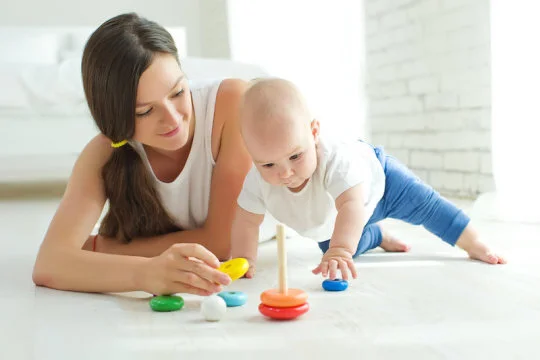
Baby and adult brains 'sync up' during play
Woman and baby playing (stock image). Credit: © nuzza11 / Adobe Stock
It's not your imagination -- you and your baby really are on the same wavelength
January 9, 2020
Science Daily/Princeton University
A team of researchers has conducted the first study of how baby and adult brains interact during natural play, and they found measurable connections in their neural activity. In other words, baby and adult brain activity rose and fell together as they shared toys and eye contact.
Have you ever played with a baby and felt a sense of connection, even though they couldn't yet talk to you? New research suggests that you might quite literally be "on the same wavelength," experiencing similar brain activity in the same brain regions.
A team of Princeton researchers has conducted the first study of how baby and adult brains interact during natural play, and they found measurable similarities in their neural activity. In other words, baby and adult brain activity rose and fell together as they shared toys and eye contact. The research was conducted at the Princeton Baby Lab, where University researchers study how babies learn to see, talk and understand the world.
"Previous research has shown that adults' brains sync up when they watch movies and listen to stories, but little is known about how this 'neural synchrony' develops in the first years of life," said Elise Piazza, an associate research scholar in the Princeton Neuroscience Institute (PNI) and the first author on a paper published Dec. 17, 2019, in Psychological Science.
Piazza and her co-authors -- Liat Hasenfratz, an associate research scholar in PNI; Uri Hasson, a professor of psychology and neuroscience; and Casey Lew-Williams, an associate professor of psychology -- posited that neural synchrony has important implications for social development and language learning.
Studying real-life, face-to-face communication between babies and adults is quite difficult. Most past studies of neural coupling, many of which were conducted in Hasson's lab, involved scanning adults' brains with functional magnetic resonance imaging (fMRI), in separate sessions, while the adults lay down and watched movies or listened to stories.
But to study real-time communication, the researchers needed to create a child-friendly method of recording brain activity simultaneously from baby and adult brains. With funding from the Eric and Wendy Schmidt Transformative Technology Grant, the researchers developed a new dual-brain neuroimaging system that uses functional near-infrared spectroscopy (fNIRS), which is highly safe and records oxygenation in the blood as a proxy for neural activity. The setup allowed the researchers to record the neural coordination between babies and an adult while they played with toys, sang songs and read a book.
The same adult interacted with all 42 infants and toddlers who participated in the study. Of those, 21 had to be excluded because they "squirmed excessively," and three others flat-out refused to wear the cap, leaving 18 children, ranging in age from 9 months to 15 months.
The experiment had two portions. In one, the adult experimenter spent five minutes interacting directly with a child -- playing with toys, singing nursery rhymes or reading Goodnight Moon -- while the child sat on their parent's lap. In the other, the experimenter turned to the side and told a story to another adult while the child played quietly with their parent.
The caps collected data from 57 channels of the brain known to be involved in prediction, language processing and understanding other people's perspectives.
When they looked at the data, the researchers found that during the face-to-face sessions, the babies' brains were synchronized with the adult's brain in several areas known to be involved in high-level understanding of the world -- perhaps helping the children decode the overall meaning of a story or analyze the motives of the adult reading to them.
When the adult and infant were turned away from each other and engaging with other people, the coupling between them disappeared.
That fit with researchers' expectations, but the data also had surprises in store. For example, the strongest coupling occurred in the prefrontal cortex, which is involved in learning, planning and executive functioning and was previously thought to be quite underdeveloped during infancy.
"We were also surprised to find that the infant brain was often 'leading' the adult brain by a few seconds, suggesting that babies do not just passively receive input but may guide adults toward the next thing they're going to focus on: which toy to pick up, which words to say," said Lew-Williams, who is a co-director of the Princeton Baby Lab.
"While communicating, the adult and child seem to form a feedback loop," Piazza added. "That is, the adult's brain seemed to predict when the infants would smile, the infants' brains anticipated when the adult would use more 'baby talk,' and both brains tracked joint eye contact and joint attention to toys. So, when a baby and adult play together, their brains influence each other in dynamic ways."
This two-brain approach to neuroscience could open doors to understanding how coupling with caregivers breaks down in atypical development -- such as in children diagnosed with autism -- as well as how educators can optimize their teaching approaches to accommodate children's diverse brains.
The researchers are continuing to investigate how this neural coupling relates to preschoolers' early language learning.
https://www.sciencedaily.com/releases/2020/01/200109163956.htm
Parents aren't powerless when it comes to sleep-deprived teenagers
January 9, 2020
Science Daily/University of Rochester
Teenagers in the US simply don't get enough shut eye. The consequences of this epidemic of sleep deprivation are extensive and include increasing rates of anxiety and depression among adolescents, as well as suicidal thoughts and actions. Sleep-deprived teens are more likely to be involved in car crashes, and run a higher risk of injury during sports-related activities.
Experts have pointed to various reasons for the chronic teenage sleep deficit: growing homework loads, too many extra-curricular activities, caffeine consumption, school start times that run counter to middle and high schoolers' natural circadian rhythms, and the use of electronic devices and backlit screens, which may disrupt sleep patterns, before bedtime.
But researchers at the University of Rochester have found that a simple and timeworn solution yields solid results: a clear bedtime that parents consistently adhere to.
"Greater enforcement of parent-set bedtimes for teenagers aged 14-to-17 are associated with longer sleep duration," says Jack Peltz, lead author of a recent study, which was published in the academic journal Sleep. Peltz, now an assistant professor of psychology at Daemen College, earned his PhD in psychology at Rochester in 2013 and conducted the study as part of a research appointment at the University of Rochester Medical Center's Department of Psychiatry.
Study participants included teenagers and their parents. The team asked their teenage participants to keep twice-daily sleep diary entries over seven days, collecting reports of sleep duration, daytime energy levels, and depressive symptoms. Parents, meanwhile, provided information about their enforcement of sleep-related rules and bedtimes.
Among the key findings:
Parent-enforced bedtimes -- along with later school start times -- are the greatest predictors of sleep duration, daytime energy level, and depressive symptoms.
More than 50 percent of parent respondents reported no specific or enforced bedtime rules, consistent with rates measured in previous research across families in the US.
Evening screen time and caffeine consumption did not, contrary to the researchers' hypotheses, significantly affect teenagers' sleep duration over the course of the study.
In 2014, the American Academy of Pediatrics responded to the sleep deprivation epidemic by urging school districts to start classes no earlier than 8:30 am, especially for middle and high schoolers. But to date, only about 14 percent of US high schools have heeded the recommendation, which makes the rule-setting role of parents all the more important.
The researchers acknowledge that setting a bedtime for teenagers might be difficult; but their results suggest that even with pre-bedtime conflict, parents' enforcement of bedtimes yielded better mental health outcomes for their offspring. That said -- "ideally parents should be able to work collaboratively with their teenagers to develop bedtimes that still support the child's autonomy," says Peltz.
The bottom line, according to coauthor Ronald Rogge, an associate professor of psychology at Rochester, is that "even though adolescents start gaining self-sufficiency and independence, they still need sleep and might not prioritize that if left to their own devices."
Absent an iron-clad rule, there are nevertheless healthy ranges, says Heidi Connolly, a professor of pediatrics and chief of the Division of Pediatric Sleep Medicine at Rochester, who is also a coauthor of the study. Most teenagers need 8.5 to 9.5 hours of sleep each night, she says, mirroring recommendations made by the American Academy of Sleep Medicine and endorsed by the American Academy of Pediatrics.
As for an appropriate bedtime, that of course depends on the wake-up time. "It's inherently more difficult for teenagers to fall asleep earlier than later because of their circadian rhythm," says Connolly. "That's why it's so important for high school start times to be later, as the American Academy of Pediatrics has recommended across the board."
The ideal is to feel well rested during the daytime, and spontaneously awaken at around your scheduled wake-up time even when allowed to sleep in.
The team notes that future studies may be necessary to determine if their findings hold true across a range of populations; they caution that their sample was predominantly white, well-educated, and economically advantaged.
https://www.sciencedaily.com/releases/2020/01/200109130203.htm
From as young as 4, children see males as more powerful than females
January 9, 2020
Science Daily/CNRS
As early as 4 years old, children associate power and masculinity, even in countries considered to be more egalitarian like Norway. This is what scientists at the Institut des Sciences Cognitives Marc Jeannerod (CNRS/Université Claude Bernard Lyon 1) report, in collaboration with the Universities of Oslo (Norway), Lausanne and Neuchâtel (Switzerland), in a study published on 7 January 2020 in Sex Roles. They also show that in some situations the power-masculinity association does not manifest in girls.
We know little about how representations of power interact with gender in early childhood. Researchers at the Institut des Sciences Cognitives Marc Jeannerod (CNRS/Université Claude Bernard Lyon 1), in collaboration with the Universities of Oslo (Norway), Lausanne and Neuchâtel (Switzerland) wanted to know whether children aged 3 to 6 years old in France, Lebanon, and Norway attribute more power to masculine figures than feminine figures.
In a first experiment, they showed the children a picture with two non-gendered individuals. One of them adopted a dominant physical posture and the other a subordinate posture. First the children had to guess which of these two individuals was exerting power over the other. Next they had to assign a gender to each individual (Who is the girl? Who is the boy?). The results reveal that from 4 years old, a large majority of children consider the dominant individual to be a boy. The power-masculinity association was observed in both boys and girls, and just as much in Lebanon as in France and Norway. However it was not significant in 3-year old children.
In a second experiment, this time in children aged 4 and 5 years old all in school in France, had to imagine themselves in the picture and imagine the other person as a boy or a girl. When the children had to consider their power relation with a person of the same gender as themselves, the girls and boys both largely identified with the dominant character. But when they had to consider their power relation with a person of the opposite gender, boys identified more often with the dominant character whereas girls did not significantly identify more with one or other of the characters.
Finally, in a third experiment, children aged 4 and 5 years old in Lebanon and France watched a series of exchanges between two puppets, one representing a girl and the other a boy, behind a board1. In one case, the puppets were getting ready to play a game together and the child heard one impose their choices on the other. In the other case, one puppet had more money than the other to buy ice cream. In France and Lebanon, most of the boys thought that the puppet that imposed their choices or that had more money was the male puppet. However, the girls in both countries did not attribute the dominant position preferably to one or other gender.
These results show that children have early sensitivity to a gender hierarchy, though in some situations girls do not associate power and masculinity. The scientists now hope to find out what power forms they attribute to feminine figures and whether they legitimise the expression of gendered power.
Note: The puppets, which were shown to the children before being hidden behind the board, were manipulated by the same speaker and "spoke" with the same voice, working as in a cartoon. So, behind the board, it was not to possible to differentiate them by their voice.
https://www.sciencedaily.com/releases/2020/01/200109111105.htm
Air pollution in childhood linked to schizophrenia
January 7, 2020
Science Daily/Aarhus University
Air pollution affects physical health, and research results now conclude that it also affects our psychological health. The study, which combines genetic data from iPSYCH with air pollution data from the Department of Environmental Science, shows that children who are exposed to a high level of air pollution while growing up, have an increased risk of developing schizophrenia.
"The study shows that the higher the level of air pollution, the higher the risk of schizophrenia. For each 10 ?g/m3 (concentration of air pollution per cubic metre) increase in the daily average, the risk of schizophrenia increases by approximately twenty per cent. Children who are exposed to an average daily level above 25 ?g/m3 have an approx. sixty per cent greater risk of developing schizophrenia compared to those who are exposed to less than 10 ?g/m3," explains Senior Researcher Henriette Thisted Horsdal, who is behind the study.
To put these figures into perspective, the lifetime risk of developing schizophrenia is approximately two per cent, which equates to two out of a hundred people developing schizophrenia during their life. For people exposed to the lowest level of air pollution, the lifetime risk is just under two per cent, while the lifetime risk for those exposed to the highest level of air pollution is approx. three per cent.
Unknown cause
The results of the study have just been published in the scientific journal JAMA Network Open.
"The risk of developing schizophrenia is also higher if you have a higher genetic liability for the disease. Our data shows that these associations are independent of each other. The association between air pollution and schizophrenia cannot be explained by a higher genetic liability in people who grow up in areas with high levels of air pollution," says Henriette Thisted Horsdal about the study, which is the first of its kind to combine air pollution and genetics in relation to the risk of developing schizophrenia.
The study included 23,355 people in total, and of these, 3,531 developed schizophrenia. Though the results demonstrate an increased risk of schizophrenia when the level of air pollution during childhood increases, the researchers cannot comment on the cause. Instead they emphasise that further studies are needed before they can identify the cause of this association.
https://www.sciencedaily.com/releases/2020/01/200107104913.htm
Understanding the adolescent brain
December 20, 2019
Science Daily/University of Alberta
New research from University of Alberta neuroscientists shows that the brains of adolescents struggling with mental-health issues may be wired differently from those of their healthy peers.
This collaborative research, led by Anthony Singhal, professor and chair in the Department of Psychology, involved adolescents between the ages of 14 and 17 who had a history of mental-health problems, including depression, anxiety, and ADHD. This group of teens received magnetic resonance imaging (MRI) scans designed to examine the white matter of their brains and were compared to scans from a second set of adolescents in the same age range who did not have a history of mental-health issues.
The results of the study show clear differences in connective neural pathways, as a function of cognitive control, between the healthy adolescents and those struggling with mental-health issues.
"We saw pathways that were less structurally efficient in the patients compared to the healthy controls," explained Singhal, who is also a member of UAlberta's Neuroscience and Mental Health Institute (NHMI). "Moreover, those observations correlated with attentional control test scores. In other words, less neural efficiency in key pathways was associated with an overall reduced tendency to focus attention."
The study is one of the first to show these results with adolescents, mapping onto previous studies conducted with adult participants.
"We can't paint with broad strokes that we are talking about differences between people's brains," explained Singhal. "It's just not that simple. But we do have to start somewhere, and this is a great jumping-off point."
https://www.sciencedaily.com/releases/2019/12/191220150612.htm
Chronobiology: 'We'll be in later'
December 20, 2019
Science Daily/Ludwig-Maximilians-Universität München
Students attending a high school in Germany can decide whether to begin the schoolday at the normal early time or an hour later. According to Ludwig-Maximilians-Universitaet (LMU) in Munich chronobiologists, the measure has had a positive effect on both their sleep and learning experience.
They fall asleep too late at night, and are rudely expelled from dreamland by the shrill tones of the alarm clock in the morning. Classes begin early and they must be prepared to show their mettle.
Adolescents are constantly sleep deprived, a phenomenon that can be observed worldwide. In addition, the problem is no longer confined to certain personality types and therefore of individual concern, it has become a public health issue. Indeed, the Centers for Disease Control and Prevention in the US have officially designated the matter as a public health concern. The consequences of chronic sleep deficit include not only a reduced ability to concentrate but also an increased accident risk to and from school. Studies have also detected higher risks for depression, obesity, diabetes and other chronic metabolic diseases. In light of these findings, it is hardly surprising that calls for school classes to begin later in the morning are becoming louder.
But would such a move do any good? Would a later school start actually change the sleep of adolescents for the better, and enhance their cognitive performance in class? So far, there have been few research studies of this question in Europe. A group of chronobiologists in Munich, led by Eva Winnebeck and Till Roenneberg, studied the issue at a high school in Germany that made an exceptional change to their starting time arrangement. This school instituted a system that allows senior students to decide day by day whether or not to attend the first class of the day or to come to school an hour later. This form of flexible scheduling is possible because the school has adopted what is known as the Dalton Plan (for which the institution won the German School Prize in 2013). A major component of this idea (which originated in the US) is that students are required to tackle parts of the school curriculum independently in the context of project phases. The school timetable allots 10 hours per week for these activities, half of which are scheduled for the first class at 8 o'clock in the morning. Students who choose to skip this class must work through the material in their free periods during the day or after the end of the regular school day. Students from the three senior grades (i.e. 15- to 19-year-olds) served as the study population for LMU researchers from the Institute of Medical Psychology. For 3 weeks before and 6 weeks after the introduction of the flexible system in the school in Alsdorf, the team observed how the students reacted and adapted to the change. The participating students were asked to record their sleeping patterns daily, and around half of them were equipped with activity monitors for objective sleep monitoring. At the end of the study, the participants provided information on their sleep, their overall level of satisfaction and their ability to concentrate in class and while studying course content.
The team was initially surprised by the fact that the students made relatively little use of the new-found freedom to start school later, says Eva Winnebeck. On average, they chose to miss out on the first class twice a week. On these days, they slept more than an hour longer than usual, irrespective of gender, grade, chronotype or frequency of later school starts. In other words, nearly all of the students involved in the project benefited when going later. In contrast to the era of rigid school start times, however, the switch to flexible starts did not result in a significant increase in the overall duration of students' sleep. Nevertheless, the students were very satisfied with the new scheduling model. The vast majority of students reported that they slept better and were better able to focus on the course material in school. "Perhaps the very fact that one can decide for oneself when to get up in the morning is sufficient to break the cycle and reduce the pressure," says Winnebeck. According to the authors of the study, which appears in the journal Sleep, "flexible systems are a viable alternative for implementing later school starts to improve teenage sleep." But they also underline the importance of actively encouraging students to make use of the option to start the school day later.
https://www.sciencedaily.com/releases/2019/12/191220150600.htm
Obesity could affect brain development in children
December 18, 2019
Science Daily/University of Vermont
New research found that obese children had a thinner pre-frontal cortex than normal weight children. The thinner cortex could be factor in the decreased executive function earlier studies observed among children with higher BMI. The new study confirmed that the obese subjects in the study had poorer working memory compared with normal weight children.
Published studies have long found a correlation between obesity in children and decreased executive function. New research published in JAMA Pediatrics, based on data mined from a massive national research study, suggests that a change in brain structure -- a thinner prefrontal cortex -- may help explain that interrelationship.
"Our results show an important connection; that kids with higher BMI tend to have a thinner cerebral cortex, especially in the prefrontal area," said Jennifer Laurent, an associate professor in the Department of Nursing at the University of Vermont and lead author of the study.
The findings are based on data retrieved from a National Institutes of Health-funded research project, the Adolescent Brain Cognitive Development study, or ABCD, which is following 10,000 teens over a 10 year period. Every two years, study subjects are interviewed, take a battery of tests, give blood samples and undergo brain scans.
The study analyzed results from 3,190 nine- and 10-year-olds recruited at 21 ABCD sites in 2017.
The robust study confirmed the findings of its predecessors; that subjects with higher BMI tended to have lower working memory, as measured by a list sorting test.
But it added an important component to that insight -- a physiological correlate in the brain that might help explain the connection.
"Our hypothesis going into the study was that the thickness of the cerebral cortex would 'mediate' -- or serve as an explanatory link for -- the relationship between BMI and executive function," Laurent said.
The findings did confirm the relationship, according to the study's senior author, Scott Mackey, an assistant professor of Psychiatry in the University of Vermont's Larner College of Medicine.
"We found widespread thinning of cerebral cortex" among research subjects with higher BMI, Mackey said, but especially so in the prefontal area.
"That's significant because we know that executive function, things like memory and the ability to plan, are controlled in that area of the brain," he said.
More research is needed to determine the nature of the link between the three variables.
"It could be that a thinner prefrontal cortex is affecting decision-making in some children, and they make unhealthy dietary choices as a result, which could lead to obesity," Laurent said.
Or the causal relationship could work in the opposite direction.
"We know from rodent models and adult studies that obesity can induce low grade inflammatory effects, which actually do alter cellular structure" and can lead to cardiovascular disease, Laurent said.
"With prolonged exposure to obesity, it is possible that children have chronic inflammation, and that may actually be affecting their brain in the long term," she said.
If that were the case, there would be significant public health implications, Laurent said. "We would want to proactively encourage changes in kids' diets and exercise levels at a young age with the understanding that it's not only the heart that is being affected by obesity, it is perhaps also the brain."
The decrease in working memory was a statistical observation, Laurent said, not a clinical one.
"We did not look at behavior. It's very important that this work not further stigmatize people who are obese or overweight," she said.
"What we're saying is that, according to our measures, we are seeing something that bears watching. How and if it translates to behavior is for future research to determine."
Data analysis for the study was done at the University of Vermont and Yale University. Richard Watts, director at the FAS Brain Imaging Center and research associate professor of radiology at Yale, was a co-author of the study.
https://www.sciencedaily.com/releases/2019/12/191218153444.htm
Parental coaching adolescents through peer stress
December 18, 2019
Science Daily/University of Illinois College of Agricultural, Consumer and Environmental Sciences
During early adolescence, especially the transition to middle school, kids face a number of challenges both socially and academically. Parents can act as social 'coaches,' offering support and advice to youth as they navigate these challenges. Researchers are finding that not all kids benefit from the same types of parental coaching because kids respond to stress differently.
Parents can act as social "coaches," offering support and advice to youth as they navigate these challenges by offering specific suggestions for facing challenges head-on or by encouraging kids' autonomy, to "figure it out" on their own. University of Illinois researchers are finding that not all kids benefit from the same types of parental coaching because kids respond to stress differently.
In a recent study, published in the Journal of Applied Developmental Psychology, researchers report on the connection between how mothers advise their children to respond to specific peer stress scenarios and youth stress responses during conversations about real peer experiences. They also identify what mothers do or say that is particularly helpful in facilitating youth adjustment and well-being in the face of these stressors.
"As we're thinking about the transition to middle school, we're looking at the extent to which mothers are encouraging their child to use active, engaged coping strategies, such as problem solving, help-seeking, or reframing or thinking about the situation in less threatening or negative ways," says Kelly Tu, assistant professor of human development and family studies at U of I.
The study also looks at how mothers may recognize that their children are transitioning into adolescence and looking for more autonomy and independence. "We wanted to examine the extent to which mothers are taking a step back, saying, 'I'm going to let you handle this in your own way -- what you think is best or what works for you,'" Tu says.
Mothers and youth in the study participated during the transition from fifth grade to sixth grade. Mothers were given hypothetical peer stress scenarios such as peer exclusion, peer victimization or bullying, and anxiety about meeting new peers, as well as a variety of coping suggestions. Mothers were asked to report on how they would typically advise their child to respond.
Researchers also observed conversations between youth and their mothers about real peer stress situations. Common topics that were discussed included being around kids who are rude, having problems with a friend, and being bullied, teased, or hassled by other kids.
During the conversations, researchers measured skin conductance level -- the electrical activity happening in the skin as part of the physiological "fight or flight" stress response system -- from youth's hands. "We assessed youths' physiological arousal during these problem-solving discussions to examine how the different levels of reactivity may indicate different needs of the adolescent," Tu explains.
For instance, greater reactivity during the conversations may reflect youths' higher levels of physiological arousal or anxiety in recalling that stressful experience and talking it through with the mother. Whereas less reactivity during the problem-solving conversation might serve as an indicator of youths' insensitivity to the stressful experience. And these different response patterns may require different parenting approaches.
"We found that mothers' active, engaged coping suggestions were more beneficial for low reactive youth. Low reactive youth may not be attending to cues in these conversations about stressful or challenging peer experiences, and so they may behave in ways that are unexpected, non-normative, or inappropriate. But when parents give them specific advice for how to manage challenging peer situations, this appears to be helpful," Tu says.
However, the same active, engaged approached predicted worse adjustment for kids exhibiting higher arousal. "Instead, self-reliant suggestions actually predicted better adjustment for these kids," Tu explains.
"These findings are interesting because this suggests that a multi-step process might work best for kids who are exhibiting high physiological arousal related to peer problems. If you're anxious or stressed, and your parent is telling you to face the problem head on, that might actually create more anxiety.
"But when a parent gives a highly aroused youth more autonomy about how to cope with the peer stressor, this seems to be more beneficial because parents are giving them more space and time to work through the situation in their own way," Tu says. Thus, parents may want to consider the match of their coping suggestions with adolescents' stress reactivity.
https://www.sciencedaily.com/releases/2019/12/191218153402.htm
Students do better in school when they can understand, manage emotions
Emotionally intelligent students get better grades and higher test scores, study says
December 12, 2019
Science Daily/American Psychological Association
Students who are better able to understand and manage their emotions effectively, a skill known as emotional intelligence, do better at school than their less skilled peers, as measured by grades and standardized test scores.
"Although we know that high intelligence and a conscientious personality are the most important psychological traits necessary for academic success, our research highlights a third factor, emotional intelligence, that may also help students succeed," said Carolyn MacCann, PhD, of the University of Sydney and lead author of the study. "It's not enough to be smart and hardworking. Students must also be able to understand and manage their emotions to succeed at school."
The research was published in the journal Psychological Bulletin.
The concept of emotional intelligence as an area of academic research is relatively new, dating to the 1990s, according to MacCann. Although there is evidence that social and emotional learning programs in schools are effective at improving academic performance, she believes this may be the first comprehensive meta-analysis on whether higher emotional intelligence relates to academic success.
MacCann and her colleagues analyzed data from more than 160 studies, representing more than 42,000 students from 27 countries, published between 1998 and 2019. More than 76% were from English-speaking countries. The students ranged in age from elementary school to college. The researchers found that students with higher emotional intelligence tended to get higher grades and better achievement test scores than those with lower emotional intelligence scores. This finding held true even when controlling for intelligence and personality factors.
What was most surprising to the researchers was the association held regardless of age.
As for why emotional intelligence can affect academic performance, MacCann believes a number of factors may come into play.
"Students with higher emotional intelligence may be better able to manage negative emotions, such as anxiety, boredom and disappointment, that can negatively affect academic performance," she said. "Also, these students may be better able to manage the social world around them, forming better relationships with teachers, peers and family, all of which are important to academic success."
Finally, the skills required for emotional intelligence, such as understanding human motivation and emotion, may overlap with the skills required to master certain subjects, such as history and language, giving students an advantage in those subject areas, according MacCann.
As an example, MacCann described the school day of a hypothetical student named Kelly, who is good at math and science but low in emotional intelligence.
"She has difficulty seeing when others are irritated, worried or sad. She does not know how people's emotions may cause future behavior. She does not know what to do to regulate her own feelings," said MacCann.
As a result, Kelly does not recognize when her best friend, Lucia, is having a bad day, making Lucia mad at her for her insensitivity. Lucia then does not help Kelly (as she usually does) later in English literature class, a class she often struggles in because it requires her to analyze and understand the motivations and emotions of characters in books and plays.
"Kelly feels ashamed that she can't do the work in English literature that other students seem to find easy. She is also upset that Lucia is mad at her. She can't seem to shake these feelings, and she is not able to concentrate on her math problems in the next class," said MacCann. "Because of her low emotion management ability, Kelly cannot bounce back from her negative emotions and finds herself struggling even in subjects she is good at."
MacCann cautions against widespread testing of students to identify and target those with low emotional intelligence as it may stigmatize those students. Instead, she recommends interventions that involve the whole school, including additional teacher training and a focus on teacher well-being and emotional skills.
"Programs that integrate emotional skill development into the existing curriculum would be beneficial, as research suggests that training works better when run by teachers rather than external specialists," she said. "Increasing skills for everyone -- not just those with low emotional intelligence -- would benefit everyone."
https://www.sciencedaily.com/releases/2019/12/191212095906.htm
Let there be 'circadian' light
New study describes science behind best lights to affect sleep, mood and learning
February 20, 2020
Science Daily/University of Washington Health Sciences/UW Medicine
Researchers said the wavelengths at sunrise and sunset have the biggest impact to brain centers that regulate our circadian clock and our mood and alertness.
Their study, "A color vision circuit for non-image-forming vision in the primate retina," published in Current Biology Feb. 20, identifies a cell in the retina, which plays an important role in signaling our brain centers that regulate circadian rhythms, boost alertness, help memory and cognitive function, and elevate mood.
These effects have been attributed to a pigment in the eye called melanopsin, which is sensitive to blue light, but researchers say cone photoreceptors are a thousand times more sensitive to light than melanopsin. The cone photoreceptor inputs to the circadian circuity respond to short wavelength blue light, but they also respond strongly to long wavelength oranges and yellows and contrasting light -- the colors at sunrise and sunset. What makes good lighting, researchers discovered, is lighting capable of stimulating the cone photoreceptor inputs to specific neurons in the eye that regulate circadian rhythms.
Lead author Sara Patterson, a graduate student in neuroscience at the University of Washington School of Medicine, said how we set our internal clocks to the external light-dark cycle has been studied a lot. But how the changes in the color of light affect our brain has not.
"Color vision used for something other than color perception was the most exciting part for me," she said.
In the study, Patterson and colleagues identified a cell known as an inhibitory interneuron or amacrine cell in the retina, which signals to photosensitive ganglion cells that affect our circadian brain centers. The researchers said these amacrine cells provide "the missing component of an evolutionary ancient color vision circuit capable of setting the circadian clock by encoding the spectral content of light."
Patterson said so little is known about rare retinal circuitry that it was possible to find a new blue cone cell. She said there is a lot more to be discovered about how blue cone cells are projecting to other areas of the brain.
While sunrise lights, blue lights and seasonal affective disorder (SAD) lights have all tried to capture benefits of natural light, they haven't been that effective because they are missing key science data, said corresponding author Jay Neitz, professor of ophthalmology at the UW School of Medicine, a scientist at the UW Medicine Eye Institute, and a well-known color vision researcher. He said the science behind SAD lights, for example, is to make lights hundreds of times brighter than normal lights to stimulate melanopsin.
"This research all started because of our interest in the health benefits of having natural light that occurs at the right time of day that helps regulate our circadian clock and our mood and alertness," Neitz said.
The University of Washington has licensed technology based on this discovery to TUO (https://www.thetuolife.com/), a lighting technology company that will be selling white LED lightbulbs that will incorporate undetectable sunrise and sunset wavelengths for commercial use.
The work was supported by the National Eye Institute and Research to Prevent Blindness. Other collaborators include James A. Kuchenbecker, research scientist/biomedical engineer with the Department of Ophthalmology at the University of Washington School of Medicine; James R. Anderson, research scientist/software architect with the John A. Moran Eye Center at the University of Utah School of Medicine, and Maureen Neitz, professor of ophthalmology at the University of Washington School of Medicine.
https://www.sciencedaily.com/releases/2020/02/200220141731.htm
Air pollution's tiny particles may trigger nonfatal heart attacks
February 14, 2020
Science Daily/Yale School of Public Health
Yale-affiliated scientist finds that even a few hours' exposure to ambient ultrafine particles common in air pollution may potentially trigger a nonfatal heart attack.
Myocardial infarction is a major form of cardiovascular disease worldwide. Ultrafine particles (UFP) are 100 nanometers or smaller in size. In urban areas, automobile emissions are the primary source of UFP.
The study in the journal Environmental Health Perspectives is believed to be the first epidemiological investigation of the effects of UFP exposure and heart attacks using the number of particles and the particle length and surface area concentrations at hourly intervals of exposure.
"This study confirms something that has long been suspected -- air pollution's tiny particles can play a role in serious heart disease. This is particularly true within the first few hours of exposure," said Kai Chen, Ph.D., assistant professor at Yale School of Public Health and the study's first author. "Elevated levels of UFP are a serious public health concern."
UFP constitute a health risk due to their small size, large surface areas per unit of mass, and their ability to penetrate the cells and get into the blood system. "We were the first to demonstrate the effects of UFP on the health of asthmatics in an epidemiological study in the 1990s," said Annette Peters, director of the Institute of Epidemiology at Helmholtz Center Munich and a co-author of this paper. "Since then approximately 200 additional studies have been published. However, epidemiological evidence remains inconsistent and insufficient to infer a causal relationship."
The lack of consistent findings across epidemiological studies may be in part because of the different size ranges and exposure metrics examined to characterize ambient UFP exposure. Chen and his co-authors were interested in whether transient UFP exposure could trigger heart attacks and whether alternative metrics such as particle length and surface area concentrations could improve the investigation of UFP-related health effects.
With colleagues from Helmholtz Center Munich, Augsburg University Hospital and Nördlingen Hospital, Chen examined data from a registry of all nonfatal MI cases in Augsburg, Germany. The study looked at more than 5, 898 nonfatal heart attack patients between 2005 and 2015. The individual heart attacks were compared against air pollution UFP data on the hour of the heart attack and adjusted for a range of additional factors, such as the day of the week, long-term time trend and socioeconomic status.
"This represents an important step toward understanding the appropriate indicator of ultrafine particles exposure in determining the short-term health effects, as the effects of particle length and surface concentrations were stronger than the ones of particle number concentration and remained similar after adjustment for other air pollutants," said Chen. "Our future analyses will examine the combined hourly exposures to both air pollution and extreme temperature. We will also identify vulnerable subpopulations regarding pre-existing diseases and medication intake."
https://www.sciencedaily.com/releases/2020/02/200214134717.htm
Reconnecting with nature key for the health of people and the planet
February 13, 2020
Science Daily/University of Plymouth
Researchers are the first to investigate -- within a single study -- the contribution of both nature contact and connection to human health, well-being and pro-environmental behaviors.
Individuals who visit natural spaces weekly, and feel psychologically connected to them, report better physical and mental wellbeing, new research has shown.
Alongside the benefits to public health, those who make weekly nature visits, or feel connected to nature, are also more likely to behave in ways which promote environmental health, such as recycling and conservation activities.
The findings of the study, published in the Journal of Environmental Psychology, indicate that reconnecting with nature could be key to achieving synergistic improvements to human and planetary health.
The study was conducted by researchers at the University of Plymouth, Natural England, the University of Exeter and University of Derby, and is the first to investigate -- within a single study -- the contribution of both nature contact and connection to human health, wellbeing and pro-environmental behaviours.
The findings are based on responses to the Monitor of Engagement with the Natural Environment (MENE) survey, commissioned by Natural England as part of DEFRA's social science research programme. The team looked at people's engagement with nature though access to greenspace, nature visits and the extent to which they felt psychologically connected to the natural world.
Lead author Leanne Martin, of the University of Plymouth, said: "In the context of increasing urbanisation, it is important to understand how engagement with our planet's natural resources relate to human health and behaviour. Our results suggest that physically and psychologically reconnecting with nature can be beneficial for human health and wellbeing, and at the same time encourages individuals to act in ways which protect the health of the planet."
Marian Spain, Chief Executive of Natural England added: "It's a top priority for Natural England to unlock the potential of the natural environment to help address the challenges we are facing as a society: poor physical health and mental wellbeing; the climate change crisis and the devastating loss of wildlife.
"These findings give vital new insights of the need to not just increase contact with nature, but about the sorts of experience that really help people build an emotional connection, which is key to unlocking health benefits as well as inspiring people to taking action to help their environment. We look forward to using the research as we work with our many partners to support more people from all walks of life to benefit from thriving nature."
https://www.sciencedaily.com/releases/2020/02/200213090912.htm
Sound of music: How melodic alarms could reduce morning grogginess
The sounds that wake you up could be affecting how groggy and clumsy you are in the morning
February 3, 2020
Science Daily/RMIT University
New research suggests melodic alarms could improve alertness, with harsh alarm tones linked to increased levels of morning grogginess.
Beep beep beep or Beach Boys? The sounds you wake up to could be affecting how groggy and clumsy you are in the morning, according to new research.
A study by RMIT University suggests melodic alarms could improve alertness levels, with harsh alarm tones linked to increased levels of morning grogginess.
The surprising finding, published in PLoS One, could have important implications for anyone who needs to perform at their peak soon after waking, such as shift workers and emergency first responders.
Lead author, RMIT doctoral researcher Stuart McFarlane, said morning grogginess -- or sleep inertia -- was a serious problem in our 24-hour world.
"If you don't wake properly, your work performance can be degraded for periods up to four hours, and that has been linked to major accidents," McFarlane said.
"You would assume that a startling 'beep beep beep' alarm would improve alertness, but our data revealed that melodic alarms may be the key element. This was unexpected.
"Although more research is needed to better understand the precise combination of melody and rhythm that might work best, considering that most people use alarms to wake up, the sound you choose may have important ramifications.
"This is particularly important for people who might work in dangerous situations shortly after waking, like firefighters or pilots, but also for anyone who has to be rapidly alert, such as someone driving to hospital in an emergency."
The research involved 50 participants, using a specially designed online survey that enable them to remotely contribute to the study from the comfort of their own home.
Each person logged what type of sound they used to wake up, and then rated their grogginess and alertness levels against standardised sleep inertia criteria.
Co-author Associate Professor Adrian Dyer, from RMIT's School of Media and Communication and Digital Ethnography Research Centre, said the research could help contribute to the design of more efficient interventions for people to use on their own devices to wake up properly.
"This study is important, as even NASA astronauts report that sleep inertia affects their performance on the International Space Station," Dyer said.
"We think that a harsh 'beep beep beep' might work to disrupt or confuse our brain activity when waking, while a more melodic sound like the Beach Boys 'Good Vibrations' or The Cure's 'Close to Me' may help us transition to a waking state in a more effective way.
"If we can continue to improve our understanding of the connection between sounds and waking state, there could be potential for applications in many fields, particularly with recent advancements in sleep technology and artificial intelligence."
https://www.sciencedaily.com/releases/2020/02/200203104505.htm
Could resetting our internal clocks help control diabetes?
January 31, 2020
Science Daily/Université de Genève
The circadian clock system allows the organisms to adjust to periodical changes of geophysical time. Today, increasing evidence show that disturbances in our internal clocks stemming from frequent time zone changes, irregular working schedules or ageing, have a significant impact on the development of metabolic diseases including type-2 diabetes. Using a molecule extracted from lemon peel, researchers have succeeded in 'repairing' the disrupted cellular clocks.
The circadian clock system (from Latin "circa diem," about a day) allows the organisms to anticipate periodical changes of geophysical time, and to adjust to these changes. Nearly all the cells in our body comprise molecular clocks that regulate and synchronize metabolic functions to a 24-hour cycle of day-night changes. Today, increasing evidence show that disturbances in our internal clocks stemming from frequent time zone changes, irregular working schedules or ageing, have a significant impact on the development of metabolic diseases in human beings, including type-2 diabetes. Such disturbances seem to prevent the proper functioning of the cells in the pancreatic islet that secrete insulin and glucagon, the hormones that regulate blood sugar levels. By comparing the pancreatic cells of type 2 diabetic human donors with those of healthy people, researchers at the University of Geneva (UNIGE) and at the University Hospitals of Geneva (HUG), Switzerland, were able to demonstrate, for the first time, that the pancreatic islet cells derived from the Type 2 Diabetic human donors bear compromised circadian oscillators. The disruption of the circadian clocks was concomitant with the perturbation of hormone secretion. Moreover, using clock modulator molecule dubbed Nobiletin, extracted from lemon peel, the researchers succeeded in "repairing" the disrupted cellular clocks and in partial restoring of the islet cell function. These results, published in the Proceedings of the National Academy of Sciences of the United States, provide a first insight into innovative approach for diabetes care.
Two years ago, the team led by Charna Dibner, Principle Investigator in the Departments of Medicine and of Cell Physiology and Metabolism, and Diabetes Centre at UNIGE Faculty of Medicine, and at HUG, has already shown that in rodents the perturbation of pancreatic cellular clocks led to disrupted insulin and glucagon secretion, thus promoting the onset of diabetes. But what is the situation in human beings? "We had also previously observed that if the clocks of human pancreatic cells were artificially disrupted in the cellular culture in vitro, secretion of the key islet hormones -- insulin and glucagon -- was compromised," says Volodymyr Petrenko, a researcher in Dr. Dibner's lab and the first author of these publications. Hence our next step, that we report here, was to unravel whether the circadian rhythms were perturbed in human pancreatic islets in type 2 diabetes, and, if so, how would this perturbation affect the islet function."
Using combined bioluminescence-fluorescence time-lapse microscopy, a technology that allows tracking the molecular clock activity in living cells very precisely over time, the scientists compared the behaviour of pancreatic cell of type-2 diabetic donors and those of healthy subjects throughout the day. "The verdict is indisputable," says Charna Dibner. The biological rhythms of the islet cells in type-2 diabetes exhibit both reduced amplitudes of circadian oscillations and poor synchronization capacity. "As a result, hormone secretion is no longer coordinated. Moreover, the defects in temporal coordination of insulin and glucagon secretion observed in patients with type-2 diabetes were comparable to those measured in healthy islet cells with artificially-disrupted circadian clock."
It's all in the timing!
Circadian clocks represent the daily cycles governing the various cellular functions. There are several interlocking levels of synchronization of these clocks, the main one being light, which in particular regulates the central clock located in the cerebral hypothalamus. Like a conductor in the orchestra, it regulates peripheral clocks present in organs and cells. The latter are therefore partly centrally regulated, but function differently in each organ, and even in each cell, depending on their functions. "Pancreatic cells are also subject to the rhythm of fasting and food intake, and to a tight hormonal regulation," says Charna Dibner. "Coordinating all levels of regulation therefore allows the optimization of metabolic functions. Clocks deregulation in pancreatic islet leads to a compromised function: they are not anymore anticipating food-derived signals. Indeed, if you eat the same food but at night rather than during the day, you may gain weight much faster, due to a suboptimal response of your metabolism."
Setting the right time again
Step two of their research: the Geneva scientists used Nobiletin, a small clock modulator molecule -- a natural ingredient of lemon peel whose impact on circadian clocks has been recently discovered -- in order to resynchronize the clocks. "By acting on one of the core-clock components, it resets efficiently the amplitude of the oscillations in the human islets" says Volodymyr Petrenko. "And as soon as we got the clocks back in sync, we also observed an improvement in insulin secretion."
"This is the first proof of principle that repairing compromised circadian clocks may help improving the function of the pancreatic islet hormone secretion," says Charna Dibner. "We will continue by exploring this repair mechanism in vivo, first in animal models. Our society experiences epidemic growth in metabolic diseases, concomitant with shifted working and eating schedules, and lack of sleep. By re-synchronizing the perturbed molecular clocks, either by personalized eating and exercise schedules or with the help of clock modulator molecules, we hope to ultimately be able to provide an innovative solution to an epidemical metabolic problem affecting an ever-increasing proportion of the world's population."
https://www.sciencedaily.com/releases/2020/01/200131074205.htm
'Spring forward' to daylight saving time brings surge in fatal car crashes
Deadly accidents spike 6% in week after time change
January 30, 2020
Science Daily/University of Colorado at Boulder
A study of 732,000 accidents over two decades has found that the annual switch to daylight saving time is associated with a 6% increase in fatal car crashes that week.
Fatal car accidents in the United States spike by 6% during the workweek following the "spring forward" to daylight saving time, resulting in about 28 additional deaths each year, according to new University of Colorado Boulder research.
The study, published January 30 in the journal Current Biology, also found that the farther west a person lives in his or her time zone, the higher their risk of a deadly crash that week.
"Our study provides additional, rigorous evidence that the switch to daylight saving time in spring leads to negative health and safety impacts," said senior author Celine Vetter, assistant professor of integrative physiology. "These effects on fatal traffic accidents are real, and these deaths can be prevented."
The findings come at a time when numerous states, including Oregon, Washington, California and Florida, are considering doing away with the switch entirely, and mounting research is showing spikes in heart attacks, strokes, workplace injuries and other problems in the days following the time change.
For the study -- the largest and most detailed to date to assess the relationship between the time change and fatal motor vehicle accidents -- the researchers analyzed 732,835 accidents recorded through the U.S. Fatality Analysis Reporting System from 1996 to 2017. They excluded Arizona and Indiana, where Daylight Savings Time was not consistently observed.
After controlling for factors like year, season and day of the week, they found a consistent rise in fatal accidents in the week following the spring time change. Notably, that spike moved in 2007, when the Energy Policy Act extended daylight saving time to begin on the second Sunday of March instead of the first Sunday in April.
"Prior to 2007, we saw the risk increase in April, and when daylight saving time moved to March, so did the risk increase," said Vetter. "That gave us even more confidence that the risk increase we observe is indeed attributable to the daylight saving time switch, and not something else."
With the arrival March 9 of daylight saving time, clocks shift forward by one hour, and many people will miss out on sleep and drive to work in darkness -- both factors that can contribute to crashes.
Those on the western edge of their time zone, in places like Amarillo, Texas, and St. George, Utah, already get less sleep on average than their counterparts in the east -- about 19 minutes less per day, research shows -- because the sun rises and sets later but they still have to be at work when everyone else does.
"They already tend to be more misaligned and sleep-deprived, and when you transition to daylight saving time it makes things worse," said first author Josef Fritz, a postdoctoral researcher in the Department of Integrative Physiology. In such western regions, the spike in fatal accidents was more than 8%, the study found.
The increase kicks in right away, on the Sunday when the clocks spring forward, and the bulk of the additional fatal accidents that week occur in the morning.
Changes in accident patterns also occur after the "fall back" time change, the study showed, with a decline in morning accidents and a spike in the evening, when darkness comes sooner.
Because they balance each other out, there is no overall change in accidents during the "fall back" week.
In all, over the course of the 22 years of data analyzed, about 627 people died in fatal car accidents associated with the spring shift to Daylight Savings Time, the study estimated.
Because the data only include the most severe of car accidents, the authors believe the results underestimate the true risk increase to drivers when time springs forward.
"Our results support the theory that abolishing time changes completely would improve public health," said Vetter. "But where do we head from here? Do we go to permanent standard time or permanent daylight saving time?"
Generally speaking, research has shown, it's better for sleep, the body clock, and overall health to have more morning light and less evening light, as is the case under standard time. Under permanent daylight saving time, mornings would stay dark later in winter all over the country, with the western parts of each time zone seeing the sun the latest, Vetter noted.
"As a circadian biologist, my clear preference is toward standard time."
https://www.sciencedaily.com/releases/2020/01/200130144410.htm
Afraid? Presence of a stranger can have a calming effect
January 30, 2020
Science Daily/University of Würzburg
Going on a journey alone. Sitting in a plane for hours at a height of twelve kilometres above the Atlantic Ocean. With turbulence and all the inconveniences that are part of a long-haul flight. This is the situation Michaela B. is afraid of. If only a friend would be with her on the trip! Then she would certainly feel better.
But Michaela B. shouldn't be afraid of the situation in the plane. She could easily do without her friend as an escort. Because it would help her to have someone sitting next to her. And this person wouldn't even have to talk to her or turn to her in any other way. The mere presence would be enough to reduce her fear.
This is the result of a study conducted by a group led by Professor Grit Hein from Julius-Maximilians-Universität (JMU) Würzburg in Bavaria, Germany. The results are published in the Journal Proceedings of the Royal Society B: Biological Science.
Physiological tension measured via skin resistance
"Our results show that fear and the resulting physiological tension can be reduced by the mere presence of another person, even if this person is unknown and does not provide active support," explains Grit Hein. She holds a professorship for Translational Social Neuroscience at JMU and investigates how social interactions effect decisions, fear and pain.
The reduced anxiety reaction occurred regardless of whether the unknown person belonged to the same or a different ethnic group. "Interestingly, the anxiety-reducing effect was stronger when the subjects perceived the other person as less similar -- probably because they then assumed that the other person, unlike themselves, was not afraid," says the JMU professor.
In the study, the test subjects were listening to either neutral or fear-inducing sounds via headphones -- the splashing of water or human cries. Their physical reactions to these sounds were measured via skin resistance -- when anxious, the electrical conductivity of the skin changes. The unknown person that was present in the room during the tests was not allowed to say anything and remained physically aloof from the test person. This setting prevented social interaction between the two.
Follow-up studies with men and women
So far, only women have been tested in the presence of women. In follow-up studies, the Würzburg research team now also wants to measure the effects when men with men or men with women are exposed to the uncanny situation in the laboratory.
Differences may become apparent in the process. "There are hints from stress research that the gender of the present person could play a role," says the JMU professor. The findings from this research could possibly be used for the treatment of anxiety disorders.
https://www.sciencedaily.com/releases/2020/01/200130144406.htm
Algae shown to improve gastrointestinal health
Project is the first to test green algae on symptoms related to human digestion
January 27, 2020
Science Daily/University of California - San Diego
A green, single-celled organism called Chlamydomonas reinhardtii has served as a model species for topics spanning algae-based biofuels to plant evolution. While algae have been used as dietary nutraceuticals that provide beneficial oils, vitamins, proteins, carbohydrates and antioxidants, the benefits of consuming C. reinhardtii were previously unexplored. Researchers have now completed the first study in humans demonstrating that C. reinhardtii helps improve human gastrointestinal problems related to irritable bowel syndrome, including diarrhea, gas and bloating.
A widespread, fast-growing plant called Chlamydomonas reinhardtii is famous in scientific laboratories due to its position as the world's most exhaustively studied algae.
For decades, the green, single-celled organism, which primarily grows in wet soil, has served as a model species for research topics spanning from algae-based biofuels to plant evolution. While other species of algae have been used as dietary nutraceuticals that provide beneficial oils, vitamins, proteins, carbohydrates, antioxidants and fiber, the benefits of consuming C. reinhardtii were previously unexplored.
Researchers at the University of California San Diego recently completed the first study examining the effects of consuming C. reinhardtii and demonstrated that the algae improves human gastrointestinal issues associated with irritable bowel syndrome (IBS) such as diarrhea, gas and bloating. Results of the project are published in the Journal of Functional Foods.
"People have been looking at this algae for decades, but this is the first study to show what many of us have suspected -- it's good for you," said principal investigator and algae expert Stephen Mayfield, a distinguished professor in UC San Diego's Division of Biological Sciences and co-director of the Food and Fuel for the 21st Century Program (FF21). "This is exciting because it demonstrates a clear benefit: If you have IBS-like symptoms, this is good for you."
For years researchers in Mayfield's laboratory have been exploring C. reinhardtii as a cost-competitive and sustainable source of valuable plant-based products, specifically pharmaceuticals and biofuels. Now, working with several collaborators, including UC San Diego's John Chang (School of Medicine), Rob Knight (School of Medicine, Jacobs School of Engineering and Center for Microbiome Innovation) and the San Diego-based startup Triton Algae Innovations, they turned their attention towards investigating the algae as a nutritious food additive for improving human health.
The C. reinhardtii biomass used in the study, which was grown by Triton Algae Innovations, was subject to rigorous safety testing and designated as "Generally Recognized As Safe" by the U.S. Food and Drug Administration, green-lighting the use of the organism in a human study.
Preliminary data in mouse studies demonstrated that consuming C. reinhardtii significantly reduced the rate of weight loss in mice with acute colitis, which is generally linked to inflammation of the digestive tract. Building off these results, the researchers set out to test for a similar effect when the algae was consumed by human volunteers, including those with and without symptoms associated with IBS. Volunteers consumed daily spoonfuls of powdered C. reinhardtii biomass and reported their gastrointestinal health for one month. Of the hundreds of interested participants in the project, data from 51 volunteers met the study's requirements for inclusion in the final data analyses.
Results showed that participants who suffered from a history of frequent gastrointestinal symptoms reported significantly less bowel discomfort and diarrhea, significantly less gas or bloating and more regular bowel movements.
"The benefits of consuming this species of algae were immediately obvious when examining the data from both mice and humans who suffered from gastrointestinal symptoms," said Frank Fields, a research scientist in Mayfield's lab and lead author of the paper. "I hope that this study helps destigmatize the thought of incorporating algae and algae-based products into your diet -- it is a fantastic source of nutrition and we have now shown that this species of algae has additional benefits to animal and human health."
Volunteers also were provided with stool sampling kits and sent samples to the American Gut Project, a citizen science effort led by Knight and his lab, to assess any changes in their microbiomes. The results indicated that the gut microbiome composition remained diverse, which is typical of healthier individuals, and that no significant changes to the composition of their gut microbiome occurred during the study as a result of consuming the algae.
The researchers say much more testing with larger groups of participants across longer time periods is needed. At this point, they are unclear about how the algae works to improve gastrointestinal health. The scientists believe the benefits could be traced to a bioactive molecule in algae or perhaps a change in gene expression of gut bacteria caused by algae consumption.
Still, the observed results in human volunteers led them to conclude in the paper that "the addition of C. reinhardtii into the diet will not only add nutritional value but may also function to relieve some gastrointestinal symptoms of certain individuals."
https://www.sciencedaily.com/releases/2020/01/200127134813.htm
An egg a day not tied to risk of heart disease
January 27, 2020
Science Daily/McMaster University
The controversy about whether eggs are good or bad for your heart health may be solved, and about one a day is fine. A team of researchers found the answer by analyzing data from three large, long-term multinational studies.
A team of researchers from the Population Health Research Institute (PHRI) of McMaster University and Hamilton Health Sciences found the answer by analyzing data from three large, long-term multinational studies.
The results suggest there is no harm from consuming eggs. Given that the majority of individuals in the study consumed one or fewer eggs per day, it would be safe to consume this level, says Mahshid Dehghan, first author and a PHRI investigator.
"Moderate egg intake, which is about one egg per day in most people, does not increase the risk of cardiovascular disease or mortality even if people have a history of cardiovascular disease or diabetes," she said.
"Also, no association was found between egg intake and blood cholesterol, its components or other risk factors. These results are robust and widely applicable to both healthy individuals and those with vascular disease."
The details are published in The American Journal of Clinical Nutrition.
Although eggs are an inexpensive source of essential nutrients, some guidelines have recommended limiting consumption to fewer than three eggs a week due to concerns they increase the risk of cardiovascular disease.
Previous studies on egg consumption and diseases have been contradictory, said Salim Yusuf, principal investigator of the study and director of PHRI.
"This is because most of these studies were relatively small or moderate in size and did not include individuals from a large number of countries," he said.
The researchers analyzed three international studies conducted by the PHRI. Egg consumption of 146,011 individuals from 21 countries was recorded in the PURE study and in 31,544 patients with vascular disease from the ONTARGET and the TRANSEND studies.
The data from these three studies involved populations from 50 countries spanning six continents at different income levels, so the results are widely applicable, said Yusuf.
https://www.sciencedaily.com/releases/2020/01/200127134727.htm
Research leads to life changing improvement for some people living with depression
Deep brain stimulation study targets people with treatment-resistant depression
January 27, 2020
Science Daily/University of Calgary
Researchers have completed a study investigating the effects of two different methods of deep brain stimulation (DBS), short pulse and long pulse, for treatment-resistant depression. The findings showed that both methods of stimulation were equally safe and effective in reducing depressive symptoms. Some study participants have experienced a massive positive change in their lives.
Beth MacKay knew at a young age that she saw the world differently than many of her friends and family. She thought her pessimism and cynicism were rooted in realism, a proud reminder of her Scottish roots, and not a sign of an underlying medical condition. But, that understanding of herself changed when at the age of 17, she attempted suicide.
"I was diagnosed with depression, but looking back, it started much earlier," says MacKay, now 31. "Doctors believe it may have started when I was 10 or 11-years-old. As a child I would go through periods where I couldn't sleep, I didn't want to go to school, and I was constantly sick."
MacKay's parents tried to find help and support for her. They thought her symptoms may have been related to a learning disorder, but no one suspected depression could be the cause.
Prescribed anti-depressants and therapy, MacKay went on to university. She noticed everyone around her seemed to be functioning, but she couldn't get out of bed. She spent the next several years pretending to be okay. She would sleep most of the day, and get up-and-out only long enough to put on a front to show people she was fine. It seemed that no matter what treatment options she tried nothing made life manageable.
"Everyday felt like climbing up a mountain. Something as simple as showering, doing dishes or throwing in a load of a laundry felt too difficult at times," recalls MacKay.
Always open to trying something else to improve her life, MacKay volunteered for a research study at the University of Calgary. Dr. Rajamannar Ramasubbu, MD, was investigating the effects of two different methods of deep brain stimulation (DBS), short pulse and long pulse, for treatment-resistant depression.
"It can be very difficult to find study participants for research like this," says Ramasubbu, a professor in the departments of Psychiatry and Clinical Neurosciences, and member of The Mathison Centre for Mental Health Research & Education and the Hotchkiss Brain Institute at the Cumming School of Medicine (CSM). "The procedure is invasive, so many clinicians are reluctant to recommend it. It requires implanting an electrode into the brain that is connected to a pulse generator that is implanted under the clavicle into the chest."
Just as pacemakers deliver electrical impulses to help control abnormal heart rhythms, DBS devices deliver electrical impulses to help neurons (brain cells) within the brain communicate more efficiently with each other.
"Depression is caused by abnormalities in the neural circuit responsible for emotional regulation," says Ramasubbu. "The region of the brain we target (subcallosal cingulate) is the junction of the limbic and frontal regions. Stimulating this area helps to keep a balance between these two unique systems."
Multi-disciplinary team collaborates on DBS study
Participants are awake when the device is implanted. Dr. Zelma Kiss, MD/PhD, a neurosurgeon and co- principal investigator of the study performed the procedure at the Foothills Medical Centre (FMC).
Participants were randomized into two groups, one group received short pulse stimulation, the other long pulse width stimulation. After six months, treatment switched for those who did not respond in the first six months. Researchers used the Hamilton Depression Rating Scale to measure change in symptoms.
"Both methods of stimulation were equally safe and effective in reducing depressive symptoms," says Ramasubbu. "50 per cent of the participants responded to the stimulation with 50 per cent reduction in symptoms. Of which 30 per cent experienced complete improvement in their symptoms, especially those who received long pulse width stimulation."
MacKay says she's experienced a massive change. "Basically I was nearly dead and now I'm mostly alive. I'm still figuring out what life feels like, because it feels so different and so much better than before the implant."
Ramasubbu adds more research is needed to determine which patients with treatment resistant depression will benefit from DBS. Study participants ranged in age from 20 to 70, with younger participants showing better improvement than older participants.
https://www.sciencedaily.com/releases/2020/01/200127164325.htm