
Study explains potential causes for 'happy hypoxia' condition in COVID-19 patients
Findings could prevent unnecessary intubation
July 8, 2020
Science Daily/Loyola University Health System
A new research study provides possible explanations for COVID-19 patients who present with extremely low, otherwise life-threatening levels of oxygen, but no signs of dyspnea (difficulty breathing). This new understanding of the condition, known as silent hypoxemia or "happy hypoxia," could prevent unnecessary intubation and ventilation in patients during the current and expected second wave of coronavirus.
The condition "is especially bewildering to physicians as it defies basic biology," said Martin J. Tobin, MD, Loyola Medicine and Edward J. Hines Jr. VA Hospital pulmonologist and critical care specialist, and professor, Loyola University Chicago Stritch School of Medicine. Dr. Tobin is lead author of the study, "Why COVID-19 Silent Hypoxemia is Baffling to Physicians," appearing recently in the online American Journal of Respiratory and Critical Care Medicine.
"In some instances, the patient is comfortable and using a phone at a point when the physician is about to insert a breathing (endotracheal) tube and connect the patient to a mechanical ventilator," said Dr. Tobin, "which while potentially lifesaving carries its own set of risks."
The study included 16 COVID-19 patients with very low levels of oxygen (as low as 50%; normal blood oxygen saturation is between 95 and 100%), without shortness of breath or dyspnea, and found that "several pathophysiological mechanisms account for most, if not all, cases of silent hypoxemia. This includes the initial assessment of a patient's oxygen level with a pulse oximeter.
"While a pulse oximeter is remarkably accurate when oxygen readings are high, it markedly exaggerates the severity of low levels of oxygen when readings are low," said Dr. Tobin. "Another factor is how the brain responds to low levels of oxygen. As oxygen levels drop in patients with COVID-19, the brain does not respond until oxygen falls to very low levels -- at which point a patient typically becomes short of breath," he said.
In addition, more than half of the patients had low levels of carbon dioxide, which may diminish the impact of an extremely low oxygen level.
"It is also possible that the coronavirus is exerting a peculiar action on how the body senses low levels of oxygen," said Dr. Tobin, which could be linked to the lack of smell, experienced by two-thirds of COVID-19 patients.
While acknowledging that further research is needed, the study concludes that "features about COVID-19 that physicians find baffling become less strange when viewed in the light of long-established principles of respiratory physiology."
"This new information may help to avoid unnecessary endotracheal intubation and mechanical ventilation, which presents risks, when the ongoing and much anticipated second wave of COVID-19 emerges," said Dr. Tobin.
https://www.sciencedaily.com/releases/2020/07/200702144732.htm
Men and younger adults less active in lockdown
Study finds women and older adults are most likely to meet exercise targets
July 7, 2020
Science Daily/Anglia Ruskin University
New research published in the journal BMJ Open Sport and Exercise Medicine indicates that men and younger adults have been less physically active during the COVID-19 lockdown.
The study, led by Anglia Ruskin University (ARU) and Ulster University, includes data from 911 UK adults who took part in an online survey which began on 17 March.
The research found that 75% of UK adults met the World Health Organisation's physical activity recommendations of 150 minutes of moderate physical activity or 75 minutes of vigorous physical activity per week, since the introduction of social distancing regulations.
This is higher than previous studies carried out before the COVID-19 pandemic, which found that between 58% and 66% of the UK adult population typically meet physical activity guidelines
The new study found that women, older adults, and those with a higher annual household income were significantly more likely to meet the WHO's physical activity guidelines. This is the opposite of studies carried out prior to the pandemic, where men and younger adults were found to have higher levels of physical activity.
Lead author Dr Lee Smith, Reader in Physical Activity and Public Health at Anglia Ruskin University (ARU), said: "The overall levels of physical activity are higher than we were expecting.
"It may be that the UK public have experienced an increase in free time and used this time to be physically active. Additionally, during the early stages of the outbreak, one of the few reasons to leave home was to take part in an hour of exercise. As well as offering a reason to go outside, this may have served as a target for some people.
"Typically, the proportion of UK adults meeting physical activity guidelines declines with age. Therefore, there should be additional support offered to older adults to encourage them to sustain this level of physical activity post pandemic."
https://www.sciencedaily.com/releases/2020/07/200707183930.htm
COVID-related discrimination disproportionately impacts racial minorities
Discrimination against people perceived to have COVID-19 increased from March to April 2020
July 7, 2020
Science Daily/University of Southern California
Discrimination against people thought to be infected with coronavirus was experienced by a rising number of United States residents, particularly racial minorities, in the early stages of the COVID-19 pandemic, according to a new study from the USC Dornsife College of Letters, Arts and Sciences.
From March to April 2020, the overall percentage of U.S. residents who experienced COVID-related discrimination more than doubled from 4% to 10%, according to researchers. The sharpest increase was among Asians and African Americans, who were most likely to report experiences of discrimination based on the perception they were infected with COVID-19.
In March, during the early stage of the pandemic in the U.S., 11% of Asians and 9% of African Americans had experienced discrimination by someone who perceived them as having the coronavirus, compared to 4% of whites. In April, this increased to 16% of Asians and 15% of African Americans, compared to 9% of whites, according to the study, which was published in the American Journal of Preventive Medicine.
Researchers analyzed responses from the Understanding Coronavirus in America tracking survey conducted by the USC Dornsife Center for Economic and Social Research (CESR) to evaluate the contribution of various risk factors for discrimination -- including race/ethnicity and wearing a face mask -- during in-person and social media encounters when discriminatory acts might occur. They also looked at how such discrimination was related to mental distress among U.S. adults in the early stage of the COVID-19 pandemic in March and April 2020.
Mask-wearing was a risk factor for discrimination
Survey participants consisted of a probability-based, nationally representative sample of 3,665 U.S. residents aged 18 years or older who completed COVID-19-related surveys online in March and April. To measure incidents of discrimination, respondents were asked if "people thinking they might have the coronavirus" acted as if they were afraid of them, threatened or harassed them, treated them with less courtesy and respect, or gave them poorer service at restaurants or stores.
"The early spike in the percentage of people who experienced COVID-related discrimination was attributable -- in part -- to discriminatory reactions to the growing number of people wearing masks or face coverings at the early stage of the pandemic," said Ying Liu, a research scientist with CESR.
The researchers found Asian Americans were the first racial/ethnic group to experience substantial discrimination, followed by African Americans, and that the higher degree of discrimination experienced by Asians in March was partially explained by their immigration status and mask-wearing.
African Americans' risk of experiencing discrimination was higher than other non-Asian groups and also increased faster between March and April than other groups, according to the study.
"This increase may in part be attributable to the spike in media coverage we saw during this time regarding African Americans' disproportionate vulnerability to COVID-19," said Kyla Thomas, a sociologist at CESR.
Mask-wearing was a persistent risk factor for discrimination associated with COVID-19, although it varied from March to April. The study found other groups, including frontline workers who didn't wear masks, people who worked partially or fully from home, and those who did not work experienced less discrimination.
"In March, before widespread stay-at-home orders and when mask-wearing was rare, people wearing masks were more likely to experience discrimination," said Brian Karl Finch, research professor of sociology and spatial sciences with CESR. "In April, only the frontline workers who wore masks had higher risks of experiencing discrimination."
The research team found that in some earlier weeks of the pandemic, people who were heavy users of social media were more likely to report an experience of discrimination. They also found that experiences of discrimination were associated with increased anxiety and depression, consistent with literature associating general discrimination with poorer mental health especially among racial/ethnic minorities.
"The relationship between COVID-related discrimination and worsening anxiety and depression is particularly pertinent during this pandemic, as it compounds mental health distress attributable to concerns of disease spread, social restrictions, and financial stress," said PhuongThao Le, a postdoctoral researcher at Johns Hopkins Bloomberg School of Public Health.
Stigma can undermine public health efforts
Discrimination toward people who share social or behavioral characteristics with COVID-19 patients, but may not carry the novel virus, was first seen in heightened anti-Chinese rhetoric online. Social media analyses showed a nearly 10-fold increase in the use of offensive language, and reports on in-person racist acts against Asians increased during the early stages of the pandemic.
"In mid-March, President Donald Trump referred to a 'China virus' or 'Chinese virus,' which coincided with an increase of online and in-person crimes including robbery and harassment of Asian Americans," said Savannah Brenneke, a pre-doctoral researcher at Johns Hopkins Bloomberg School of Public Health.
Researchers say this disease-associated stigma toward people, regardless of infection status, has been observed in previous outbreaks of novel viruses. For example, Mexicans and other Latinos were shunned during the 2009 H1N1 pandemic owing to the virus' link to hog farms where migrants worked.
The United Nations and the U.S. Centers for Disease Control and Prevention have called for increased attention to preventing stigma associated with COVID-19, which could undermine disease control efforts, worsen mental health outcomes and exacerbate disparities.
About the study
The UAS coronavirus surveys referred in this paper were initiated and financed by USC and funded in part by the Bill & Melinda Gates Foundation. The parent study protocol was approved by the USC IRB, and data access was granted by UAS' data user agreement.
Ms. Brenneke's work was supported by the National Institute on Drug Abuse (T32DA007292) and Dr. Le's work was supported by a training grant from the National Institute of Mental Health (T32MH103210).
The Understanding Coronavirus in America Study regularly surveys a panel of more than 7,000 people throughout the country to learn how COVID-19 impacts their attitudes, lives and behaviors. Data from the study, supported in part by the Bill & Melinda Gates Foundation and USC, is updated daily and available to researchers and the public at: covid19pulse.usc.edu.
https://www.sciencedaily.com/releases/2020/07/200707113208.htm
Lack of lockdown increased COVID-19 deaths in Sweden
July 6, 2020
Science Daily/University of Virginia Health System
Sweden's controversial decision not to lock down during COVID-19 produced more deaths and greater healthcare demand than seen in countries with earlier, more stringent interventions, a new analysis finds. But Sweden fared better than would be expected from its public-health mandates alone, roughly similar to France, Italy and Spain -- countries that had more stringent measures but adopted them after the pandemic took hold there.
Sweden's unusual approach also saw fewer patients admitted to intensive-care units than expected. But the country has seen a higher percentage of deaths in older patients outside ICUs than other countries when ICU beds were not limited. That suggests health authorities there have considered patients' chances of recovery in deciding who receives access to intensive care, the researchers say.
"Our study shows that individually driven infection-control measures can have a substantial effect on national outcomes, and we see Sweden as a good example of this case," said Peter Kasson, MD, PhD, of the University of Virginia School of Medicine and Sweden's Uppsala University. "Higher levels of individual action would further suppress the infection, while a complete lack of individual action would likely have led to runaway infection, which fortunately hasn't happened."
Understanding the Impact of COVID-19
Kasson and Uppsala's Lynn Kamerlin set out to analyze the effects of the country's public-health response using population, employment and household data. They say the insights gained from their work can guide future public-health policies. In particular, the findings will help doctors understand the effects of individual compliance with infection-control measures.
The researchers conclude that Sweden's "mild" government restrictions, coupled with a population willing to voluntarily self-isolate, produced results quite similar to those seen in countries that enacted more stringent measures later in the pandemic.
Sweden's per capita death rate was 35 per 100,000 as of May 15. Meanwhile, Denmark's death rate was 9.3 per 100,000, Finland's 5.2 and Norway's 4.7. All three neighboring countries enacted stricter policies. For comparison, the United States had 24 deaths per 100,000 as of May 15. But Sweden has fared better than hard-hit countries such as the United Kingdom and Spain.
"Sweden is perhaps the most prominent example of mitigation -- limiting the extent of socially and economically disruptive interventions while still aiming to slow spread and allow for an effective medical response," the researchers wrote in a new paper outlining their findings. "Studying the effects of this strategy, which elements are key to reducing mortality and healthcare need, and how it might compare to other approaches, is thus of critical importance to the global understanding of pandemic responses."
Key Measures in Sweden
While it did not opt for full lockdown, Sweden took several steps to mitigate the spread of COVID-19. The researchers created computer models to measure the effects of these steps, including voluntary self-isolation by symptomatic people and those over 70, closing schools and other interventions. They then validated their results by comparing the models with Sweden's death rate and compared Sweden's results to other countries'.
The researchers' models anticipated that Sweden's public-health mandates would result in 40 times more patients needing ICU beds than the number of ICU beds available before the pandemic. Voluntary self-isolation reduced this to five-fold, and the country essentially doubled its number of ICU beds as the pandemic emerged.
That still leaves many patients without a bed, however, and yet the country's ICUs weren't overrun. That outcome -- and the fact older patients in Sweden were several times more likely to die than to be admitted to an ICU -- prompted the researchers to analyze choices that Swedish health authorities made about who would receive intensive care.
"Analyzed by categorical age group, older Swedish patients with confirmed COVID-19 were more likely to die than to be admitted to the ICU, suggesting that predicted prognosis may have been a factor in ICU admission," the researchers wrote. "This likely reduced ICU load at the cost of more high-risk patients dying outside the ICU."
"The key finding is that individual actions matter," Kasson said. "If enough individuals stay home and take precautions when in the community, it can really change the infection curve. And we can't let up now."
Analysis Published
The researchers have published their analysis in the scientific journal Clinical Infectious Diseases. Kasson and Kamerlin collaborate at Uppsala University, and Kasson is part of UVA's Department of Molecular Physiology and Biological Physics. He also holds an appointment in the Department of Biomedical Engineering, a collaboration of UVA's School of Medicine and School of Engineering.
https://www.sciencedaily.com/releases/2020/07/200706100812.htm
Clinicians find encouraging results from functional MRI in an unresponsive patient with COVID-19
July 6, 2020
Science Daily/Massachusetts General Hospital
A patient with severe COVID-19 who, despite prolonged unresponsiveness and structural brain abnormalities, demonstrated functionally intact brain connections and later recovered the ability to follow commands
Many patients with severe coronavirus disease 2019 (COVID-19) remain unresponsive after surviving critical illness. Investigators led by a team at Massachusetts General Hospital (MGH) now describe a patient with severe COVID-19 who, despite prolonged unresponsiveness and structural brain abnormalities, demonstrated functionally intact brain connections and weeks later he recovered the ability to follow commands. The case, which is published in the Annals of Neurology, suggests that unresponsive patients with COVID-19 may have a better chance of recovery than expected.
In addition to performing standard brain imaging tests, the team took images of the patient's brain with a technique called resting-state functional magnetic resonance imaging (rs-fMRI), which evaluates the connectivity of brain networks by measuring spontaneous oscillations of brain activity. The patient was a 47-year-old man who developed progressive respiratory failure, and despite intensive treatment, he fluctuated between coma and a minimally conscious state for several weeks.
Standard brain imaging tests revealed considerable damage, but unexpectedly, rs-fMRI revealed robust functional connectivity within the default mode network (DMN), which is a brain network thought to be involved in human consciousness. Studies have shown that stronger DMN connectivity in patients with disorders of consciousness predicts better neurologic recovery. The patient's DMN connectively was comparable to that seen in healthy individuals, suggesting that the neurologic prognosis may not be as grim as conventional tests implied.
Twenty days later, on hospital day 61, the patient began following verbal commands. He blinked his eyes to command, opened his mouth to command, and on day 66 followed four out of four vocalization commands. By this time, he also consistently demonstrated gaze tracking with his eyes in response to visual and auditory stimuli.
"Because there are so many unanswered questions about the potential for recovery in unresponsive patients who have survived severe COVID-19, any available data that could inform prognosis are critical," said senior author Brian Edlow, MD, director of the Laboratory for NeuroImaging of Coma and Consciousness and associate director of the Center for Neurotechnology and Neurorecovery at MGH. "Our unexpected observations do not prove that functional MRI predicts outcomes in these patients, but they suggest that clinicians should consider the possibility that unresponsive survivors of severe COVID-19 may have intact brain networks. We should thus exercise caution before presuming a poor neurologic outcome based on our conventional tests."
Providing families with an accurate prognosis about neurological recovery is particularly challenging for patients with COVID-19, because so little is known about how the brain is affected by severe acute respiratory syndrome coronavirus 2 (SARS-CoV-2), or associated inflammation and clotting disorders. "Initially, our goal in the intensive care unit was to support patients through the critical illness of COVID-19," said lead author David Fischer, MD, Neurocritical Care fellow at MGH. "However, we found that a subset of patients, after surviving the critical illness, were not waking up as expected. As neurologists, we were asked by many families whether their loved ones would regain consciousness -- a critical question given that decisions about life support often hinged on the answer -- but we were uncertain. We used functional MRI to try to provide a more comprehensive assessment of brain function."
The application of functional MRI to critically ill patients with disorders of consciousness is the culmination of decades of work to develop this technology and ultimately translate it to clinical care. Co-author Bruce Rosen, MD, PhD, director of the Athinoula A. Martinos Center for Biomedical Imaging at MGH, and one of the developers of functional MRI in the early 1990s, explained that "we have to be cautious when interpreting results from a single patient, but this study provides proof of principle that clinicians may be able to use advanced imaging techniques like functional MRI to get a clearer picture of a patient's brain function, and hence the potential for recovery."
To facilitate dissemination of this tool to other hospitals around the world caring for patients with COVID-19, the investigators release the functional MRI sequence parameters and the data analysis pipeline at http://www.github.com/ComaRecoveryLab/COVID-19_rsfMRI.
https://www.sciencedaily.com/releases/2020/07/200706145437.htm
Individuals physically distanced before state mandates, slowing COVID-19 spread
July 2, 2020
Science Daily/Johns Hopkins University
Residents in all 25 of the U.S. counties hardest hit by COVID-19 began to limit their public movements six to 29 days before states implemented stay-at-home orders, according to Johns Hopkins University researchers.
The decline in the number of daily trips people made as tracked by mobile phone data helped slow the spread of the virus, according to findings published today in The Lancet Infectious Diseases journal from the Johns Hopkins team that created the world-famous online coronavirus tracking map.
"Our results strongly support the conclusion that social distancing played a crucial role in the reduction of case growth rates in multiple U.S. counties during March and April, and is therefore an effective mitigation policy for COVID-19 in the United States," said Lauren Gardner, co-director of the Center for Systems Science and Engineering at Johns Hopkins, who led the research team.
"Critically, if individual-level actions were not taken and social distancing behavior was delayed until the state-level directives were implemented, COVID-19 would have been able to circulate unmitigated for additional weeks in some locations, inevitably resulting in more infections and deaths," Gardner added. "This demonstrates that it is within the power of each U.S. resident to help slow the spread of COVID-19."
Despite some county-level restrictions being implemented earlier than state policies, 21 out of the 25 counties recorded initial declines in movement before even those local steps.
Determining the effectiveness of social distancing is difficult because counties and states implemented different policies at different times. To establish a reliable indicator of social distancing the researchers used real-world mobile phone movement data.
Their first step was to establish a baseline of normal movement between Jan. 8-31. They then examined changes through April 16 in the 25 U.S. counties with the highest numbers of confirmed COVID-19 cases.
From Jan. 24 to April 17, people made far fewer daily trips than they did during the baseline period. Individuals began to reduce movement in early March, indicating that social distancing began well before the first state, California, imposed a stay-at-home directive on March 21.
In New York City, for example, residents had limited movement to 35% of the baseline, the most-significant reduction in movement among the 25 jurisdictions.
Harris County, Texas, which includes Houston, displayed the least change. Its residents slowed their normal movements but only to 65% of the movements measured in January. Data for all 25 counties are detailed in the research.
Social distancing will remain one of the most important ways to control the spread of infections until a vaccine is available.
"Individuals seem to have anticipated public health directives in March and April, despite a mixed political message," Hamada Badr, a co-author and research scientist in the Department of Earth and Planetary Sciences at Johns Hopkins. "As stay-at-home policies began to relax, we urge individuals and governments to make safe and data-driven decisions, to respond to the potential risk of increased infections. More timely, consistent and decisive policy implementation of social distancing and other known effective mitigation measures is urgently needed."
https://www.sciencedaily.com/releases/2020/07/200702100547.htm
Barriers to addiction care fell because of COVID-19; Now the challenge is keeping them down
July 1, 2020
Science Daily/Michigan Medicine - University of Michigan
The opioid and addiction epidemic didn't go away when the coronavirus pandemic began. But rapid changes in regulations and guidance made during COVID-19 response could also help many more people get care for opioid use disorder and other addiction problems.
That's according to experts from the University of Michigan Addiction Center and VA Ann Arbor Healthcare System, writing in this week's issue of JAMA Psychiatry.
They document the recent policy changes that have made it possible for more addiction care to take place through telemedicine, specifically video chats and even telephone calls. They also note the requirements for in-person visits for key addiction treatments that have been waived -- though only temporarily -- during COVID-19.
Yet despite the recent rapid progress, they say, it will take more changes to truly lower barriers that stand in the way of delivering evidence-based addiction care to more people via telemedicine.
If that happens, more people with substance use disorders could have access to care such as medications, psychotherapy and peer group support, they say -- even in rural areas and other places where addiction specialists are scarce.
Some of the authors already used telehealth as part of their work at the VA even before the COVID-19 pandemic began. Based on that experience, and on the intense shifts to virtual care in the past three months, they give specific recommendations for how to make telehealth for addiction a sustainable option for more providers and patients.
"Before COVID, treatment of substance use disorders was one of the least-used forms of telemedicine, because of a combination of regulatory issues, clinician comfort and patient comfort," says Allison Lewei Lin, M.D., M.Sc., the lead author and an addiction psychiatrist at the U-M and VA.
"Now, many addiction providers haven't seen their patients in the office, or have substantially decreased in-person visits, by using telemedicine in the past three months," she says. "And where we once relied on referring patients to inpatient and residential programs, many of those have not been available during this time, so outpatient clinicians have been trying to take care of sicker patients as well."
Policy shifts
Relaxation of rules such as the Ryan Haight Act, which previously didn't allow prescribers to prescribe buprenorphine and other controlled addiction treatment medications to patients they had only seen virtually, have made a big difference, says Lin.
So have changes in rules and guidance from the Substance Abuse and Mental Health Services Administration to make it easier for clinicians to communicate and care for patients with addiction via telemedicine.
Plus, the same changes to Medicare and Medicaid telemedicine reimbursement rules that have helped move non-addiction care online this spring are helping addiction providers, too.
More research needed
As the coronavirus pandemic continues, she says, many in the addiction field have a lot of questions -- ones that researchers are now scrambling to study. For instance, how are patients doing, and are they improving with telemedicine-delivered treatment? Also of intense interest: Can telemedicine potentially help patients start and stay engaged in treatment longer than they would have with traditional care?
The rapid move to virtual care has been a big switch for a field that has focused for so long on building interpersonal rapport between patient and provider -- and also on in-person checks such as urine tests to make sure patients are adhering to their treatment and spot relapses early.
"Patients are now used to telemedicine and some really like it, so we shouldn't take it away even when coronavirus wanes," Lin says. "But we have to evaluate the impacts, including if the treatments are actually effective, as we go on."
Last year, Lin led a team that published a review of the existing evidence surrounding telemedicine for substance use disorders. They concluded that much more research was needed -- but that early evidence showed efficacy and high patient satisfaction.
Key recommendations
In the new piece, she and colleagues Anne Fernandez, Ph.D., M.A. and Erin Bonar, Ph.D. recommend three key changes going forward:
Development of treatment guidelines that include both in-person and telemedicine-based care for substance use disorders, and that provide guidance on urine toxicology practices and use of new ways to monitor treatment progress including self-monitoring apps and other practices.
More work to increase the availability of buprenorphine via telemedicine, including by increasing the number of physicians who are trained to prescribe it and monitor patients taking it. This could especially help rural areas hit hard by the opioid epidemic. Lin and her colleagues currently lead regular training sessions to get new providers started with such prescribing, and offer ongoing support for prescribers.
More help for people with substance use disorders who are also coping with other mental health conditions, and with the psychological and financial stress brought on by the COVID-19 pandemic. Online resources including group therapy online will be key, they say.
"In this moment when clinical care has been transformed because of real-world necessity, rather than evidence produced by research, it makes research on the effects of that transformation all the more urgent," says Lin. "We need to understand to what extent we should be offering telemedicine even after COVID-19 has subsided."
Another urgent issue: making sure that patients in rural areas without broadband Internet access aren't left behind.
Lin has been seeing addiction patients for years using telehealth, but they had to travel to a clinic in a nearby city in order to connect with her. Now she is having visits with those patients in their homes instead.
"These past few months have been a natural experiment for substance use disorder treatment, much of which has traditionally been largely outside the realm of other types of medicine," she says. "It will be important to see how things change, for better or worse. When we have the option for in-person care again, we will also need to determine which is better -- telemedicine or the traditional approach -- and for which patients to keep them engaged and make care more accessible, especially for vulnerable populations."
Lin, Bonar and Fernandez are all faculty in the U-M Department of Psychiatry, part of Michigan Medicine, as well as members of the U-M Institute for Healthcare Policy and Innovation and the U-M Injury Prevention Center.
https://www.sciencedaily.com/releases/2020/07/200701125434.htm
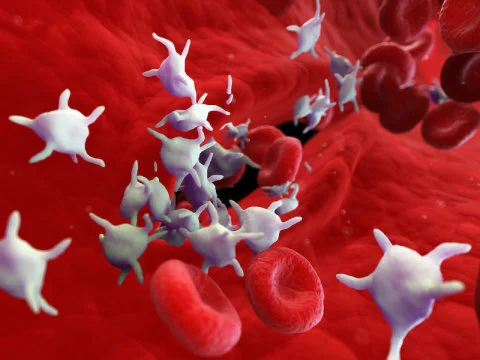
COVID-19 causes 'hyperactivity' in blood-clotting cells
Illustration of platelets and red blood cells (stock image). Credit: © SciePro / stock.adobe.com
June 30, 2020
Science Daily/University of Utah Health
Changes in blood platelets triggered by COVID-19 could contribute to the onset of heart attacks, strokes, and other serious complications in some patients who have the disease, according to University of Utah Health scientists. The researchers found that inflammatory proteins produced during infection significantly alter the function of platelets, making them "hyperactive" and more prone to form dangerous and potentially deadly blood clots.
They say better understanding the underlying causes of these changes could possibly lead to treatments that prevent them from happening in COVID-19 patients. Their report appears in Blood, an American Society of Hematology journal.
"Our finding adds an important piece to the jigsaw puzzle that we call COVID-19," says Robert A. Campbell, Ph.D., senior author of the study and an assistant professor in the Department of Internal Medicine. "We found that inflammation and systemic changes, due to the infection, are influencing how platelets function, leading them to aggregate faster, which could explain why we are seeing increased numbers of blood clots in COVID patients."
Emerging evidence suggests COVID-19 is associated with an increased risk of blood clotting, which can lead to cardiovascular problems and organ failure in some patients, particularly among those with underlying medical problems such as diabetes, obesity, or high blood pressure.
To find out what might be going on, the researchers studied 41 COVID-19 patients hospitalized at University of Utah Hospital in Salt Lake City. Seventeen of these patients were in the ICU, including nine who were on ventilators. They compared blood from these patients with samples taken from healthy individuals who were matched for age and sex.
Using differential gene analysis, the researchers found that SARS-CoV-2, the virus that causes COVID-19, appears to trigger genetic changes in platelets. In laboratory studies, they studied platelet aggregation, an important component of blood clot formation, and observed COVID-19 platelets aggregated more readily. They also noted that these changes significantly altered how platelets interacted with the immune system, likely contributing to inflammation of the respiratory tract that may, in turn, result in more severe lung injury.
Surprisingly, Campbell and his colleagues didn't detect evidence of the virus in the vast majority of platelets, suggesting that it could be promoting the genetic changes within these cells indirectly.
One possible mechanism is inflammation, according to Bhanu Kanth Manne, Ph.D., one of the study's lead authors and a research associate with the University of Utah Molecular Medicine Program (U2M2). In theory, inflammation caused by COVID-19 could affect megakaryocytes, the cells that produce platelets. As a result, critical genetic alterations are passed down from megakaryocytes to the platelets, which, in turn, make them hyperactive.
In test tube studies, the researchers found that pre-treating platelets from SARS-CoV-2 infected patients with aspirin did prevent this hyperactivity. These findings suggest aspirin may improve outcomes; however, this will need further study in clinical trials. For now, Campbell warns against using aspirin to treat COVID-19 unless recommended by your physician.
In the meantime, the researchers are beginning to look for other possible treatments.
"There are genetic processes that we can target that would prevent platelets from being changed," Campbell says. "If we can figure out how COVID-19 is interacting with megakaryocytes or platelets, then we might be able to block that interaction and reduce someone's risk of developing a blood clot."
This study titled, "Platelet Gene Expression and Function in COVID-19 Patients," was funded by the National Institutes of Health, the University of Utah Health 3i Initiative, and the American Heart Foundation.
https://www.sciencedaily.com/releases/2020/06/200630125129.htm
COVID-19: Study shows virus can infect heart cells in lab dish
Research uses stem cell technology to learn how coronavirus may directly attack heart muscle
June 30, 2020
Science Daily/Cedars-Sinai Medical Center
A new study shows that SARS-CoV-2, the virus that causes COVID-19 (coronavirus), can infect heart cells in a lab dish, indicating it may be possible for heart cells in COVID-19 patients to be directly infected by the virus. The discovery, published today in the journal Cell Reports Medicine, was made using heart muscle cells that were produced by stem cell technology.
Although many COVID-19 patients experience heart problems, the reasons are not entirely clear. Pre-existing cardiac conditions or inflammation and oxygen deprivation that result from the infection have all been implicated. But until now, there has been only limited evidence that the SARS-CoV-2 virus directly infects the individual muscle cells of the heart.
"We not only uncovered that these stem cell-derived heart cells are susceptible to infection by novel coronavirus, but that the virus can also quickly divide within the heart muscle cells," said Arun Sharma, PhD, a research fellow at the Cedars-Sinai Board of Governors Regenerative Medicine Institute and first and co-corresponding author of the study. "Even more significant, the infected heart cells showed changes in their ability to beat after 72 hours of infection."
The study also demonstrated that human stem cell-derived heart cells infected by SARS-CoV-2 change their gene expression profile, further confirming that the cells can be actively infected by the virus and activate innate cellular "defense mechanisms" in an effort to help clear out the virus.
While these findings are not a perfect replicate of what is happening in the human body, this knowledge may help investigators use stem cell-derived heart cells as a screening platform to identify new antiviral compounds that could alleviate viral infection of the heart, according to senior and co-corresponding author Clive Svendsen, PhD.
"This viral pandemic is predominately defined by respiratory symptoms, but there are also cardiac complications, including arrhythmias, heart failure and viral myocarditis," said Svendsen, director of the Regenerative Medicine Institute and professor of Biomedical Sciences and Medicine. "While this could be the result of massive inflammation in response to the virus, our data suggest that the heart could also be directly affected by the virus in COVID-19."
Researchers also found that treatment with an ACE2 antibody was able to blunt viral replication on stem cell-derived heart cells, suggesting that the ACE2 receptor could be used by SARS-CoV-2 to enter human heart muscle cells.
"By blocking the ACE2 protein with an antibody, the virus is not as easily able to bind to the ACE2 protein, and thus cannot easily enter the cell," said Sharma. "This not only helps us understand the mechanisms of how this virus functions, but also suggests therapeutic approaches that could be used as a potential treatment for SARS-CoV-2 infection."
The study used human induced pluripotent stem cells (iPSCs), a type of stem cell that is created in the lab from a person's blood or skin cells. IPSCs can make any cell type found in the body, each one carrying the DNA of the individual. Tissue-specific cells created in this way are used for research and for creating and testing potential disease treatments.
"This work illustrates the power of being able to study human tissue in a dish," said Eduardo Marbán, MD, PhD, executive director of the Smidt Heart Institute, who collaborated with Sharma and Svendsen on the study. "It is plausible that direct infection of cardiac muscle cells may contribute to COVID-related heart disease."
The investigators also collaborated with co-corresponding author Vaithilingaraja Arumugaswami, DVM, PhD, an associate professor of molecular and medical pharmacology at the David Geffen School of Medicine at UCLA and member of the Eli and Edythe Broad Center of Regenerative Medicine and Stem Cell Research. Arumugaswami provided the novel coronavirus that was added to the heart cells, and UCLA researcher Gustavo Garcia Jr. contributed essential heart cell infection experiments.
"This key experimental system could be useful to understand the differences in disease processes of related coronaviral pathogens, SARS and MERS," Arumugaswami said.
https://www.sciencedaily.com/releases/2020/06/200630155745.htm
Lab-grown 'mini-brains' suggest COVID-19 virus can infect human brain cells
June 30, 2020
Science Daily/Johns Hopkins Medicine
A multidisciplinary team from two Johns Hopkins University institutions, including neurotoxicologists and virologists from the Bloomberg School of Public Health and infectious disease specialists from the school of medicine, has found that organoids (tiny tissue cultures made from human cells that simulate whole organs) known as "mini-brains" can be infected by the SARS-CoV-2 virus that causes COVID-19.
The results, which suggest that the virus can infect human brain cells, were published online June 26, 2020, in the journal ALTEX: Alternatives to Animal Experimentation.
Early reports from Wuhan, China, the origin of the COVID-19 pandemic, have suggested that 36% of patients with the disease show neurological symptoms, but it has been unclear whether or not the virus infects human brain cells. In their study, the Johns Hopkins researchers demonstrated that certain human neurons express a receptor, ACE2, which is the same one that the SARS-CoV-2 virus uses to enter the lungs. Therefore, they surmised, ACE2 also might provide access to the brain.
When the researchers introduced SARS-CoV-2 virus particles into a human mini-brain model, the team found -- for what is believed to be the first time -- evidence of infection by and replication of the pathogen.
The human brain is well-shielded against many viruses, bacteria and chemical agents by the blood-brain barrier, which in turn, often prevents infections of the brain. "Whether or not the SARS-CoV-2 virus passes this barrier has yet to be shown," notes senior author Thomas Hartung, M.D., Ph.D., chair for evidence-based toxicology at the Bloomberg School of Public Health. "However, it is known that severe inflammations, such as those observed in COVID-19 patients, make the barrier disintegrate."
The impermeability of the blood-brain barrier, he adds, also can present a problem for drug developers targeting the brain.
The impact of SARS-CoV-2 on the developing brain is another concern raised by the study. Previous research from Paris-Saclay University has shown that the virus crosses the placenta, and embryos lack the blood-brain barrier during early development. "To be very clear," Hartung says, "we have no evidence that the virus produces developmental disorders."
However, the mini-brains -- which model the growing human brain -- contain the ACE2 receptor from their earliest stages of development. Therefore, Hartung says, the findings suggest that extra caution should be taken during pregnancy.
"This study is another important step in our understanding of how infection leads to symptoms, and where we might tackle the COVID-19 disease with drug treatment," says William Bishai, M.D., Ph.D., professor of medicine at the Johns Hopkins University School of Medicine, and leader of the infectious disease team for the study.
The human stem cell-derived mini-brain models -- known as BrainSpheres -- were developed at the Bloomberg School of Public Health four years ago. They were the first mass-produced, highly standardized organoids of their kind, and have been used to model a number of diseases, including infections by viruses such as Zika, dengue and HIV.
https://www.sciencedaily.com/releases/2020/06/200630111445.htm
Life-hack: Rituals spell anxiety relief
June 30, 2020
Science Daily/University of Connecticut
With graduation ceremonies, weddings, funeral, annual parades, and many other gatherings called off, it is apparent that our lives are filled with rituals. UConn Assistant Professor of Anthropology Dimitris Xygalatas studies rituals and how they impact our health. In research published today in Philosophical Transactions of the Royal Society, Xygalatas and collaborators from Masaryk University, Czech Republic, including former UConn student Martin Lang, examine the important roles rituals play in reducing our anxiety levels.
"In the current context of the pandemic, if you were a completely rational being -- perhaps an extraterrestrial who's never met any actual humans -- you would expect that given the current situation people wouldn't bother doing things that do not seem crucial to their survival. Maybe they wouldn't care so much about art, sports, or ritual, and they would focus on other things," says Xygalatas. "If you were to think that, it would show you didn't know much about human nature, because humans care deeply about those things."
Further, Xygalatas says, rituals play an important role in people's lives, helping them cope with anxiety and functioning as mechanisms of resilience.
This research started years ago, says Xygalatas. He explains that to study something as complex as human behavior, it is important to approach the question from multiple angles to collect converging evidence. First, in a laboratory study, they found that inducing anxiety made people's behavior more ritualized, that is, more repetitive and structured. So the next step was to take this research out to real-life situations, where they examined whether performing cultural rituals in their natural context indeed helps practitioners cope with anxiety.
"This approach also goes to show the limitations of any study. One study can only tell us a tiny bit about anything, but by using a variety of methods like my team and I are doing, and by going between the highly controlled space of the lab and the culturally relevant place that is real life we are able to get a more holistic perspective."
The experiment reported in their current publication took place in Mauritius, where the researchers induced anxiety by asking participants to prepare a plan for dealing with a natural disaster that would be evaluated by government experts. This was stressful, as floods and cyclones are very pertinent threats in that context. Following this stress-inducing task, one half of the group performed a familiar religious ritual at the local temple while the other half were asked to sit and relax in a non-religious space.
The researchers found that the speech was successful in inducing for both groups but those who performed the religious ritual experienced a greater reduction in both psychological and physiological stress, which was assessed by using wearable technology to measure heart rate variability.
Stress itself is important, says Xygalatas, "Stress acts as a motivation that helps us focus on our goals and rise to meet our challenges, whether those involve studying for an exam, flying a fighter jet, or scoring that game-winning goal. The problem is that beyond a certain threshold, stress ceases to be useful. In fact, it can even be dangerous. Over time, its effects can add up and take a toll on your health, impairing cognitive function, weakening the immune system, and leading to hypertension or cardiovascular disease. This type of stress can be devastating to our normal functioning, health, and well-being."
This is where Xygalatas and his team believe ritual plays an important role in managing stress.
"The mechanism that we think is operating here is that ritual helps reduce anxiety by providing the brain with a sense of structure, regularity, and predictability."
Xygalatas explains that in recent decades we have begun to realize the brain is not a passive computer but an active predictive machine, registering information and making predictions to help us survive.
"We come to expect certain things -- our brain fills in the missing information for the blind spot in our vision, and prompts us to anticipate the next word in a sentence -- all of these things are due to this effect because our brain makes active predictions about the state of the world."
Well-practiced rituals, like the one included in the study, are repetitive and predictable and therefore the researchers believe they give our brains the sense of control and structure that we crave, and those feelings help alleviate stress. This stress reducing impact of rituals could be a way to cope with chronic anxiety.
In today's stressful context, we see ritual taking different forms, from people gathering to applaud healthcare workers, to virtual choirs singing across the internet. Xygalatas also notes a recent study that tracked the increase in people typing 'prayer' in Google searches. In this unpredictable time, people are continuing to find relief in ritual.
"One thing I like to tell my students is that we as human beings are not as smart as we'd like to think. But thankfully, we are at least smart enough to be able to outsmart ourselves. We have many ways of doing this, for instance when we look at ourselves in the mirror before an interview and tell ourselves, 'Ok I can do this'. Or when we take deep breaths to calm down. We have all of these hacks that we can use on our very brain. We could rationalize it and tell ourselves 'Ok I'm going to lower my heartbeat now'. Well that doesn't work. Ritual is one of those mental technologies that we can use to trick ourselves into doing that. That is what these rituals do -- they act like life hacks for us."
Going forward, Xygalatas points out that he and his colleagues intend to do more work on the exact mechanisms underlying these effects of ritual.
"Of course it is a combination of factors, and that is why ritual is so powerful: because it combines a number of mechanisms that have to do both with the behavior itself, the physical movements, and with the cultural context, the symbolism, and the expectations that go into that behavior. To be able to disentangle those things is what we are trying to do next: we are examining these factors one at a time. Those rituals have gone through a process of cultural selection and they are still with us because they fulfil specific functions. They are life hacks that have been with and have served us well since the dawn of our kind."
https://www.sciencedaily.com/releases/2020/06/200630111504.htm
Seeing is believing: Effectiveness of facemasks
Woman wearing face mask (stock image). Credit: © Jedsada Naeprai / stock.adobe.com
Researchers use flow visualization to qualitatively test facemasks and social distancing
June 30, 2020
Science Daily/Florida Atlantic University
Using flow visualization, researchers assessed the efficacy of facemasks in obstructing respiratory droplets. Loosely folded facemasks and bandana-style coverings provide minimal stopping-capability for the smallest aerosolized respiratory droplets. Well-fitted homemade masks with multiple layers of quilting fabric, and off-the-shelf cone style masks, proved to be the most effective in reducing droplet dispersal. Importantly, uncovered coughs were able to travel noticeably farther than the currently recommended 6-foot distancing guideline. Without a mask, droplets traveled more than 8 feet.
Currently, there are no specific guidelines on the most effective materials and designs for facemasks to minimize the spread of droplets from coughs or sneezes to mitigate the transmission of COVID-19. While there have been prior studies on how medical-grade masks perform, data on cloth-based coverings used by the vast majority of the general public are sparse.
Research from Florida Atlantic University's College of Engineering and Computer Science, just published in the journal Physics of Fluids, demonstrates through visualization of emulated coughs and sneezes, a method to assess the effectiveness of facemasks in obstructing droplets. The rationale behind the recommendation for using masks or other face coverings is to reduce the risk of cross-infection via the transmission of respiratory droplets from infected to healthy individuals.
Researchers employed flow visualization in a laboratory setting using a laser light sheet and a mixture of distilled water and glycerin to generate the synthetic fog that made up the content of a cough-jet. They visualized droplets expelled from a mannequin's mouth while simulating coughing and sneezing. They tested masks that are readily available to the general public, which do not draw away from the supply of medical-grade masks and respirators for healthcare workers. They tested a single-layer bandana-style covering, a homemade mask that was stitched using two-layers of cotton quilting fabric consisting of 70 threads per inch, and a non-sterile cone-style mask that is available in most pharmacies. By placing these various masks on the mannequin, they were able to map out the paths of droplets and demonstrate how differently they perform.
Results showed that loosely folded facemasks and bandana-style coverings provide minimal stopping-capability for the smallest aerosolized respiratory droplets. Well-fitted homemade masks with multiple layers of quilting fabric, and off-the-shelf cone style masks, proved to be the most effective in reducing droplet dispersal. These masks were able to curtail the speed and range of the respiratory jets significantly, albeit with some leakage through the mask material and from small gaps along the edges.
Importantly, uncovered emulated coughs were able to travel noticeably farther than the currently recommended 6-foot distancing guideline. Without a mask, droplets traveled more than 8 feet; with a bandana, they traveled 3 feet, 7 inches; with a folded cotton handkerchief, they traveled 1 foot, 3 inches; with the stitched quilted cotton mask, they traveled 2.5 inches; and with the cone-style mask, droplets traveled about 8 inches.
"In addition to providing an initial indication of the effectiveness of protective equipment, the visuals used in our study can help convey to the general public the rationale behind social-distancing guidelines and recommendations for using facemasks," said Siddhartha Verma, Ph.D., lead author and an assistant professor who co-authored the paper with Manhar Dhanak, Ph.D., department chair, professor, and director of SeaTech; and John Frakenfeld, technical paraprofessional, all within FAU's Department of Ocean and Mechanical Engineering. "Promoting widespread awareness of effective preventive measures is crucial at this time as we are observing significant spikes in cases of COVID-19 infections in many states, especially Florida."
When the mannequin was not fitted with a mask, they projected droplets much farther than the 6-foot distancing guidelines currently recommended by the United States Centers for Disease Control and Prevention. The researchers observed droplets traveling up to 12 feet within approximately 50 seconds. Moreover, the tracer droplets remained suspended midair for up to three minutes in the quiescent environment. These observations, in combination with other recent studies, suggest that current social-distancing guidelines may need to be updated to account for aerosol-based transmission of pathogens.
"We found that although the unobstructed turbulent jets were observed to travel up to 12 feet, a large majority of the ejected droplets fell to the ground by this point," said Dhanak. "Importantly, both the number and concentration of the droplets will decrease with increasing distance, which is the fundamental rationale behind social-distancing."
The pathogen responsible for COVID-19 is found primarily in respiratory droplets that are expelled by infected individuals during coughing, sneezing, or even talking and breathing. Apart from COVID-19, respiratory droplets also are the primary means of transmission for various other viral and bacterial illnesses, such as the common cold, influenza, tuberculosis, SARS (Severe Acute Respiratory Syndrome), and MERS (Middle East Respiratory Syndrome), to name a few. These pathogens are enveloped within respiratory droplets, which may land on healthy individuals and result in direct transmission, or on inanimate objects, which can lead to infection when a healthy individual comes in contact with them.
"Our researchers have demonstrated how masks are able to significantly curtail the speed and range of the respiratory droplets and jets. Moreover, they have uncovered how emulated coughs can travel noticeably farther than the currently recommended six-foot distancing guideline," said Stella Batalama, Ph.D., dean of FAU's College of Engineering and Computer Science. "Their research outlines the procedure for setting up simple visualization experiments using easily available materials, which may help healthcare professionals, medical researchers, and manufacturers in assessing the effectiveness of face masks and other personal protective equipment qualitatively."
https://www.sciencedaily.com/releases/2020/06/200630111449.htm
Whole-town study reveals more than 40% of COVID-19 infections had no symptoms
June 30, 2020
Science Daily/Imperial College London
A study of COVID-19 in the quarantined Italian town of Vò, where most of the population was tested, reveals the importance of asymptomatic cases.
The authors of the new research, from the University of Padova and at Imperial College London, published today in Nature, suggest asymptomatic or pre-symptomatic people are an important factor in the transmission of COVID-19. They also argue that widespread testing, isolating infected people, and a community lockdown effectively stopped the outbreak in its tracks.
The town of Vò, with a population of nearly 3,200 people, experienced Italy's first COVID-19 death on 21 February 2020. The town was put into immediate quarantine for 14 days. During this time, researchers tested most of the population for infection of SARS-CoV-2, the virus that causes COVID-19, both at the start of the lockdown (86 percent tested) and after two weeks (72 percent tested).
The testing revealed that at the start of the lockdown, 2.6 percent of the population (73 people) were positive for SARS-CoV-2, while after a couple of weeks only 1.2 percent (29 people) were positive. At both times, around 40 percent of the positive cases showed no symptoms (asymptomatic). The results also show it took on average 9.3 days (range of 8-14 days) for the virus to be cleared from someone's body.
None of the children under ten years old in the study tested positive for COVID-19, despite several living with infected family members. This is in contrast to adults living with infected people, who were very likely to test positive.
As a result of the mass testing any positive cases, symptomatic or not, were quarantined, slowing the spread of the disease and effectively suppressing it in only a few short weeks.
Co-lead researcher Professor Andrea Crisanti, from the Department of Molecular Medicine of the University of Padua and the Department of Life Sciences at Imperial, said: "Our research shows that testing of all citizens, whether or not they have symptoms, provides a way to manage the spread of disease and prevent outbreaks getting out of hand. Despite 'silent' and widespread transmission, the disease can be controlled."
The results of the mass testing programme in Vò informed policy in the wider Veneto Region, where all contacts of positive cases were offered testing. "This testing and tracing approach has had a tremendous impact on the course of the epidemic in Veneto compared to other Italian regions, and serves as a model for suppressing transmission and limiting the virus' substantial public health, economic and societal burden," added Professor Crisanti.
As well as identifying the proportion of asymptomatic cases, the team also found that asymptomatic people had a similar 'viral load' -- the total amount of virus a person has inside them -- as symptomatic patients.
Viral load also appeared to decrease in people who had no symptoms to begin with but later developed symptoms, suggesting that asymptomatic and pre-symptomatic transmission could contribute significantly to the spread of disease, making testing and isolating even more important in controlling outbreaks.
Co-lead researcher Dr Ilaria Dorigatti, from the MRC Centre for Global Infectious Disease Analysis, Jameel Institute (J-IDEA), at Imperial College London, said: "The Vò study demonstrates that the early identification of infection clusters and the timely isolation of symptomatic as well as asymptomatic infections can suppress transmission and curb an epidemic in its early phase. This is particularly relevant today, given the current risk of new infection clusters and of a second wave of transmission.
"There are still many open questions about the transmission of the SARS-CoV-2 virus, such as the role of children and the contribution of asymptomatic carriers to transmission. Finding answers to these questions is crucial to identifying targeted and sustainable control strategies to combat the spread of SARS-CoV-2 in Italy and around the world."
Professor Enrico Lavezzo, from the Department of Molecular Medicine at the University of Padua said: "The result concerning asymptomatic carriers is key. We took a picture of the Vò population and found that about half of the population testing positive had no symptoms at the time of testing and some of them developed symptoms in the following days. This tells us that if we find a certain number of symptomatic people testing positive, we expect the same number of asymptomatic carriers that are much more difficult to identify and isolate.
"The fact that the viral load is comparable between symptomatic and asymptomatic carriers means even asymptomatic infections have the potential to contribute to transmission, as some of the reconstructed chain of transmission obtained from the detailed contact tracing conducted in Vò confirmed.
"On the one hand, it is likely that a symptomatic infection transmits large quantities of virus, for example via coughing, but it is also reasonable to think that symptoms may induce a person with a symptomatic infection to stay at home, limiting the number of contacts and hence the transmission potential. On the other hand, someone with an asymptomatic infection is entirely unconscious of carrying the virus and, according to their lifestyle and occupation, could meet a large number of people without modifying their behaviour."
Co-first author Dr Elisa Franchin, from the Department of Molecular Medicine of the University of Padua, said: "This work highlights the efficacy of the containment strategies implemented since the finding of the first positive patient in the town of Vò. From a technical perspective, this work has been possible thanks to the most advanced diagnostic technologies that we had available and to the work of a large number of people with different skills: from nurses to clerks, technicians, biologists and medical doctors. The en mass participation of the Vo' population to this study has given us the opportunity to better understand the transmission of this virus and how to avoid future infections."
This research was funded by the Veneto Region, Wellcome Trust, Royal Society, the European Union's Horizon 2020 research and innovation programme, the UK Medical Research Council (MRC) and the UK Department for International Development (DFID) under the MRC/DFID Concordat agreement, the EDCTP2 programme supported by the European Union and the Abdul Latif Jameel Foundation.
https://www.sciencedaily.com/releases/2020/06/200630103557.htm
Even in the worst COVID-19 cases, the body launches immune cells to fight back
International collaboration provides important piece of COVID-19 puzzle
June 29, 2020
Science Daily/La Jolla Institute for Immunology
A new study from researchers at La Jolla Institute for Immunology (LJI) and Erasmus University Medical Center (Erasmus MC) shows that even the sickest COVID-19 patients produce T cells that help fight the virus. The study offers further evidence that a COVID-19 vaccine will need to elicit T cells to work alongside antibodies.
The research, published June 26, 2020 in Science Immunology, also reveals that both Dutch and American patients have similar responses to the virus. "This is key to understanding how the immune response fights the virus," says LJI Professor Alessandro Sette, Dr. Biol. Sci., who co-led the study with Erasmus MC Virologist Rory de Vries, Ph.D. "You want vaccine approaches to be grounded in observations from rather diverse settings to ensure that the results are generally applicable."
For the study, the researchers followed ten COVID-19 patients with the most severe disease symptoms. All ten were admitted to the ICU at Erasmus University Medical Center, in the Netherlands, and put on ventilators as part of their care. Two of the patients eventually died of the disease. An in-depth look at their immune system responses showed that all ten patients produced T cells that targeted the SARS-CoV-2 virus. These T cells worked alongside antibodies to try to clear the virus and stop the infection.
"Activating these cells appears to be at least as important as the production of antibodies," says Erasmus MC Virologist Rory de Vries, Ph.D., who co-led the study with Sette.
These findings are in line with a recent Cell study from Sette, LJI Professor Shane Crotty, Ph.D., and LJI colleagues that showed a robust T cell response in individuals with moderate cases of COVID-19. In both studies, the T cells in these patients prominently targeted the "spike" protein on SARS-CoV-2. The virus uses the spike protein to enter host cells, and many vaccine efforts around the world are aimed at getting the immune system to recognize and attack this protein. The new study offers further evidence that the spike protein is a promising target and confirms that the immune system can also mount strong responses to other targets on the virus.
"This is good news for those making a vaccine using spike, and it also suggests new avenues to potentially increase vaccine potency," says Daniela Weiskopf, Ph.D., research assistant professor at LJI and first author of the new study.
The collaboration between scientists in La Jolla and the Netherlands is also a part of a larger picture, and emphasizes the highly collaborative philosophy adopted by the LJI group. Sette is a world leader in understanding what specific pieces (or epitopes) the immune system recognizes when it encounters a new microbe. The Sette lab's work in defining epitope sets to allow to measure SARS-CoV-2 T cell responses was a key element of the study.
In fact, LJI has become a hub for COVID-19 T cell studies, and Sette has sent out reagents to more than 60 labs around the world. "The study is also highly significant because it illustrates how science has no frontiers," says Sette. "To truly understand a global pandemic, our approach needs to be global, and we need to study effective immune response in people with different genetic backgrounds, living in different environments."
While the Cell paper followed San Diego residents, the new paper follows Dutch patients -- and the T cell responses were consistent in both populations. "This study is important because it shows this immune response in patients thousands of miles apart," says Weiskopf. "The same observation has now been strongly reproduced in different continents and different studies."
https://www.sciencedaily.com/releases/2020/06/200629124106.htm
Coronavirus: Social distancing accepted when people understand exponential growth
June 29, 2020
Science Daily/University of Cologne
Experiments among U.S. population show: When people fail to see the need for restrictions on public life, explaining the exponential increase of infections creates greater acceptance for measures taken to slow down the infection rate.
Researchers from the Social Cognition Center Cologne at the University of Cologne and from the University of Bremen report that participants in three experiments, each involving more than 500 adults in the United States, tended to assume the number of COVID-19 cases grew linearly with time, rather than exponentially. As a result, they underestimated actual virus growth. Interventions designed to help people avoid this bias led to an improved understanding of virus growth and increased support for social distancing measures compared with participants who did not receive such instructions.
The experiments were conducted by the social psychologist Dr Joris Lammers of the Social Cognition Center Cologne and the University of Bremen and his co-authors, the social psychologists Jan Crusius and Anne Gast, also from the University of Cologne. The article "Correcting misperceptions of exponential coronavirus growth increases support for social distancing" has been published in the current issue of Proceedings of the National Academy of Sciences.
The most effective way to stem the spread of a pandemic such as COVID-19 is what has come to be known as 'social distancing'. But the introduction of such measures is hampered by the fact that a sizeable part of the population fails to see their need. Many social scientists see the root of this perception in what they call the exponential growth bias. "In general, people have difficulty understanding exponential growth and erroneously interpret it in linear terms instead," explains first author Joris Lammers. The result is a gross underestimation of the growth of the infection rate and a misunderstanding of the potential to slow it down through social distancing. "Our current work tests the role of exponential growth bias in shaping the public's view on social distancing to contain the coronavirus's spreading."
Three studies were conducted during the mass spreading of the virus in the United States toward the end of March 2020. The first study focused on participants' understandings of linear growth, showing that many Americans mistakenly perceive the virus's exponential growth in linear terms. Interestingly, political orientation also played a role: conservatives were more prone to this misunderstanding than liberals. Studies 2 and 3 showed that instructing people to avoid the exponential growth bias significantly increases correct perceptions of the virus's growth and thereby support for social distancing. "Together, these results show the importance of statistical literacy to recruit support for fighting pandemics such as the coronavirus," said Lammers.
"Our results stand in contrast to earlier literature showing that the exponential growth bias is difficult to overcome," he explained. "The reason for this is that the current study focuses on a threat with great personal relevance and media presence, which likely increases subjective availability and thus the estimated probability of the risk."
Given that social distancing is the most effective way to combat the coronavirus currently available, these findings can have a significant impact: They show that bias, among other things, influences political opinions about matters of life and death, Lammers believes. Most important for team is to show the necessity of statistical literacy and to improve that skill among the general public.
https://www.sciencedaily.com/releases/2020/06/200629120142.htm
Collectivism drives efforts to reduce the spread of COVID-19
June 29, 2020
Science Daily/University of Kent
Research from the University of Kent has found that people who adopt a collectivist mindset are more likely to comply with social distancing and hygiene practices to help reduce the spread of COVID-19.
People who are more individualist are less likely to engage, partly due to beliefs in COVID-19 conspiracy theories, and feelings of powerlessness surrounding the pandemic.
This study suggests the need for the UK Government and other world leaders to consider promoting collectivism amongst the general public, and to combat the spread of conspiracy theories and other types of misinformation. Doing so may increase levels of engagement in practices to help reduce the spread of COVID-19.
The research was led by Mikey Biddlestone alongside Ricky Green and Professor Karen Douglas at the University of Kent's School of Psychology. A total of 724 participants completed an online questionnaire addressing their actions relating to social distancing and hygiene measures, their individualist-collectivist mindset, feelings of powerlessness surrounding the pandemic, and their beliefs in COVID-19 conspiracy theories such as the idea that COVID-19 was made in a Chinese laboratory.
Mikey Biddlestone said: "Interventions that focus on collective empowerment and champion a 'we are in this together' mentality could encourage people to comply with guidelines that will reduce the spread of COVID-19. Promoting collectivism could make a positive difference to future public health crises too, as leaders look to improve response strategies. A collectivist mindset might also make people less susceptible to conspiracy theories and misinformation that can negatively affect their behaviour."
https://www.sciencedaily.com/releases/2020/06/200629120140.htm
How upregulation of a single gene by SARS-CoV-2 can result in a cytokine storm
June 29, 2020
Science Daily/IOS Press
The SARS-CoV-19 virus initially has a limited capability to invade, attacking only one intracellular genetic target, the aryl hydrocarbon receptors (AhRs). Yet it leads to widely diverse clinical symptoms, suggesting multiple pathogenic mechanisms. Writing in Restorative Neurology and Neuroscience, investigators describe how excessive activation of AhRs via the IDO1-kynurenine-AhR signaling pathway, which is used by many pathogens to establish infection, leads to "Systemic AhR Activation Syndrome" (SAAS). The authors also hypothesize that therapies targeting downregulation of AhRs and IDO1 genes should decrease severity of infection.
SAAS underlies inflammation, thromboembolism, and fibrosis that may lead to severe disease and death from COVID-19. When corona virus (CoV) infection persists, it activates IDO1 by massively releasing cytokines. This in turn perpetuates the already extensive viral activation of AhRs, and the self-limiting control mechanisms of the host immune response may derail, triggering the cytokine storm underlying the most severe symptoms of COVID-19.
"The SARS-CoV-19 virus is a living example of viral simplicity complicated by extreme target complexity," explains lead author Waldemar A. Turski, MD, PhD, Department of Experimental and Clinical Pharmacology, Medical University in Lublin, Poland. "Direct activation of AhRs by CoVs may lead to diverse sets of phenotypic disease pictures, depending on time after infection, overall state of health, hormonal balance, age, gender, comorbidities, but also diet and environmental factors modulating AhRs."
The authors demonstrate that CoVs are perfect viruses leaving nothing to chance and show how difficult it is to stop them after cell invasion. They describe how many of the features and symptoms of COVID-19 may be dependent on AhR activation, including thromboembolism, fibrosis, multiple organ injury, and brain damage. They also explore how environmental factors, such as urban dust and diesel fumes, may activate AhRs and make humans more prone to pathogens, including CoV. However, physical exercise plays a positive role in IDO1 function and downregulates AhRs.
The investigators hypothesize that when AhRs remain activated and clinical symptoms are mild, eliminating factors known to increase AhR activation or implementing factors known to suppress AhR activation should decrease the severity of infection. When the disease is fully established and symptoms are severe, IDO1 is believed to be continuously activated in addition to the CoV activation of AhRs. "Such a vicious cycle can only be efficiently interrupted by simultaneous downregulation of both AhR and IDO1. There is currently, however, no licensed medication specifically and simultaneously downregulating the activity of both AhR and IDO1," notes co-author Les Turski, MD, PhD, German Center for Neurodegenerative Diseases, Bonn, Germany.
Co-author Artur Wnorowski, PhD, Department of Biopharmacy, Faculty of Pharmacy, Medical University in Lublin, Poland, undertook an intriguing challenge that yielded surprising results. "I analyzed major databases to identify chemicals that downregulate both AhR and IDO1, or AhR gene expression. I selected 596 molecules and an in-depth analysis of 23,526 experiments involving these molecules identified either a single molecule that repeatedly reduced AhR and IDO1 or AhR gene expression in human cells."
The molecules were dexamethasone for AhR and IDO1, and calcitriol, the active form of vitamin D, which is also known to inhibit the spread of other viral infections, for the AhR gene. Likewise, tocopherol, a form of Vitamin E, might downregulate IDO1 and is known to play a positive role in response to viral infections and inflammation in aging. The authors call for epidemiological studies and prospective trials to determine if calcitriol and tocopherol supplementation should be recommended for the prevention of SARS-CoV-2 infections.
"Our concept is based on 40 years of research experience with the metabolism of tryptophan. Activation of IDO1 in immune cells leads to release of kynurenine, a tryptophan metabolite, activates AhR. IDO1 was the clue that brought us to the AhR-IDO1 axis concept and exposed the role that AhR may play in the pathogenesis of COVID-19," says Dr. Waldemar Turski.
The Editor-in-Chief of Restorative Neurology and Neuroscience, Professor Bernhard Sabel from the University of Magdeburg, Germany, in recognition of novelty of the authors' vision says: "The turning point defined by the authors' concepts requires critical review of our habits, our relationships with the environment, and our education and research in the context of AhR modulation. We seem to be at the very beginning of novel discovery pathways and only see the very tip of an iceberg of unknown size that may critically affect our future."
Because the authors are reporting on changes in gene expression only, their hypotheses need to be tested before claiming that there are benefits of any therapy in modulating the SARs-CoV-2 infection. Randomized controlled trials and large observational studies are needed.
https://www.sciencedaily.com/releases/2020/06/200629120126.htm
Many families must 'dance' their way to COVID-19 survival
June 26, 2020
Science Daily/University of Birmingham
Researchers have been studying how families plan ahead and make decisions about family care and family consumption for a long time -- but what happens when planning ahead is not possible? When consumers can't plan ahead, they 'dance'.
Marketing managers and academics have been studying how families plan ahead and make decisions about family care and family consumption for a long time -- but what happens when planning ahead is not possible? When consumers can't plan ahead, they 'dance'.
Although there has been a lot of talk about how COVID-19 has 'slowed down' family life, a new study in the Journal of Marketing Management by researchers at the University of Birmingham (UK), University of Melbourne (Australia) and Adolfo Ibanez University (Chile) argues that this is not the case for every family.
Dr Pilar Rojas Gaviria, Lecturer in Marketing at the University of Birmingham, comments: "For many families, life has become more precarious, anxious, and accelerated. Rather than a combination of strategic activities and well-planned decisions, we found that when normality is disrupted abruptly, family care looks more like an intricate improvised 'dance'."
Dr Rojas Gaviria and her colleagues note that when facing unplanned disruptions to family life, such as COVID-19, while some families may enjoy more free time because they are not commuting, others face unprecedented situations, such as disrupted careers, caring for others and suffering from the loss of income.
She comments: "We should avoid assumptions about families being affected in the same way. Many families are struggling with mental health while others are coping well. Many have lost friends or family members, others have not.
"This means that organisations should aim to better understand the needs of individual employees and their families and think about how they can support them by acknowledging that these needs are different and that they evolve through time."
Particularly, Dr. Rojas Gaviria and her colleagues found that families who already deal with more intensive care needs -- such as those who have a family member with a chronic health condition -- must 'dance' their way through unplanned disruptions such as the COVID-19 crisis.
Families strike a balance between day-to-day routines -- resorting to what the researchers call 'grounding' activities -- and other more creative, emotionally-laden and inspirational activities that go well beyond their daily schedules in order to counter massive disruption to their everyday life.
In their study of families living with diabetic children, they discovered how, in the midst of chaos, each family finds its own style to 'dance' through their life constraints by alternating 'grounding' and 'aerial' activities.
They also found that that this process often occurs instinctively and invisibly, and is usually lead by one family member who "orchestrates" resources and talents at hand to help their family develop its 'dance'.
Dr Rojas Gaviria adds: "In keeping that 'dance' going, it is essential for the family to balance 'grounding movements' with 'aerial movements' that soothe, inspire and motivate family members.
"For instance, we saw how, during the COVID-19 lockdown both 'grounding' activities -- such as knitting, gardening and baking -- combined with 'aerial' activities -- like becoming a helping hand in the community, placing rainbows in the family home's windows, supporting local shops, fisheries and farms, or raising funds for the NHS -- to comfort families and help them connect to each other, even from a distance."
Dr. Rojas Gaviria argues that there is an untapped need for public policies and support programmes that can be flexible and adaptable to different moments and different life circumstances and that aim at enhancing the creative competencies of the families.
"The aim should be helping families gather resources for movement (energy, time, focus, hope in the future) instead of telling them how to move by setting very strict rules that not everyone is able to follow. Designing a diverse set of support tools that can be offered for different circumstances and at different moments in time is a challenge for our societal systems," she adds.
https://www.sciencedaily.com/releases/2020/06/200626114745.htm
Estimating COVID-19 spread by looking at past trends of influenza-like illnesses
June 26, 2020
Science Daily/Montana State University
In order to better understand the spread of the novel coronavirus, new research examines trends in visits to outpatient clinics for influenza-like illnesses in March 2020 as compared to previous years.
How many people in the U.S. have had COVID-19? Using a database of information collected after the 2009 H1N1 outbreak, a Montana State University researcher is helping develop a better understanding of the spread of the novel coronavirus.
Alex Washburne, a researcher in the Bozeman Disease Ecology Lab, which is housed in the College of Agriculture's Department of Microbiology and Immunology, published a paper on the subject this week in the journal Science Translational Medicine. The paper uses data from ILINet a database created by the Centers for Disease Control and Prevention in 2010 to count patients who check into medical clinics with influenza-like illnesses, or ILI. That type of data collection for the purpose of identifying trends is known as syndromic surveillance.
Influenza-like illnesses include any number of infections that carry symptoms similar to the seasonal flu -- such as fever, cough and sore throat. Both influenza-like H1N1 and non-influenza diseases like COVID-19 fall into that group. Monitoring trends in ILI clinic visits, Washburne said, could help better understand how quickly and extensively COVID-19 spread during the early days of its appearance in the U.S.
In collaboration with researchers at Pennsylvania State and Cornell universities, Washburne examined the number of ILI visits reported each week over the last decade and compared those historical trends to such visits during March 2020. They identified a surge in March 2020 ILI visits that parallels regional increases in COVID-19 cases.
By examining ILI data alongside the known regional prevalence of COVID-19, Washburne and his collaborators determined that there may have been many cases of the coronavirus disease that weren't initially identified as such.
Washburne and his colleagues estimate that as many as 87% of coronavirus cases were not diagnosed during early March, which could translate to around 8.7 million people based on the excess March ILI visits. The surge in ILI diminished quickly in the latter part of March, leading researchers to conclude that more cases of COVID-19 were being identified since fewer ILI reports were being logged in the database.
"Early on there seems to have been a low case detection rate, but as time went on that changed," said Washburne. "By the last week in March, as more and more testing was going on, that case detection rate increased significantly."
This is good news for scientists seeking to predict and prepare for future epidemics, said Washburne. A baseline has been established through a decade of ILI data collection that allows for the early detection of anomalous surges of ILI that deviate from the annual average.
With much of the research about COVID-19 happening as the pandemic unfolds, Washburne said syndromic surveillance like this shows researchers and the medical community one piece of a larger story. When coupled with COVID-19 testing efforts and serological surveys, which seek to identify the proportion of a population with immunity to an illness, this type of data collection and analysis can illuminate a piece of the puzzle that helps outline our understanding of coronavirus as a whole, he said, while also offering insight for future potential epidemics.
Washburne also said that syndromic surveillance using tools like ILINet could be applied in areas where widespread testing is too expensive.
"For communities that may not have the capacity for more large-scale testing, this may be able to help give them a picture of the movement of their epidemic in time and space," he said. "That way they can know when to implement actions like mask wearing and social distancing measures."
The practice of collecting data ahead of a potential outbreak is an investment in future public health, Washburne said. This research into COVID-19 wouldn't have been possible without the creation of the database after H1N1, so continuing to expanding the baseline data collected for other illnesses could be crucial in navigating future pandemics.
"All these different methods can be used to cross-validate each other," he said. "We know if our other methods don't work optimally, we have additional resources. Things like this can really help us be better prepared in the future."
https://www.sciencedaily.com/releases/2020/06/200626092732.htm
EMS calls have dropped 26 percent nationwide in U.S. since the start of the pandemic
June 26, 2020
Science Daily/University at Buffalo
Since early March and the start of the COVID-19 pandemic in the United States, 911 calls for emergency medical services have dropped by 26.1 percent compared to the past two years.
But the study also found that EMS-attended deaths have doubled, indicating that when EMS calls were made, they often involved a far more serious emergency.
"The public health implications of these findings are alarming," said E. Brooke Lerner, PhD, first author on the paper and professor and vice chair for research in the Department of Emergency Medicine in the Jacobs School of Medicine and Biomedical Sciences at UB.
"When people are making fewer 911 calls but those calls are about far more severe emergencies, it means that people with urgent conditions are likely not getting the emergency care they need in a timely way," she said. "The result is increased morbidity and mortality resulting from conditions not directly related to exposure to SARS-CoV2."
This finding covered the six-week period that began on March 2, and this trend persisted through the end of May.
Delaying care
"The doubling of deaths and cardiac arrests during this relatively short period of time, from March through May, demonstrates that people who need emergency health care may be delaying care such that their lives are actually in jeopardy," said Lerner.
Lerner pointed to two possible causes: fear of contracting the virus at health care facilities and the impulse to not burden health care facilities with non-COVID-19 issues.
"This may mean that future consideration needs to be given to how we message the risks associated with seeking medical care during a pandemic," said Lerner. "At the same time that we are stressing how to stay safe from COVID-19, it may also be necessary to stress how important it is to continue to seek care for serious conditions unrelated to the novel coronavirus." Lerner added that the findings echo those of studies in other countries, such as Italy, where there was an increase in heart attack fatalities during the height of the pandemic there.
A persistent trend
"The fact that this trend persists even as the pandemic in some areas has started to lessen in severity shows that the fear of accessing health care has continued," Lerner said.
One positive, unsurprising finding was that the rate of 911 calls related to injuries declined for the obvious reason that during times when regions were shutdown, there were fewer opportunities for driving and recreation-related injuries.
The study also revealed significant issues related to the financial viability of EMS in this type of environment.
"The financial strain on EMS agencies will have long-term ramifications for maintaining this important safety net for our communities, especially those agencies whose revenue is based solely on patient transports," said Lerner.
The study consisted of a comparative, retrospective analysis of standardized patient care records that are submitted by more than 10,000 EMS agencies across 47 states and territories nearly in real-time. Those data are submitted to the National Emergency Medical Services Information System (NEMSIS) database, which stores EMS data nationwide.
The study was published online June 17 in Academic Emergency Medicine. Co-authors are Craig D. Newgard, MD, of Oregon Health and Science University, and N. Clay Mann, MD, of the University of Utah School of Medicine.
The work was supported by the National Highway Traffic Safety Administration, Office of Emergency Medical Services and the Health Resources and Services Administration of the U.S. Department of Health and Human Services.
https://www.sciencedaily.com/releases/2020/06/200626092735.htm