
When it comes to obesity, the problem isn’t an excess of fat but its loss of function
February 3, 2022
Science Daily/Cell Press
Obesity is known to cause cardiometabolic diseases like hypertension and diabetes but attributing these diseases to merely an overabundance of fat is a simplification. On a basic level, fat acts as a receptacle to store energy, but upon a closer look it is an essential actor in vital bodily processes like the immune response, the regulation of insulin sensitivity, and maintenance of body temperature. In a review published in the journal Cell on February 3rd, researchers argue that the negative health effects of obesity stem not simply from an excess of fat but from the decline in its ability to respond to changes, or in other words, its plasticity.
The makeup and functioning of this tissue changes in response to weight fluctuations and aging. As fat declines in plasticity due to aging and obesity, it loses its ability to respond to bodily cues. In the current model of this phenomenon, the rapid growth of adipose tissue outpaces its blood supply, depriving the fat cells of oxygen and causing the accumulation of cells that no longer divide. This leads to insulin resistance, inflammation, and cell death accompanied by the uncontrolled spill of lipids from these cells.
"The central role of adipose tissue dysfunction in disease and the incredible plasticity of fat tissue supports the promise of modulating fat tissue phenotypes for therapeutic purposes," write the authors, led by Claudio J. Villanueva (@ClaudioVillanu) from the College of Life Sciences/David Geffen School of Medicine and Patrick Seale (@LabSeale) from Perelman School of Medicine at the University of Pennsylvania. "Many questions and opportunities for future discovery remain, which will yield new insights into adipose tissue biology and hopefully lead to improved therapies for human disease."
https://www.sciencedaily.com/releases/2022/02/220203122923.htm
More spice could help seniors avoid salt
February 3, 2022
Science Daily/Washington State University
Add a little spicy seasoning to a low sodium meal, and adults over the age of 60 may have a harder time noticing a lack of salt, according to a new study in the journal Food Quality and Preference.
Led by Carolyn Ross, a professor of Food Sciences at Washington State University, the study tested saltiness perception in older adults using white sauce formulations with varying amounts of salt and different spices and seasonings added.
The results of the analysis showed the addition of chipotle seasoning to the white sauce made it difficult for the study participants to differentiate between the samples with low and high levels of salt. Conversely, the addition of herbs, such as basil leaves, garlic powder and coarse ground pepper, was not as effective at masking the samples with less salt. The research points to the significant role that spice could play in reducing salt intake for people over 60.
"We were working specifically with a population of older adults to see if we could reduce the amount of salt in a product and then tailor it to their tastes," Ross said. "This is important because the ability to taste and smell is known to weaken with age, and weaker perception of salty flavors may induce people to season their food with excessive salt, which may increase their risk of cardiovascular disease."
For their study, Ross and María Laura Montero, a postdoctoral researcher in the WSU School of Food Sciences, recruited 39 healthy people over the age of 60 to participate in an in-person taste testing experiment that took place over several days slightly prior to the onset of the COVID-19 pandemic.
Previous research examining saltiness perception in older adults has tended to use water as a matrix for tasting experiments rather than actual food products. To generate more realistic data in terms of what people actually enjoy eating, Ross and Montero used a white sauce formulation that is commonly found in ready-to-eat Cajun chicken pasta meals.
The study participants were asked to compare three different formulations of the sauce at five different salt concentrations. One of the formulations had no added herbs, the second had just herbs, and the third had both herbs and chipotle seasoning. Their results showed the formulation with both herbs and chipotle seasoning made it difficult for the seniors to determine the amount of salt being used while the formulation with exclusively herbs did not.
In addition to administering the taste test, the researchers surveyed their participants about their oral and olfactory health, the number and type of medications they were taking and any other pre-existing conditions that might affect their saltiness perception.
Their analysis showed there was a positive correlation between poor oral health and the number of medications each participant was taking, which could be a result of less saliva production; however, their data on whether or not this was the main cause of lowered saltiness perception wasn't conclusive.
Moving forward, when it is once again feasible to recruit participants for in-person studies, the researchers plan to follow-up with a larger study evaluating lower salt concentrations as well as different herb and spice concentrations.
"To date, a clear relationship between taste loss, and thus higher taste thresholds, and eating behavior remains to be established," Ross said. "So, we are investigating a bunch of different possible factors."
https://www.sciencedaily.com/releases/2022/02/220203083613.htm
Greater body fat a risk factor for reduced thinking and memory ability
February 1, 2022
Science Daily/McMaster University
A new study has found that greater body fat is a risk factor for reduced cognitive function, such as processing speed, in adults.
Even when the researchers took cardiovascular risk factors (such as diabetes or high blood pressure) or vascular brain injury into account, the association between body fat and lower cognitive scores remained. This suggests other not yet confirmed pathways that linked excess body fat to reduced cognitive function.
In the study, 9,166 participants were measured by bioelectrical impedance analysis to assess their total body fat.
As well, 6,733 of the participants underwent magnetic resonance imaging (MRI) to measure abdominal fat packed around the organs known as visceral fat, and the MRI also assessed vascular brain injury -- areas in the brain affected by reduced blood flow to the brain.
The results were published today in JAMA Network Open.
"Our results suggest that strategies to prevent or reduce having too much body fat may preserve cognitive function," said lead author Sonia Anand, a professor of medicine of McMaster University's Michael G. DeGroote School of Medicine and a vascular medicine specialist at Hamilton Health Sciences (HHS). She is also a senior scientist of the Population Health Research Institute of McMaster and HHS.
She added that "the effect of increased body fat persisted even after adjusting for its effect on increasing cardiovascular risk factors like diabetes and high blood pressure, as well as vascular brain injury, which should prompt researchers to investigate which other pathways may link excess fat to reduced cognitive function."
Co-author Eric Smith, a neurologist, scientist and an associate professor of clinical neurosciences at the University of Calgary, said that "preserving cognitive function is one of the best ways to prevent dementia in old age. This study suggests that one of the ways that good nutrition and physical activity prevent dementia may be by maintaining healthy weight and body fat percentage."
Smith is head of the brain core lab for the two population cohorts used for this new analysis- the Canadian Alliance for Healthy Hearts and Minds (CAHHM) and PURE Mind- a sub-study of the large, international Prospective Urban Rural Epidemiological (PURE) study.
The participants were in the age range of 30 to 75 with an average age of about 58. Just over 56% were women; they all lived in either Canada or Poland. The majority were White European origin, with about 16% other ethnic backgrounds. Individuals with known cardiovascular disease were excluded.
https://www.sciencedaily.com/releases/2022/02/220201144019.htm
People with less memory loss in old age gain more knowledge
New findings on cognitive development in adulthood
February 3, 2022
Science Daily/Max Planck Institute for Human Development
Do cognitive abilities change together, or do they change independently of each other? An international research team from the USA, Sweden, and Germany involving the Max Planck Institute for Human Development has presented new findings now published in Science Advances.
At the age of 20, people usually find it easier to learn something new than at the age of 70. People aged 70, however, typically know more about the world than those aged 20. In lifespan psychology this is known as the difference between "fluid" and "crystallized" cognitive abilities. Fluid abilities primarily capture individual differences in brain integrity at the time of measurement, whereas crystallized abilities primarily capture individual differences in accumulated knowledge.
Accordingly, fluid and crystallized abilities differ in their average age trajectories. Fluid abilities like memory already start to decline in middle adulthood. In contrast. crystallized abilities such as vocabulary show increases until later adulthood and only evince decline in advanced old age.
This divergence in the average trajectories of fluid and crystallized abilities has led to the assumption that people can compensate for fluid losses with crystallized gains. For instance, if an individual's memory declines, this loss, it is assumed, can be compensated for by an increase in knowledge.
A study of a research team from Germany, Sweden and the USA now shows that this compensation hypothesis has more limits than previously claimed. The researchers analyzed data from two longitudinal studies, the Virginia Cognitive Aging Project (VCAP) study from the USA and the Betula study from Sweden. In the VCAP study, 3633 female and 1933 male participants aged 18-99 years at the first occasion of measurement were followed for a period of up to 18 years and assessed up to eight times. The Betula study involved 1803 women and 1517 men who were between 25 and 95 years old at the first measurement occasion and examined up to four times over 18 years.
The research team used multivariate methods of change measurement to examine the extent to which individual differences in changes in crystallized abilities are related to individual differences in fluid changes. The findings are clear: The correlations between the two types of changes observed in both studies were very high. Thus, individual differences in cognitive development are, to a large extent, domain-general and do not follow the fluid-crystallized divide. What this means is that individuals who show greater losses in fluid abilities simultaneously show smaller gains in crystallized abilities, and persons whose fluid abilities hardly decline show large gains in crystallized abilities.
These findings are in accordance with the everyday observation that some people remain mentally fit in many areas into very old age while others' cognitive functioning declines across the board.
"In intelligence research, people often talk about a general factor or g-factor of intelligence that expresses the commonality of different cognitive abilities," says the lead author of the study, Elliot Tucker-Drob of the Department of Psychology and the Population Research Center at the University of Texas at Austin, USA. "In previous work, we have already demonstrated that not only individual differences in cognitive abilities at a given point in time can be captured by a general factor, but also changes of cognitive abilities. Our new results confirm this finding and demonstrate that changes in crystallized abilities can indeed be subsumed under a general factor of common change."
"Our findings call for a revision of textbook knowledge," adds Ulman Lindenberger, Director of the Center for Lifespan Psychology at the Max Planck Institute for Human Development in Berlin. "If those who show the largest fluid losses also show the smallest crystallized gains, then this places tighter limits on the compensatory power of knowledge than previously believed." For example, people whose memory is declining, also show a low gain in knowledge, even though they are in most need of such gains. Conversely, individuals with small fluid losses and strong crystallized gains are less likely to be in need of relying on compensatory processes to begin with.
Overall, the results underscore the great importance of identifying and supporting modifiable influences that contribute to the general maintenance of cognitive abilities in later adulthood and old age. An example is physical exercise that can prevent cardiovascular diseases and thereby help to maintain cognitive abilities.
https://www.sciencedaily.com/releases/2022/02/220203103001.htm
Exercise can provide relief for dry, itchy eyes
Making time for regular exercise can make your eyes feel better
February 3, 2022
Science Daily/University of Waterloo
A team led by researchers from the University of Waterloo discovered that a significant increase in tear secretion and tear film stability after participating in aerobic exercise can be another remedy for relieving dry, itchy eyes.
Every time we blink, our eyes are covered in tear film -- an essential protective coating necessary for maintaining healthy ocular function. Healthy tear film comprises three layers-oil, water, and mucin-that work together to hydrate the ocular surface and protect against infection-causing irritants like dust or dirt.
When any part of the tear film becomes unstable, the ocular surface can develop dry spots, causing eye symptoms like itchiness or stinging and burning sensations.
"With so much of our activity tied to screen usage, dry eye symptoms are becoming increasingly common," said Heinz Otchere, a PhD candidate in vision science at Waterloo. "Instead of having to use eye drops or other alternative treatments, our study aimed to determine if remaining physically active can be an effective preventative measure against dryness."
Fifty-two participants were divided into two groups -- athlete and non-athlete -- to participate in an exercise session. Participants in the athlete group exercised at least five times per week, while non-athlete participants exercised no more than once per week. Researchers, which included experts from the University of Cape Coast in Ghana, performed visual examinations before and five minutes after each exercise session, where tear secretion and tear break-up time were assessed.
While participants in the athlete group showed the largest increase, Otchere says all participants experienced a meaningful boost in tear quantity and tear film stability after the exercise session.
"It can be challenging for people to regularly exercise when the demand is there to work increasingly longer hours in front of screens," Otchere said. "However, our findings show physical activity can be really important for not just our overall well-being, but for our ocular health too."
https://www.sciencedaily.com/releases/2022/02/220203083607.htm
Poor sleep and stress exacerbate each other among nurses who work night shift
February 3, 2022
Science Daily/Oregon State University
Nurses who work the night shift report more sleep disturbances and are more likely to suffer from psychological and physical health symptoms including PTSD, insomnia and inflammation, a recent study from an Oregon State University researcher found.
Though effective interventions exist for many different sleep disorders, including insomnia and nightmares, those techniques are often not widely known or offered to patients such as nurses who could benefit from them.
"I think the main finding here is that sleep is important and should not be overlooked when we're considering the picture of someone's health, especially in fields that require a lot of attention and care and emotional involvement, like nursing," said Jessee Dietch, co-author on the study and an assistant professor of psychology in OSU's College of Liberal Arts.
The study, conducted in 2018, involved 392 nurses who reported their sleep experiences in daily sleep diaries for 14 days, noting duration, quality, efficiency -- how long they were in bed versus how long they were asleep -- and nightmare severity.
Researchers also took blood samples at the halfway point to test for general immune response and inflammation.
Based on the results, the researchers sorted participants into three sleep classes: 80.4% reported good overall sleep; 11.2% had poor overall sleep; and 8.4% were in the "nightmares only" group, with mostly average sleep but above average levels of nightmare severity.
They found that nurses in the poor overall sleep class were more likely to be recent night-shift workers than those in the good overall sleep class. They reported worse sleep quality along with more PTSD, more depression, more insomnia and more severe anxiety and perceived stress than those in the good overall sleep group.
Nurses in this group were also more likely to be Black. While Black nurses accounted for only 7% of the total sample, they comprised 23% of those in the poor overall sleep class. This is consistent with findings from other studies, Dietch said, and is linked to systemic racism.
"Experiences of discrimination are related to poor sleep health," she said, noting that socioeconomic factors and caregiving responsibilities among racial and ethnic minorities, outside of their working hours, can also play a part.
While the study took place before COVID-19, the pandemic has only increased nurses' workload and heightened the emotional toll, and it is very likely that sleep problems have become even more exacerbated, Dietch said.
"The pandemic has really highlighted the importance of caring for our caregivers, and I think sleep is an important place to look for doing that," she said.
Historically, Dietch said, the consensus was that sleep problems were a symptom of an underlying mental or physical health problem and treating that other health problem would solve the sleep disorder.
"But in the last 20 years or so this has been thoroughly debunked, at least in the sleep world," she said. "We know in a lot of cases, poor sleep health precedes mental and physical health problems, and even when that's not the case, if we treat the co-occurring health problem, the sleep health problems often don't go away."
Dietch hopes research like hers will help demonstrate the need for more health care providers trained in sleep disorders and treatments, such as cognitive behavioral therapy for insomnia.
"People don't know these treatments are out there and that they work really well, often better and faster than other mental health treatments, and we don't have enough providers," she said. "It's hard to get the word out."
Future research will look at how to mitigate the negative sleep effects for shift-working nurses, including individual-level interventions and stabilizing schedules at the systemic level, she said.
https://www.sciencedaily.com/releases/2022/02/220203161120.htm
Study finds high levels of depression, anxiety among disabled people during COVID-19 pandemic
February 3, 2022
Science Daily/Oregon State University
A new study from Oregon State University confirms what many in the disabled community already know: People with disabilities have been experiencing high levels of depression and anxiety during the COVID-19 pandemic.
Social isolation was the main predictor for both depression and anxiety, said Kathleen Bogart, co-author on the study and an associate professor of psychology at OSU.
"We know that people with disabilities were more socially isolated before the pandemic, so for a variety of reasons, the pandemic has amplified that disparity," she said.
People with disabilities are often immunocompromised or have comorbidities that would cause more severe infection from COVID-19, requiring more strict isolation at home to avoid exposure to the virus.
The study, published in Rehabilitation Psychology, examined survey responses from 441 adults between October and December 2020 who self-identified as having a disability. In total, 61% of participants met the criteria for probable major depressive disorder and 50% for probable generalized anxiety disorder.
That's much higher than the pre-pandemic baseline among people with and without disabilities, Bogart said. Previous research in the field has found that about 22% of people with disabilities are diagnosed with depression during their lifetime. According to the Anxiety & Depression Association of America, in an average year, roughly 7% of all U.S. adults have major depressive disorder and 3% have generalized anxiety disorder.
Stigma was also a major predictor for depression and anxiety, particularly from conversations and policies around medical rationing where disabled people were essentially deemed a low priority for life-saving COVID resources. This translated into greater fear of catching the virus and needing medical care that might not be available, and therefore more social isolation, Bogart said.
"Especially early on in the beginning of the pandemic, there were explicit policies in place that disabled people would not be given priority to receive a ventilator or to receive even COVID tests when those were scarce," she said.
Medical practitioners were directed to focus resources on patients who were likely to have a "good quality of life" after COVID, but the health care system frequently underestimates the quality of life among disabled people, whether it be someone who uses a wheelchair or someone who has an intellectual disability, she said.
"Some of those policies thankfully got removed, though I think some are still in place," Bogart said. "But even when those policies don't exist, there are a lot of other more implicit ways that health care was difficult to access."
For example, at different points during the pandemic, hospitals and health care centers have delayed or canceled all "non-essential" health care to limit transmission of COVID within their facilities. This means that disabled people cannot access their regularly scheduled health care, including physical therapy or surgery, which can exacerbate their conditions.
Despite the surge in mental health issues, Bogart sees some hope in the study's findings: Social isolation and access to health care are points that can be addressed fairly easily, such as by connecting via Zoom and capitalizing on telehealth visits when possible. Several large disability organizations have been organizing virtual community events as well, which may be more accessible to some people than in-person events, depending on their disability.
"We know that social support is really beneficial; what's interesting is perceived isolation or perceived social support is much more important than the actual concrete number of friends in your social network," she said. "It's all about whether someone perceives their support to be adequate."
Home visits and in-home assistance are also crucial for making health care accessible and safe for people with disabilities when the practitioner needs to physically treat or examine them, Bogart said.
And within telehealth, Bogart said health care systems can improve accessibility by providing automatic captioning for people who are deaf or hard of hearing, providing sign language interpreters and making platforms that blind patients can navigate, as well.
https://www.sciencedaily.com/releases/2022/02/220203161117.htm
Paternal alcohol use increases frequency of fetal development issues
February 1, 2022
Science Daily/Texas A&M University
Prenatal visits have traditionally focused almost exclusively on the behavior of mothers, but new research from the Texas A&M College of Veterinary Medicine & Biomedical Sciences (CVMBS) continues to suggest that science should be looking more closely at the fathers' behavior as well.
Dr. Michael Golding, an associate professor in the CVMBS' Department of Veterinary Physiology & Pharmacology (VTPP), has spent years investigating the father's role, specifically as it relates to drugs and alcohol, in fetal development.
Golding says a number of publications have shown that males pass down more than just their genetics, but exactly how that process works and the consequences of it remain largely unknown.
"When you look at the data from throughout human history, there's clear evidence that there's something beyond just genetics being inherited from the male," Golding said. "So, if that data is solid, we've got to start looking more at male behavior.
"Say you had a parent who was exposed to starvation -- they could pass on what you might call a 'thriftiness,' where their kids can derive more nutrition from less food," he said. "That could be a positive if they grow up in a similar environment, or they could grow up in a time when starvation isn't an issue and they might be more prone to obesity or metabolic syndromes. That kind of data is clearly present in clinical data from humans."
Golding's study of how things beyond genes, such as behavior and environment, affect development is called epigenetics, and one of the big questions in the search for answers on how male prenatal behavior can impact fetal growth has been how exactly these epigenetic factors manifest.
Now, there is at least one answer.
In a November publication in the FASEB Journal, Golding's team showed that the epigenetic factor of prenatal exposure to alcohol in males can manifest in the placenta.
According to Kara Thomas, VTPP graduate student and the lead author on the paper, their data shows that in mice, offspring of fathers exposed to alcohol have a number of placenta-related difficulties, including increased fetal growth restriction, enlarged placentas, and decreased placental efficiency.
"The placenta supplies nutrients to the growing fetus, so fetal growth restriction can be attributed to a less efficient placenta. This is why placental efficiency is such an important metric; it tells us how many grams of fetus are produced per gram of placenta," Thomas said. "With paternal alcohol exposure, placentas become overgrown as they try to compensate for their inefficiency in delivering nutrients to the fetus."
However, the mystery also deepened.
While these increases happened frequently in male offspring, the frequency varied greatly based on the mom; however, the same increases were far less frequent in female offspring. Golding believes this suggests that although that information is passed from the father, the mother's genetics and the offspring's sex also play a role.
"This is a novel observation because it says that there's some complexity here," Golding said. "Yes, men can pass things on to their offspring beyond just genetics, but the mom's genetics can interpret those epigenetic factors differently, and that ultimately changes the way that the placenta behaves."
These results don't draw a clear line in how human male drinking prior to conception impacts fetal development, but they continue to at least point to it being a question that needs to be explored.
Golding is hoping that soon doctors, and society at large, will begin to ask more questions about male prenatal behavior so that there's more data from which to work.
"The thing that I want to ultimately change is this stigma surrounding the development of birth defects," Golding said. "There's information coming through in sperm that is going to impact the offspring but is not tied to the genetic code; it's in your epigenetic code, and this is highly susceptible to environmental exposures, so the birth defects that we see might not be the mother's fault; they might be the father's or both, equally.
https://www.sciencedaily.com/releases/2022/02/220201161046.htm
Another pandemic challenge for nurses: Sleep problems
Difficulty sleeping due to work stress and scheduling contributes to nurses' anxiety and depression
January 27, 2022
Science Daily/New York University
More than half of nurses had difficulty sleeping during the first six months of the COVID-19 pandemic -- and getting less sleep increased their odds of experiencing anxiety and depression, according to a new study led by researchers at NYU Rory Meyers College of Nursing.
"Nurses are already at risk for higher rates of depression and insufficient sleep compared to other professions, thanks to the stress of patient care and the nature of shift work. The pandemic seems to have further exacerbated these issues to the detriment of nurses' well-being," said Amy Witkoski Stimpfel, PhD, RN, assistant professor at NYU Rory Meyers College of Nursing and the lead author of the study, which was published in the Journal of Occupational and Environmental Medicine.
Nurses have faced unparalleled challenges working on the frontlines of the COVID-19 pandemic, including staffing shortages, an early lack of personal protective equipment (PPE), and witnessing widespread suffering and death. Research is beginning to reveal the impact of these ongoing stressors on nurses' mental health and well-being.
In this study, the researchers surveyed 629 nurses and interviewed 34 nurses from June through August 2020. The nurses, who worked across healthcare settings in 18 states, were asked about their experiences working during the first six months of the pandemic in the U.S.
The survey revealed high rates of depression (22 percent), anxiety (52 percent), and insomnia (55 percent) among nurses. Notably, difficulty sleeping was both a contributing factor to and an outcome of poor mental health.
Only sleeping for five hours or less before a shift increased the odds of depression, anxiety, and insomnia. However, nurses also described how anxiety and thinking about stressful working conditions -- understaffing, being redeployed to a COVID unit, lack of PPE, and many patient deaths -- led to difficulty falling asleep and waking up at night. In addition to stress-related sleep problems, changes in nurses' work schedules from either working extra hours or abruptly switching between day and night shifts led to nurses getting fewer hours of sleep.
"We found that sleep problems were interwoven with anxiety and depressive symptoms," said Witkoski Stimpfel. "Prior research supports this bidirectional relationship between sleep and mental health. We know that getting sufficient sleep fosters mental and emotional resilience, while not getting enough sleep predisposes the brain to negative thinking and emotional vulnerability."
To better support nurses and their well-being, the researchers urge employers to take action to address work stress and factors that influence sleep. In addition to making sure that nurses have the resources like staffing, beds, and PPE to effectively do their jobs, employers can offer training on stress management and provide referrals to mental healthcare professionals for those in need. Employers should also pay attention to scheduling, ensuring nurses have time away from work, protecting them from excessive overtime hours and shifts that quickly switch between day and night, and offering flexible working arrangements.
"Our findings help us better understand the difficulty nurses are facing -- and why some nurses are leaving their jobs or the field altogether -- but also reveal opportunities for hospitals and other employers to support this critical workforce," said Witkoski Stimpfel.
https://www.sciencedaily.com/releases/2022/01/220127125846.htm
How you speak up at work can affect whether you’re picked for a team
December 4, 2021
Science Daily/Iowa State University
Business leaders and management experts often encourage people to speak up in the workplace. Suggesting a creative idea or a more efficient way to work can help companies overcome challenges and meet goals. But new research shows another, more subtle and often overlooked form of speaking up has a big effect on the way work gets done and how teams come together.
"What we say within a group, the ideas we suggest and the way we support others, signals something about who we are to our coworkers. It can attract people to us or repel them," said Melissa Chamberlin, assistant professor of management and entrepreneurship at Iowa State University, and co-author of a paper recently published in Journal of Management.
In the paper, Chamberlin and her research team demonstrate how two different ways of communicating work-related issues shape reputations and affect the formation of teams to complete short-term projects. They found people who use "supportive voice," which fuels trust and cooperation, have a higher chance of being recruited to a team compared to those who use a more task-oriented "challenging voice."
Challenging voice pushes back against the status quo and offers ideas for improvement. While it has some downsides, such as perceived criticism or conflict, challenge voice tends to signal an employee's competence or expertise. Chamberlin said managers, especially in dynamic and fast-paced industries, often value this communication behavior as something that can help teams complete tasks efficiently and effectively.
"Supportive voice is still about speaking up in the workplace, but it's looking at what's going well in the group or team. It might defend the status quo by saying there's value in what the team is already doing," said Chamberlin.
Supportive voice signals someone's approachability and trustworthiness. It fosters strong interpersonal relationships, which Chamberlin said affects a team's ability to communicate and coordinate efforts in order to reach goals.
To understand the effects of the two communication behaviors on team formation, the researchers collected data from a cohort of full-time, first-year Master of Business Administration students over a four-month period. The students were periodically assigned to different teams to complete projects and then asked to rate fellow team members' use of challenging and supportive voice, quality of work, reputation and trust. Near the end of the study, students were allowed to assemble into teams without any direction from the MBA office.
The study results revealed students who ranked high on challenging voice built a reputation for conducting high-quality work, but students preferred to work in teams with those who frequently used supportive voice. Chamberlin said the results were surprising.
"Because challenging voice is the predominant form of speaking up we encourage in classrooms and as managers, we thought it was going to be strong driver of people selecting team members later. But as it turns out, this more supportive voice that helps establish relationships and a sense of trust amongst individuals in the group was more important," Chamberlin said.
The researchers pointed out that having both types of voice would be ideal, but between the two, supportive voice was a stronger driver of team formation.
Chamberlin said the paper's findings could help employees realize the way they speak up can have a strong effect on informal teaming up at a later point and help them move into leadership roles. As for managers, Chamberlin said the results could encourage them to foster and provide space for more supportive voice by coaching this type of behavior and rewarding employees who speak up supportively.
"There might be times that challenging voice reigns supreme but other situations where supportive voice becomes more critical for a team," said Chamberlin. "Supportive voicers can keep teams together to make sure the work gets done."
https://www.sciencedaily.com/releases/2021/12/211204190835.htm
Daytime meals may reduce health risks linked to night shift work
December 3, 2021
Science Daily/NIH/National Heart, Lung and Blood Institute
A small clinical trial supported by the National Institutes of Health has found that eating during the nighttime -- like many shift workers do -- can increase glucose levels, while eating only during the daytime might prevent the higher glucose levels now linked with a nocturnal work life. The findings, the study authors said, could lead to novel behavioral interventions aimed at improving the health of shift workers -- grocery stockers, hotel workers, truck drivers, first responders, and others -- who past studies show may be at an increased risk for diabetes, heart disease, and obesity.
The new study, which the researchers noted is the first to demonstrate the beneficial effect of this type of meal timing intervention in humans, appears online in the journal Science Advances. It was funded primarily by the National Heart, Lung, and Blood Institute (NHLBI), part of NIH.
"This is a rigorous and highly controlled laboratory study that demonstrates a potential intervention for the adverse metabolic effects associated with shift work, which is a known public health concern," said Marishka Brown, Ph.D., director of the NHLBI's National Center on Sleep Disorders Research. "We look forward to additional studies that confirm the results and begin to untangle the biological underpinnings of these findings."
For the study, the researchers enrolled 19 healthy young participants (seven women and 12 men). After a preconditioning routine, the participants were randomly assigned to a 14-day controlled laboratory protocol involving simulated night work conditions with one of two meal schedules. One group ate during the nighttime to mimic a meal schedule typical among night workers, and one group ate during the daytime.
The researchers then evaluated the effects of these meal schedules on their internal circadian rhythms. That's the internal process that regulates not just the sleep-wake cycle, but also the 24-hour cycle of virtually all aspects of your bodily functions, including metabolism.
The researchers found that nighttime eating boosted glucose levels -- a risk factor for diabetes -- while restricting meals to the daytime prevented this effect. Specifically, average glucose levels for those who ate at night increased by 6.4% during the simulated night work, while those who ate during the daytime showed no significant increases.
"This is the first study in humans to demonstrate the use of meal timing as a countermeasure against the combined negative effects of impaired glucose tolerance and disrupted alignment of circadian rhythms resulting from simulated night work," said study leader Frank A.J.L. Scheer, Ph.D., professor of medicine at Harvard Medical School and director of the Medical Chronobiology Program at Brigham & Women's Hospital in Boston.
The researchers said that the mechanisms behind the observed effects are complex. They believe that the nighttime eating effects on glucose levels during simulated night work are caused by circadian misalignment. That corresponds to the mistiming between the central circadian "clock" (located in the brain's hypothalamus) and behavioral sleep/wake, light/dark, and fasting/eating cycles, which can influence peripheral "clocks" throughout the body. The current study shows that, in particular, mistiming of the central circadian clock with the fasting/eating cycles plays a key role in boosting glucose levels. The work further suggests the beneficial effects of daytime eating on glucose levels during simulated night work may be driven by better alignment between these central and peripheral "clocks."
https://www.sciencedaily.com/releases/2021/12/211203151433.htm
Mindfulness can get wandering thoughts back on track
Psychology research investigates collective views on how to abate mind wandering with mindfulness
December 15, 2021
Science Daily/University of Cincinnati
Everyone has times where their mind won't stay on task. For example, you might be listening to someone talk in a meeting or class and your mind wanders to your dinner plans. Notably, research suggests that 30% to 50% of our daily thoughts are spent on this kind of mind wandering, and that excessive mind wandering can lead to many negative outcomes like poorer performance on standardized tests and poorer recall of information.
"While zoning out for a few minutes during a meeting may not hurt, it can impact you negatively if it goes on for long periods of time," says Lynley Turkelson, a University of Cincinnati doctoral student and lead author of a new study on mindfulness and mind wandering published in the Journal of Cognitive Enhancement.
"When distracting thoughts or feelings come up, mindfulness helps us gently set them aside and refocus on what is right in front of us," says Turkelson.
Methods of practicing mindfulness vary but include practices such as breath-work and meditation.
For example, Turkelson says, one can practice mindfulness by paying attention to the experience of eating a favorite food: "You may start by noticing the smell of the food before you eat it, what it feels like as you bite into it, how it feels in your mouth, and the taste. Or perhaps you pay attention to the flow of breath in and out of your lungs or on the sensations you experience in various parts of the body."
For the study, Turkelson, a doctoral student and fellow in UC's Department of Psychology, and co-author Quintino Mano, PhD, a UC associate professor of psychology, conducted a systematic review of research that looks at the relationship between mindfulness and mind wandering.
What they found is that while mindfulness -- the ability to intentionally focus attention on the present moment -- can be effective for reducing mind wandering, results do differ depending on the research methodology. For instance, people are sometimes unaware when they are distracted, so asking them to report their own mind wandering is not reliable. The study results show it's better to measure mind wandering in other ways, such as using computer-based testing.
"During COVID, people are facing even more distractions than normal, so it is important to find research-based ways to decrease mind wandering and improve attention," says Turkelson.
Turkelson says that their systematic review looks at the research on this topic and synthesizes the results so that researchers know how consistent these findings are, as well as what still needs to be studied to improve our understanding of how mindfulness helps with mind wandering.
https://www.sciencedaily.com/releases/2021/12/211215204057.htm
Farther or faster? Both improve distance running performance
January 26, 2022
Science Daily/University of Jyväskylä
A study performed at the University of Jyväskylä compared two-week blocks of low-intensity training and high-intensity interval training in terms of performance and recovery. Both methods can improve endurance performance in recreational athletes after already two weeks when the training load is increased significantly from what the individual is accustomed to.
The weekly routine of distance runners typically consists of a permanent mix of low-intensity training and moderate- to high-intensity training. As an alternative, it has been suggested that block periodization with a more focused training target within a single period may have its advantages.
In a recent study, block periodization was examined with a setting where participants either added the volume of low-intensity training by 70% or performed 10 sessions of 6 x 3-min intervals (5 times/week) during the two-week block. A short block of low- or high-intensity interval training seemed to be an effective method for recreational athletes.
"Both groups improved their 3000 m running performance immediately after the block," explains doctoral researcher Olli-Pekka Nuuttila from the University of Jyväskylä. "The Interval group improved on average 13 seconds and the low-intensity group 11 seconds. The same trend was observed after the recovery week: the Interval group's time was on average 19 seconds faster compared to baseline and in the low-intensity group difference was 17 seconds. No statistically significant differences were observed between the groups."
Interval period more demanding -- monitoring the recovery state is beneficial
When recovery was considered, differences were found in the muscle soreness of lower extremities, which increased at a group level only in the interval group. The change differed from the low-intensity group across the training and recovery weeks. Increased muscle soreness at the end of the block was also associated with smaller improvement in the running test. Resting levels of stress hormone norepinephrine concentrations increased after the block in the interval group and remained elevated after the recovery week. The same trend was observed in the nocturnal heart rate variability, which decreased compared to the low-intensity group during the first week of the block.
"Based on the recovery markers we measured, the interval block seemed more demanding compared to the low-intensity block," Nuuttila summarizes. "Therefore, ensuring sufficient recovery especially after such a period would be important. It is also recommendable to monitor recovery at least via subjective markers during these types of blocks to avoid excessive impairment in the recovery state."
The effectiveness of block periodization protocols has not been examined in detail in recreational athletes. Previous studies have not investigated, in particular, both recovery from different perspectives and changes in performance during a block of varying training targets.
Changes in endurance performance were analyzed by a 3000 m running test, and recovery state was monitored with nocturnal heart rate recordings and perceived recovery scales. In addition, resting hormone concentrations were analyzed from urine and blood samples.
Participants were 20- to 45-year-old males and females (15 per group) who trained recreationally. The study was financially supported by the Foundation of Sports Institute and the Finnish Sports Research Foundation. The study was also supported by Firstbeat Analytics Oy, whose heart rate monitors were used in the data collection.
https://www.sciencedaily.com/releases/2022/01/220126144219.htm
Late-life exercise shows rejuvenating effects on cellular level
January 21, 2022
Science Daily/University of Arkansas
For people who hate exercising, here comes some more bad news: it may also keep you younger. Not just looking younger, but actually younger, on an epigenetic level. By now, the benefits of exercise have been well established, including increased strength of bones and muscles, improved mobility and endurance, and lower risk of heart disease, diabetes and high blood pressure.
But younger?
A study recently published in Aging Cell, "Late-life exercise mitigates skeletal muscle epigenetic aging," suggests this could be the case. The paper was written by a team of seven researchers across three institutions, including Kevin Murach, an assistant professor in the Department of Health, Human Performance and Recreation at the U of A. Murach's grant from the National Institute of Health funded the study, and he was one of three co-first authors.
Bootcamp for Mice
While the paper is dense with data, reflecting the use of several analytic tools, the experiment that generated the data was relatively straightforward. Lab mice nearing the end of their natural lifespan, at 22 months, were allowed access to a weighted exercise wheel. Generally, mice require no coercion to run and will do so voluntarily. Older mice will run anywhere from six to eight kilometers a day, mostly in spurts, while younger mice may run up to 10-12 kilometers. The weighted wheel ensured they built muscle. While there isn't a direct analogue to most human exercise routines, Murach likened it to "a soldier carrying a heavy backpack many miles."
When the mice were studied after two months of progressive weighted wheel running, it was determined that they were the epigenetic age of mice eight weeks younger than sedentary mice of the same age -- 24 months. Murach noted that while the specific strain of mice and their housing conditions can impact lifespans, "historically, they start dropping off after 24 months at a significant rate." Needless to say, when your lifespan is measured in months, an extra eight weeks -- roughly 10 percent of that lifespan -- is a noteworthy gain.
Methylation, My Dear Watson
The science behind this, while complicated, hinges largely on a biological process known as DNA methylation. A recent New York Times article discussing Murach's work on muscle memory described methylation "as a process in which clusters of atoms, called methyl groups, attach themselves to the outside of genes like minuscule barnacles, making the genes more or less likely to turn on and produce particular proteins."
As the body ages, there tends to be increased DNA methylation, or even hypermethylation, at promoter sites on genes in muscle. "DNA methylation changes in a lifespan tend to happen in a somewhat systematic fashion," Murach explained, "to the point you can look at someone's DNA from a given tissue sample and with a fair degree of accuracy predict their chronological age." Due to this, researchers can use one of a number of "methylation clocks" to determine the age of a DNA sample.
DNA Methylation, Aging and Exercise
While the paper strengthens the case for exercise, there is still much that needs to be learned. Though the connection between methylation and aging is clear, the connection between methylation and muscle function is less clear. Murach is not yet prepared to say that the reversal of methylation with exercise is causative for improved muscle health. "That's not what the study was set up to do," he explained. However, he intends to pursue future studies to determine if "changes in methylation result in altered muscle function."
"If so, what are the consequences of this?" he continued. "Do changes on these very specific methylation sites have an actual phenotype that emerges from that? Is it what's causing aging or is it just associated with it? Is it just something that happens in concert with a variety of other things that are happening during the aging process? So that's what we don't know."
https://www.sciencedaily.com/releases/2022/01/220121124840.htm
Do we get our most creative ideas when walking?
January 14, 2022
Science Daily/University of Würzburg
Movement helps us to think creatively. This insight is over 2000 years old -- and already known to the philosophers in ancient Greece.
However, what is the connection between movement and cognition from a scientific point of view? What happens in the brain when we walk? Are people who rarely move less creative?
"Our research shows that it is not movement per se that helps us to think more flexibly," says neuroscientist Dr Barbara Händel from Julius-Maximilians-Universität Würzburg (JMU) in Bavaria, Germany. Instead, the freedom to make self-determined movements is responsible for it.
Accordingly, even small movements while sitting can have the same positive effects on creative thinking. However, the researcher does not derive any concrete movement suggestions from her work: "The important thing is the freedom to move without external constraints."
Don't stare at small screens for too long
It is important, she says, that movement is not suppressed or forced into regular patterns. "Unfortunately, this happens when people focus for example on a small screen," explains the JMU researcher.
The increased use of mobile phones and similar devices -- also in the field of education at the time of the Corona pandemic -- could therefore have a negative effect on cognitive processes such as creativity.
The experiments that Barbara Händel and her doctoral student Supriya Murali conducted are described in detail in a recent publication in the journal Psychological Research.
Background
How do people perceive their environment? What effect do sensory stimuli have in the peripheral nervous system and what in the brain? What influence do body movements have on perception of sensory input? Researchers like Barbara Händel are interested in such questions for many reasons. In the long term, their findings could contribute to a better understanding of diseases that affect body movements as well as cognitive processes.
https://www.sciencedaily.com/releases/2022/01/220114115643.htm
Scientists dive deep into the different effects of morning and evening exercise
January 13, 2022
Science Daily/Helmholtz Zentrum München - German Research Center for Environmental Health
It is well established that exercise improves health, and recent research has shown that exercise benefits the body in different ways, depending on the time of day. However, scientists still do not know why the timing of exercise produces these different effects. To gain a better understanding, an international team of scientists recently carried out the most comprehensive study to date of exercise performed at different times of the day.
Their research shows how the body produces different health-promoting signaling molecules in an organ-specific manner following exercise depending on the time of day. These signals have a broad impact on health, influencing sleep, memory, exercise performance, and metabolic homeostasis. Their findings were recently published in the journal Cell Metabolism.
"A better understanding of how exercise affects the body at different times of day might help us to maximize the benefits of exercise for people at risk of diseases, such as obesity and type 2 diabetes," says Professor Juleen R. Zierath from Karolinska Institutet and the Novo Nordisk Foundation Center for Basic Metabolic Research (CBMR) at the University of Copenhagen.
Using exercise to fix a faulty body clock
Almost all cells regulate their biological processes over 24 hours, otherwise called a circadian rhythm. This means that the sensitivity of different tissues to the effects of exercise changes depending on the time of day. Earlier research has confirmed that exercise timing according to our circadian rhythm can optimize the health-promoting effects of exercise.
The team of international scientists wanted a more detailed understanding of this effect, so they carried out a range of experiments on mice that exercised either in the early morning or the late evening. Blood samples and different tissues, including brain, heart, muscle, liver, and fat were collected and analyzed by mass spectrometry. This allowed the scientists to detect hundreds of different metabolites and hormone signaling molecules in each tissue, and to monitor how they were changed by exercising at different times of the day.
The result is an 'Atlas of Exercise Metabolism' -- a comprehensive map of exercise-induced signaling molecules present in different tissues following exercise at different times of day.
"As this is the first comprehensive study that summarizes time and exercise dependent metabolism over multiple tissues, it is of great value to generate and refine systemic models for metabolism and organ crosstalk," adds Dominik Lutter, Head of Computational Discovery Research from the Helmholtz Diabetes Center at Helmholtz Munich.
New insights include a deeper understanding of how tissues communicate with each other, and how exercise can help to 'realign' faulty circadian rhythms in specific tissues -- faulty circadian clocks have been linked to increased risks of obesity and type 2 diabetes. Finally, the study identified new exercise-induced signaling molecules in multiple tissues, which need further investigation to understand how they can individually or collectively influence health.
"Not only do we show how different tissues respond to exercise at different times of the day, but we also propose how these responses are connected to induce an orchestrated adaptation that controls systemic energy homeostasis," says Associate Professor Jonas Thue Treebak from CBMR at the University of Copenhagen, and co-first author of the publication.
A resource for future exercise research
The study has several limitations. The experiments were carried out in mice. While mice share many common genetic, physiological, and behavioral characteristics with humans, they also have important differences. For example, mice are nocturnal, and the type of exercise was also limited to treadmill running, which can produce different results compared to high-intensity exercise. Finally, the impact of sex, age and disease were not considered in the analysis.
"Despite the limitations, it's an important study that helps to direct further research that can help us better understand how exercise, if timed correctly, can help to improve health," says Assistant Professor Shogo Sato from the Department of Biology and the Center for Biological Clocks Research at Texas A&M University, and fellow co-first author.
Fellow co-first author Kenneth Dyar, Head of Metabolic Physiology from the Helmholtz Diabetes Center at Helmholtz Munich, stressed the utility of the atlas as a comprehensive resource for exercise biologists. "While our resource provides important new perspectives about energy metabolites and known signaling molecules, this is just the tip of the iceberg. We show some examples of how our data can be mined to identify new tissue and time-specific signaling molecules," he says.
https://www.sciencedaily.com/releases/2022/01/220113111520.htm
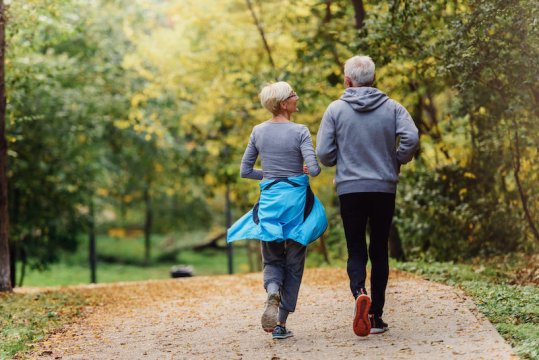
Exercise alters brain chemistry to protect aging synapses
Couple jogging in the park (stock image). Credit: © lordn / stock.adobe.com
Enhanced nerve transmission seen in older adults who remained active
January 7, 2022
Science Daily/University of California - San Francisco
When elderly people stay active, their brains have more of a class of proteins that enhances the connections between neurons to maintain healthy cognition, a UC San Francisco study has found.
This protective impact was found even in people whose brains at autopsy were riddled with toxic proteins associated with Alzheimer's and other neurodegenerative diseases.
"Our work is the first that uses human data to show that synaptic protein regulation is related to physical activity and may drive the beneficial cognitive outcomes we see," said Kaitlin Casaletto, PhD, an assistant professor of neurology and lead author on the study, which appears in the January 7 issue of Alzheimer's & Dementia: The Journal of the Alzheimer's Association.
The beneficial effects of physical activity on cognition have been shown in mice but have been much harder to demonstrate in people.
Casaletto, a neuropsychologist and member of the Weill Institute for Neurosciences, worked with William Honer, MD, a professor of psychiatry at the University of British Columbia and senior author of the study, to leverage data from the Memory and Aging Project at Rush University in Chicago. That project tracked the late-life physical activity of elderly participants, who also agreed to donate their brains when they died.
"Maintaining the integrity of these connections between neurons may be vital to fending off dementia, since the synapse is really the site where cognition happens," Casaletto said. "Physical activity -- a readily available tool -- may help boost this synaptic functioning."
More Proteins Mean Better Nerve Signals
Honer and Casaletto found that elderly people who remained active had higher levels of proteins that facilitate the exchange of information between neurons. This result dovetailed with Honer's earlier finding that people who had more of these proteins in their brains when they died were better able to maintain their cognition late in life.
To their surprise, Honer said, the researchers found that the effects ranged beyond the hippocampus, the brain's seat of memory, to encompass other brain regions associated with cognitive function.
"It may be that physical activity exerts a global sustaining effect, supporting and stimulating healthy function of proteins that facilitate synaptic transmission throughout the brain," Honer said.
Synapses Safeguard Brains Showing Signs of Dementia
The brains of most older adults accumulate amyloid and tau, toxic proteins that are the hallmarks of Alzheimer's disease pathology. Many scientists believe amyloid accumulates first, then tau, causing synapses and neurons to fall apart.
Casaletto previously found that synaptic integrity, whether measured in the spinal fluid of living adults or the brain tissue of autopsied adults, appeared to dampen the relationship between amyloid and tau, and between tau and neurodegeneration.
"In older adults with higher levels of the proteins associated with synaptic integrity, this cascade of neurotoxicity that leads to Alzheimer's disease appears to be attenuated," she said. "Taken together, these two studies show the potential importance of maintaining synaptic health to support the brain against Alzheimer's disease."
https://www.sciencedaily.com/releases/2022/01/220107100955.htm
Brain function boosted by daily physical activity in middle-aged, older adults
January 31, 2022
Science Daily/University of California - San Diego
A new study by researchers at University of California San Diego School of Medicine adds to the canon of research associating physical activity with cognitive performance, this time using 90 middle-aged and older subjects who wore accelerometers while physically active and completed mobile cognitive testing from home.
"The future of lifestyle interventions really needs to be remote-based," said Raeanne Moore, PhD, associate professor in the Department of Psychiatry at UC San Diego School of Medicine and principal investigator of the study. "The pandemic has made this especially clear."
On the days their physical activity increased, the study found, the 50- to 74-year-old participants performed more effectively on an executive function task, and on the days when their physical activity decreased, so too did their cognitive performance.
The findings published Jan. 31, 2022 in the journal JMIR mHealth and uHealth.
"It was a very linear relationship," Moore said. "We hypothesized that we would find this, but we couldn't be sure because we weren't telling people to increase their physical activity. They just did what they do every day."
First author Zvinka Zlatar, PhD, a clinical psychologist at UC San Diego School of Medicine, added: "Future interventions, in which we ask people to increase their physical activity, will help us determine if daily changes in physical activity lead to daily gains in cognition measured remotely or vice versa."
The correlation between physical activity and cognition remained when adjustments were made for various co-morbidities, such as HIV status, age, sex, education and race/ethnicity. But it held only for persons who function dependently -- who rely on others to perform the tasks of daily living, such as managing household activities or paying the bills.
"For them, physical activity may have a greater benefit on daily, real-world cognitive performance," Moore said, a finding consistent with research into Alzheimer's disease and related dementias.
Though it didn't fall within the purview of this study, Moore speculated that, because functionally independent adults likely perform more cognitively stimulating and social activities, which are known to have positive impacts on brain health, physical activity may have less of an impact on cognition.
Moore and Zlatar said their work has implications for the development of novel digital health interventions to preserve brain health in aging.
"We don't know yet if there's a cumulative, long-term effect to these small daily fluctuations in cognition," Zlatar said. "That's something we plan to study next -- to see if performing physical activity at different intensities over time, in unsupervised settings, can produce long-term improvements in brain health and sustained behavior change."
https://www.sciencedaily.com/releases/2022/01/220131164208.htm
Change of heart? It may affect thinking and memory skills in middle age
January 26, 2022
Science Daily/American Academy of Neurology
Subtle changes in the structure and the diastolic function of a person's heart between early adulthood and middle age may be associated with a decline in thinking and memory skills. The research is published in the January 26, 2022, online issue of Neurology®, the medical journal of the American Academy of Neurology. The diastolic function of the heart is when it rests between beats and the chambers fill with blood.
"Cardiovascular risk factors such as high blood pressure, high cholesterol and diabetes have been associated with an increased risk for cognitive impairment, but much less is known about heart structure and function and the risks for cognition," said study author Laure Rouch, PharmD, PhD, of the University of California, San Francisco. "We followed young adults for 25 years into middle age and found declines in thinking and memory skills independent of these other risk factors. Our findings are of critical importance in the context of identifying potential early markers in the heart of increased risk for later-life cognitive decline. Such abnormalities are common and often underdiagnosed as they do not produce any obvious symptoms."
The study looked at 2,653 people with an average age of 30. Participants had echocardiograms, ultrasound images of the heart, at the start of the study and again 20 and 25 years later. Echocardiograms are non-invasive and widely available.
Researchers used the images to measure the following: the weight of the left ventricle, one of four chambers of the heart; the volume of the blood that filled the left ventricle when pumping; and how well the left ventricle pumped blood to the body, specifically the percentage of blood pumped out of the heart.
Researchers found over 25 years, there was an average increase in the weight of the left ventricle of 0.27 grams per square meter per year (g/m2), with average weight of 81 g/m2 in the first year and 86 g/m2 in the last year. There was also an average increase in left atrial volume of 0.42 milliliters of blood per square meter (mL/m2) with average volume of 16 mL/m2 in the first year and 26 mL/m2 in the last year.
In the last year of the study, participants were given six cognitive tests to measure thinking and memory skills including global cognition, processing speed, executive function, delayed verbal memory and verbal fluency. Tests included tasks like recalling words from a list 10 minutes after looking at the list, as well as substituting symbols for numbers using a key at the top of the page.
After adjusting for factors like age, sex and education, researchers found that a greater than average increase from early to middle adulthood in the weight of a person's left ventricle was associated with lower midlife cognition on most tests.
Tests included a common dementia test that asks participants to do tasks like draw lines connecting alternating letters and numbers, and repeat five words, complete other tasks, and then repeat the same five words. Scores range from zero to 30 with 26 and higher representing normal cognition. Participants with a greater than average midlife increase in left ventricle weight had an average score of 22.7 while those without a greater than average increase in weight had an average score of 24.
Researchers also found a greater than average increase from early to middle adulthood in left atrial volume was associated with lower midlife global cognition.
However, a greater than average decrease in the percentage of blood pumped out of the left ventricle was not associated with cognition.
"What is interesting is that our results were similar after adjusting for cardiovascular risk factors such as high blood pressure, diabetes, smoking and obesity," Rouch said. "As early as young adulthood, even before the occurrence of cardiovascular disease, there may be heart abnormalities that could be risk markers for lower thinking and memory skills in middle age. In the future, a single echocardiogram may help identify people at higher risk of cognitive impairment."
Rouch said that future research should determine whether interventions to improve the structure and function of the heart could benefit brain health. She said, "The question of whether altered cardiac structure and function could be a risk factor for cognitive impairment has major public health implications and could reveal another important heart-brain connection."
A limitation of the study is echocardiograms were performed up to 25 years apart using slightly different procedures and equipment, which may make the data hard to compare.
https://www.sciencedaily.com/releases/2022/01/220126165518.htm
Study now links non-mutated Apolipoprotein E to dementia in the aging brain
January 26, 2022
Science Daily/Elsevier
Researchers exploring dementia-related proteins in the brain identified Apolipoprotein E (ApoE) as a key misfolded protein. About 25% of individuals, and 50% of individuals with Alzheimer disease, have a genetic mutation, the APOE ε4 allele -- a known risk factor for the disease. The researchers were surprised to find that even in the brains of patients without the disease-driving APOE ε4 allele, ApoE proteins were strongly enriched in dementia. Their findings appear in The American Journal of Pathology, published by Elsevier.
"Dementia is very complex, but you can simplify it: the disease is caused by 'gloppy proteins' in the brain," explained lead investigator Peter T. Nelson, MD, PhD, Sanders-Brown Center on Aging and Department of Pathology, University of Kentucky, Lexington, KY, USA. "I'm not making light of it -- these 'sticky' misfolded proteins often end up destroying the brain, the mind, the memories and everything else for millions of people who suffer from dementia. We want to understand specifically which proteins are the problem."
The investigators used mass spectrometry to characterize the complete set of proteins, or proteome, from the amygdalae of 40 participants from the University of Kentucky Alzheimer's Disease Center autopsy cohort. The amygdala is vulnerable to mis-aggregated proteins associated with dementia and is often affected even at the earliest stages of disease. The subjects ranged from cognitively normal to severe amnestic dementia. Although previous studies have examined the human amygdala proteome, none have reported on a sample of this size with dementia subjects and control subjects for comparison.
As anticipated, portions of proteins previously associated with neurodegenerative diseases were found in the brains of patients with dementia, including proteins called Tau (associated with neurofibrillary tangles), Aβ (associated with amyloid plaques), and α-Synuclein (associated with Lewy Body disease). Aβ and α-Synuclein correlated strongly with clinical diagnosis of dementia. Tau and Aβ proteins, but not α-Synuclein, were occasionally detectible in cognitively normal subjects and those with mild cognitive impairment. Overall, Dr. Nelson observes, the findings for these proteins were in line with expectations.
The data also revealed a close correlation between dementia diagnosis and the detection of ApoE peptides in the brain. The correlation with dementia for ApoE was even stronger than that seen for Tau, Aβ, or α-Synuclein. Moreover, the ApoE peptides were significantly enriched even in dementia patients who lack the APOE ε4allele. The results emphasize the relevance of the ApoE protein as an aberrantly aggregated protein in its own right, rather than just an "upstream" genetic risk factor.
"Our study adds to an evolving appreciation of multiple misfolded proteins in the human brain and moves the field forward by emphasizing that ApoE may be a stong contributor to the dementia prototype, even in individuals who do not have the disease-driving version of the APOE gene," said Dr. Nelson. "Even in persons lacking the APOE ε4 allele, ApoE may indeed be among the most impactful 'gloppy proteins' in aging brains."
https://www.sciencedaily.com/releases/2022/01/220126122408.htm